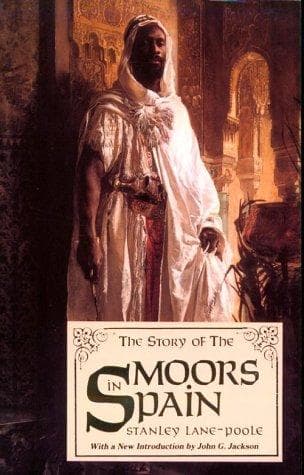
The Berbers in Andalusia, always in intimate touch with their kinsmen
over the water, were quick to feel the influence of such a revolution as
was then (741) going forward in Africa. They had cause to grudge the
Arabs their lion's share of the spoils of Spain, which had been the
trophies of the Berbers' bow and spear. While the Arabs, who had only
arrived in time to reap the advantages of the conquest, had
appropriated all the most smiling provinces of the peninsula, the
Berbers found themselves relegated to the most unlovely parts, to the
dusty plains of Estremadura, or to the icy mountains of Leon, where they
had to contend with a climate which severely tried natures brought up in
African heats, and where, too, they had the doubtful privilege of
forming a buffer between their Arab allies and the Christians of the
North. Already there had been signs of disaffection. One of Tārik's
Berber generals, Monousa, who had married a daughter of Eudes, Duke of
Aquitaine, raised the standard of revolt when he heard of the oppression
of his countrymen in Africa; and now, when the Berber cause was
triumphant across the Straits, a general rising took place among the
northern provinces; the Berbers of the borders, of Galicia, of Merida,
Coria, and all the region round about, took up arms, and began to march
south upon Toledo, Cordova, and Algeciras, whence they intended to take
ship and go to join their compatriots in Barbary.
The situation was full of peril, and the Arab Emīr of Andalusia,
Abd-el-Melik, who had sternly refused to lend any assistance to the
Syrian Arabs shut up in Ceuta, now found himself in this dilemma, that
either he must submit to his own rebellious Berbers, or he must invite
the co-operation of the very Syrians whom he had persistently refused to
succour, and who, when they arrived, might possibly turn out to be a
worse plague than that they came to remove. In grave apprehension, he
sent ships and brought over the Syrians, after first making them promise
to go back when their work was done. Thus reinforced, the Arabs of
Andalusia put the Berbers to utter rout, hunted them like wild beasts
through the country to their mountain fastnesses, and gratified their
vengeance to the full. And then the event which Abd-el-Melik had
endeavoured to guard against came to pass. The Syrian auxiliaries
refused to exchange the rich lands of Andalusia for the deserts of
Africa and the spears of triumphant Berbers; they defied and murdered
Abd-el-Melik, and set up their own chief in his stead. The result was a
long and obstinate struggle between the old Arab party and the
new-comers, accompanied by much bloodshed and devastation. The struggle
was only decided when the Khalif of Damascus sent over a new and able
governor, who divided the hostile factions by giving them settlements in
cities far apart from each other, and banished the more turbulent of
their leaders. Thus the Egyptian contingent of the Syrian army was
Public-domain text, read in full here on John Shaqi.
Reviews
Reviews
No reviews yet
Be the first to share your thoughts on this work.
Join the Discussion
Join the discussion
Sign in to leave a comment or review.
Sign InorCreate an account