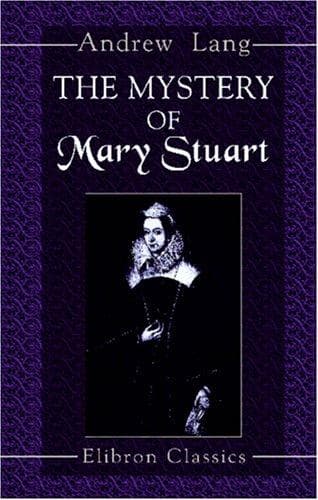
Mary, Queen of Scots, 1542-1587; Queens -- Scotland -- Biography; Scotland -- History -- Mary Stuart, 1542-1567
Mary’s gratitude was not of the kind proverbial in princes. In September
1571, when the Ridolfi plot collapsed, and Mary’s household was reduced,
her sorest grief was for Archibald Beaton, her usher, and little Willie
Douglas, who rescued her from Loch Leven. They were to be sent to
Scotland, which meant death to both, and she pleaded pitifully for them.
To her servants she wrote: ‘I thank God, who has given me strength to
endure, and I pray Him to grant you the like grace. To you will your
loyalty bring the greatest honour, and whensoever it pleases God to set me
free, I will never fail you, but reward you according to my power.... Pray
God that you be true men and constant, to such He will never deny his
grace, and for you, John Gordon and William Douglas, I pray that He will
inspire your hearts. I can no more. Live in friendship and holy charity
one with another, bearing each other’s imperfections.... You, William
Douglas, be assured that the life which you hazarded for me shall never be
destitute while I have one friend alive.’
In a trifling transaction she writes: ‘Rather would I pay twice over, than
injure or suspect any man.’
In the long lament of the letters written during her twenty years of
captivity, but a few moods return and repeat themselves, like phrases in a
fugue. Vain complaints, vain hopes, vain intrigues with Spain, France, the
Pope, the Guises, the English Catholics, succeed each other with futile
iteration. But always we hear the note of loyalty even to her humblest
servants, of sleepless memory of their sacrifices for her, of unstinting
and generous gratitude. Such was the Queen’s ‘natural,’ _mon naturel_:
with this character she faced the world: a lady to live and die for: and
many died.
This woman, sensitive, proud, tameless, fierce, and kind, was browbeaten
by the implacable Knox: her priests were scourged and pilloried, her
creed was outraged every day; herself scolded, preached at, insulted; her
every plan thwarted by Elizabeth. Mary had reason enough for tears even
before her servant was slain almost in her sight by her witless husband
and the merciless Lords. She could be gay, later, dancing and hunting, but
it may well be that, after this last and worst of cruel insults, her heart
had now become hard as the diamond; and that she was possessed by the evil
spirits of loathing, and hatred, and longing for revenge. It had not been
a hard heart, but a tender; capable of sorrow for slaves at the galley
oars. After her child’s birth, when she was holiday-making at Alloa,
according to Buchanan, with Bothwell and his gang of pirates, she wrote to
the Laird of Abercairnie, bidding him be merciful to a poor woman and her
‘company of puir bairnis’ whom he had evicted from their ‘kindly rowme,’
or little croft.
Public-domain text, read in full here on John Shaqi.
Reviews
Reviews
No reviews yet
Be the first to share your thoughts on this work.
Join the Discussion
Join the discussion
Sign in to leave a comment or review.
Sign InorCreate an account