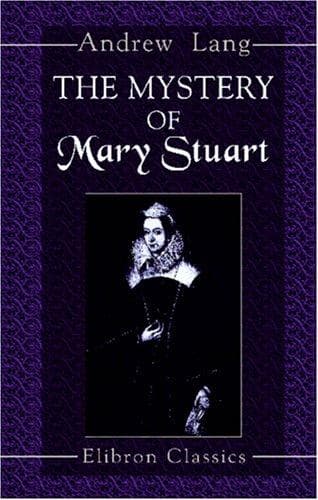
Mary, Queen of Scots, 1542-1587; Queens -- Scotland -- Biography; Scotland -- History -- Mary Stuart, 1542-1567
Her more than masculine courage her enemies have never denied. Her
resolution was incapable of despair; ‘her last word should be that of a
Queen.’ Her plighted promise she revered, but, in such an age, a woman’s
weapon was deceit.
She was the centre and pivot of innumerable intrigues. The fierce nobles
looked on her as a means for procuring lands, office, and revenge on their
feudal enemies. To the fiercer ministers she was an idolatress, who ought
to die the death, and, meanwhile, must be thwarted and insulted. To
France, Spain, and Austria she was a piece in the game of diplomatic
chess. To the Pope she seemed an instrument that might win back both
Scotland and England for the Church, while the English Catholics regarded
her as either their lawful or their future Queen. To Elizabeth she was,
naturally, and inevitably, and, in part, by her own fault, a deadly rival,
whatever feline caresses might pass between them: gifts of Mary’s heart,
in a heart-shaped diamond; Elizabeth’s diamond ‘like a rock,’ a rock in
which was no refuge. Yet Mary was of a nature so large and unsuspicious
that, on the strength of a ring and a promise, she trusted herself to
Elizabeth, contrary to the advice of her staunchest adherents. She was no
natural dissembler, and with difficulty came to understand that others
could be false. Her sense of honour might become perverted, but she had a
strong native sense of honour.
One thing this woman wanted, a master. Even before Darnley and she were
wedded, at least publicly, Randolph wrote, ‘All honour that may be
attributed unto any man by a wife, he hath it wholly and fully.’ In her
authentic letters to Norfolk, when, a captive in England, she regarded
herself as betrothed to him, we find her adopting an attitude of
submissive obedience. The same tone pervades the disputed Casket Letters,
to Bothwell, and is certainly in singular consonance with the later, and
genuine epistles to Norfolk. But the tone--if the Casket Letters are
forged--may have been borrowed from what was known of her early submission
to Darnley.
Public-domain text, read in full here on John Shaqi.
Reviews
Reviews
No reviews yet
Be the first to share your thoughts on this work.
Join the Discussion
Join the discussion
Sign in to leave a comment or review.
Sign InorCreate an account