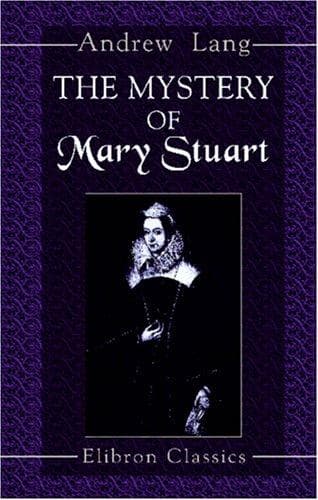
Mary, Queen of Scots, 1542-1587; Queens -- Scotland -- Biography; Scotland -- History -- Mary Stuart, 1542-1567
In such a mist of dark beliefs and dreads was the world living, beliefs
shared by Queen, preacher, and Earl, scholar, poet, historian, and the
simple secretary of Knox: while the sun shone fair on St. Leonard’s
gardens, and boys like little James Melville were playing tennis and golf.
The scenes in which the wild deeds were done are scarcely recognisable in
modern Scotland. Holyrood is altered by buildings of the Restoration; the
lovely chapel is a ruin, where Mary prayed, and the priests at the altar
were buffeted. The Queen’s chamber is empty, swept and garnished, as is
the little cabinet whereinto came the livid face of Ruthven, clad in
armour, and Darnley, half afraid, and Standen, later to boast, with
different circumstances, that he saved the Queen from the dirk of Patrick
Ballantyne. The blood of Riccio, outside the door of the state chamber, is
washed away: there are only a tourist or two in the long hall where Mary
leaned on Chastelard’s breast in the dance called ‘The Purpose’ or
‘talking dance.’ The tombs of the kings through which Mary stole,
stopping, says Lennox, to threaten Darnley above the new mould of Riccio’s
grave, have long been desecrated.
At Jedburgh we may still see the tall old house, with crow-stepped gables,
and winding stairs, and the little chambers where Mary tried to make so
good an end, and where the wounded Bothwell was tended. In the long
gallery above, Lethington, and Moray, and du Croc must have held anxious
converse, while physicians came and went, proposing uncouth remedies, and
the Confessor flitted through, and the ladies in waiting wept. But least
changed are the hills of the robbers, sweeping slopes of rough pasturage,
broken by marshes, and the foaming burns of October, through which Mary
rode to the wounded Bothwell in Hermitage Castle, now a huge shell of grey
stone, in the pastoral wastes.
Most changed of all is Glasgow, then a pretty village, among trees,
between the burn and the clear water of Clyde. The houses clustered about
the Cathedral, the ruined abodes of the religious, and the Castle where
Lennox and Darnley both lay sick, while Mary abode, it would seem, in the
palace then empty of its Archbishop. We see the little town full of armed
Hamiltons, and their feudal foes, the Stewarts of Lennox, who anxiously
attend her with suspicious glances, as she goes to comfort their young
chief.
In thinking of old Edinburgh, as Mary knew it, our fancy naturally but
erroneously dwells on the narrow wynds of the old town, cabined between
grimy slate-roofed houses of some twelve or fifteen stories in height,
‘piled black and massy steep and high,’ and darkened with centuries of
smoke, squalid, sunless, without a green tree in the near view, so we are
apt to conceive the Edinburgh of Queen Mary. But we do the good town
injustice: we are conceiving the Edinburgh of Queen Mary under the colours
and in the forms of the Edinburgh of Prince Charles and of Robert Burns.
Public-domain text, read in full here on John Shaqi.
Reviews
Reviews
No reviews yet
Be the first to share your thoughts on this work.
Join the Discussion
Join the discussion
Sign in to leave a comment or review.
Sign InorCreate an account