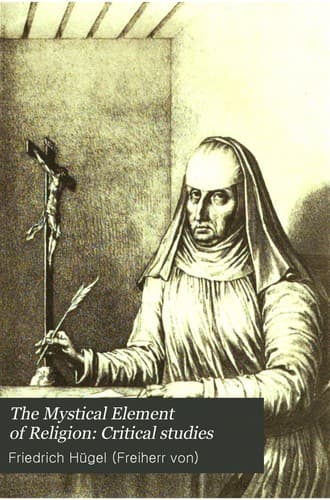
The Mystical Element of Religion, as studied in Saint Catherine of Genoa and her friends, Volume 2 (of 2) — John Shaqi
The Mystical Element of Religion, as studied in Saint Catherine of Genoa and her friends, Volume 2 (of 2)Hügel, Friedrich, Freiherr von
Religion
The Mystical Element of Religion, as studied in Saint Catherine of Genoa and her friends, Volume 2 (of 2)
Hügel, Friedrich, Freiherr von
Catherine, of Genoa, Saint, 1447-1510
The two stages really belong to one another, and the depth of the
former gloom and dreariness stood in direct proportion and relation to
the capacities of that nature and to the height of their satisfaction
in the later light and vigour brought to and assimilated by them. It
was the sense, at that previous time still inarticulate, but none the
less mightily operative, of the insufficiency of all things merely
contingent, of all things taken as such and inevitably found to be
such, that had been adding, and was now discovered to have added, a
quite determining weight and poignancy to the natural pressure of her
temperament and external lot. And this temperament and lot, which had
not alone produced that sadness, could still less of themselves remove
it, whatever might be its cause. Her sense of emptiness and impotence
could indeed add to her sense of fulness and of power, once these
latter had come; but of themselves the former could no more give her
the latter, than hunger, which indeed makes bread to taste delicious,
can give us real bread and, with it, that delight.
And it was such real bread of life and real power which now came to
her. For if the tests of reality in such things are their persistence
and large and rich spiritual applicability and fruitfulness,
then something profoundly real and important took place in the
soul of that sad and weary woman of six-and-twenty, within that
Convent-chapel, at that Annunciation-tide. Her four years of heroic
persistence; her unbroken Hospital service of a quarter of a century;
her lofty magnanimity towards her husband, Thobia and Thobia’s
mother; her profound influence upon Vernazza, in urging him on to
his splendid labours throughout Italy, and to his grand death in
plague-stricken Genoa; her daringly original, yet immensely persuasive,
doctrine,--nearly all this dates back, completely for her consciousness
and very largely in reality, to those few moments on that memorable day.
2. _Her conversion not sudden nor visionary._
But two points, concerning the manner and form of this experience,
are, though of but secondary spiritual interest, far more difficult
to decide. There is, for one thing, the indubitable impression, for
her own mind and for ours, of complete suddenness and newness in her
change. Was this suddenness and newness merely apparent, or real as
well? And should this suddenness, if real, be taken as in itself and
directly supernatural?
Public-domain text, read in full here on John Shaqi.
Reviews
Reviews
No reviews yet
Be the first to share your thoughts on this work.
Join the Discussion
Join the discussion
Sign in to leave a comment or review.
Sign InorCreate an account