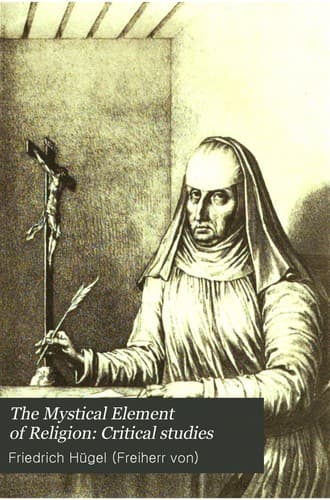
The Mystical Element of Religion, as studied in Saint Catherine of Genoa and her friends, Volume 2 (of 2)Hügel, Friedrich, Freiherr von
Religion
The Mystical Element of Religion, as studied in Saint Catherine of Genoa and her friends, Volume 2 (of 2)
Hügel, Friedrich, Freiherr von
Catherine, of Genoa, Saint, 1447-1510
Studying here these great convictions simply in their temperamental
occasions, colouring, and limitations, we can readily discover how the
“one thing at a time” maxim springs from the same disposition as that
which found such refreshment in ecstasy. For here too, partly from a
congenital incapacity to take things lightly, partly from an equally
characteristic sensitiveness to the conflict and confusion incident
to the introduction of any fresh multiplicity into the consciousness,
she requires, even in her non-ecstatic moments, to have her attention
specially concentrated upon one all-important idea, one point in the
field of consciousness. And, by a faithful wholeness of attention to
the successive spiritually significant circumstances and obligations,
interior impressions and lights, which her praying, thinking,
suffering, actively bring round to her notice, she manages, by such
single steps, gradually to go a very long way, and, by such severe
successiveness, to build up a rich simultaneity. For each of these
faithfully accepted and fully willed and utilized acts and states,
received into her one ever-growing and deepening personality, leave
memories and stimulations behind them, and mingle, as subconscious
elements, with the conscious acts which follow later on.
4. _Two remarkable consequences of this kind of warfare._
There were two specially remarkable consequences of this constant
watchful fixation of the one spiritually significant point in each
congeries of circumstances, and of the manner in which (partly perhaps
as the occasion, but probably in great part as the effect of this
attention) one interior condition of apparent fixity would suddenly
shift to another condition of a different kind but of a similar
apparent stability. There was the manner in which, during these years,
she appears to have escaped the committing of any at all definite
offences against the better and best lights of that particular moment;
and there was the way in which she would realize the faultiness and
subtle self-seeking of any one state, only at the moment of its
disappearing to make room for another.
Public-domain text, read in full here on John Shaqi.
Reviews
Reviews
No reviews yet
Be the first to share your thoughts on this work.
Join the Discussion
Join the discussion
Sign in to leave a comment or review.
Sign InorCreate an account