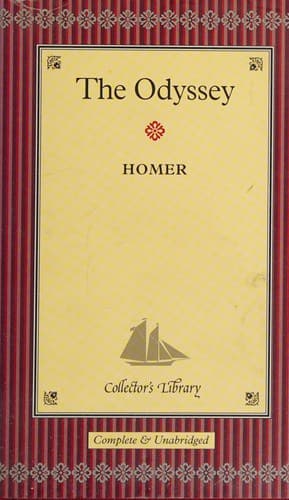
Epic poetry, Greek -- Translations into English; Homer -- Translations into English; Odysseus, King of Ithaca (Mythological character) -- Poetry
A blending of popular legends, and a free use of the songs of other
bards, are features perfectly consistent with poetical originality. In
fact, the most original writer is still drawing upon outward
impressions—nay, even his own thoughts are a kind of secondary agents
which support and feed the impulses of imagination. But unless there be
some grand pervading principle—some invisible, yet most distinctly
stamped archetypus of the great whole, a poem like the Iliad can never
come to the birth. Traditions the most picturesque, episodes the most
pathetic, local associations teeming with the thoughts of gods and
great men, may crowd in one mighty vision, or reveal themselves in more
substantial forms to the mind of the poet; but, except the power to
create a grand whole, to which these shall be but as details and
embellishments, be present, we shall have nought but a scrap-book, a
parterre filled with flowers and weeds strangling each other in their
wild redundancy; we shall have a cento of rags and tatters, which will
require little acuteness to detect.
Sensible as I am of the difficulty of disproving a negative, and aware
as I must be of the weighty grounds there are for opposing my belief,
it still seems to me that the Homeric question is one that is reserved
for a higher criticism than it has often obtained. We are not by nature
intended to know all things; still less, to compass the powers by which
the greatest blessings of life have been placed at our disposal. Were
faith no virtue, then we might indeed wonder why God willed our
ignorance on any matter. But we are too well taught the contrary
lesson; and it seems as though our faith should be especially tried,
touching the men and the events which have wrought most influence upon
the condition of humanity. And there is a kind of sacredness attached
to the memory of the great and the good, which seems to bid us repulse
the scepticism which would allegorize their existence into a pleasing
apologue, and measure the giants of intellect by an homaeopathic
dynameter.
Long and habitual reading of Homer appears to familiarize our thoughts
even to his incongruities; or rather, if we read in a right spirit and
with a heartfelt appreciation, we are too much dazzled, too deeply
wrapped in admiration of the whole, to dwell upon the minute spots
which mere analysis can discover. In reading an heroic poem, we must
transform ourselves into heroes of the time being, we in imagination
must fight over the same battles, woo the same loves, burn with the
same sense of injury, as an Achilles or a Hector. And if we can but
attain this degree of enthusiasm (and less enthusiasm will scarcely
suffice for the reading of Homer), we shall feel that the poems of
Homer are not only the work of one writer, but of the greatest writer
that ever touched the hearts of men by the power of song.
Public-domain text, read in full here on John Shaqi.
Reviews
Reviews
No reviews yet
Be the first to share your thoughts on this work.
Join the Discussion
Join the discussion
Sign in to leave a comment or review.
Sign InorCreate an account