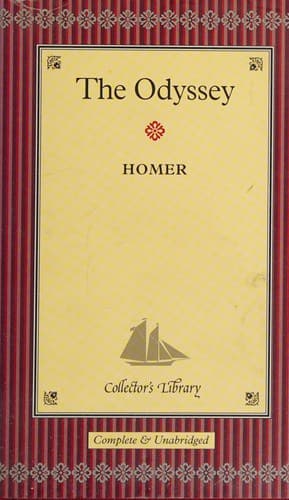
Epic poetry, Greek -- Translations into English; Homer -- Translations into English; Odysseus, King of Ithaca (Mythological character) -- Poetry
“This poem,” says Coleridge, “is a short mock-heroic of ancient date.
The text varies in different editions, and is obviously disturbed and
corrupt to a great degree; it is commonly said to have been a juvenile
essay of Homer’s genius; others have attributed it to the same Pigrees
mentioned above, and whose reputation for humour seems to have invited
the appropriation of any piece of ancient wit, the author of which was
uncertain; so little did the Greeks, before the age of the Ptolemies,
know or care about that department of criticism employed in determining
the genuineness of ancient writings. As to this little poem being a
youthful prolusion of Homer, it seems sufficient to say that from the
beginning to the end, it is a plain and palpable parody, not only of
the general spirit, but of numerous passages of the Iliad itself; and,
even if no such intention to parody were discernible in it, the
objection would still remain, that to suppose a work of mere burlesque
to be the primary effort of poetry in a simple age, seems to reverse
that order in the development of national taste, which the history of
every other people in Europe, and of many in Asia, has almost
ascertained to be a law of the human mind; it is in a state of society
much more refined and permanent than that described in the Iliad, that
any popularity would attend such a ridicule of war and the gods as is
contained in this poem; and the fact of there having existed three
other poems of the same kind attributed, for aught we can see, with as
much reason to Homer, is a strong inducement to believe that none of
them were of the Homeric age. Knight infers from the usage of the word
δὲλτος, ‘writing tablet,’ instead of διφθέρα, ‘skin,’ which, according
to Herod 5, 58, was the material employed by the Asiatic Greeks for
that purpose, that this poem was another offspring of Attic ingenuity;
and generally that the familiar mention of the cock (v. 191) is a
strong argument against so ancient a date for its composition.”
Having thus given a brief account of the poems comprised in Pope’s
design, I will now proceed to make a few remarks on his translation,
and on my own purpose in the present edition.
Public-domain text, read in full here on John Shaqi.
Reviews
Reviews
No reviews yet
Be the first to share your thoughts on this work.
Join the Discussion
Join the discussion
Sign in to leave a comment or review.
Sign InorCreate an account