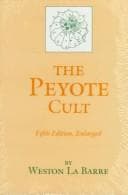
Indians of North America -- Religion; Indians of North America -- Rites and ceremonies; Peyotism
Then the shaman and hikuli-seekers ceremonially circle the freshly
white-plastered “god-house of the Sun,” enter, pray aloud and give a
long account of their journey until late at night. The temple fire place
(áro) is a circular clay basin in the center with a slightly raised rim;
the poker is the “arrow” of the God of Fire. The niches at the west of
the temple behind the shaman are filled with god-images; the others
sit on either side of him in a semi-circle on sotol or century-plant
stools. Their wives, flower-garlanded and painted, sit farther back
in the temple, while the pilgrims smoke and sing all night about
Greatgrandfather Deer-Tail, the Morning Star and all the other gods who,
long ago, went out to seek hikuli. The next morning all wash their faces,
heads and hands in water from the hikuli-country, and salute the rising
sun with a bowl of burning incense, sprinkling water to the four corners
of the world with a flower and praying for life and for luck in hunting
deer.[35]
Meanwhile the patio has been prepared for dancing. Beside the fire are
jars of holy water and tesvino, a stuffed fetish-skunk tied to a stick,
and a stuffed grey squirrel decorated with dark green beetle wing-covers,
small clay birds, feathers and a crucifix.[36] The shaman, sitting west
of the main fire (behind the usual ceremonial arrows, plumes, tamales,
and a pot of hikuli-liquor) sacrifices water to the six regions with
a stick; then, with assistants on either side who take turns helping
him, the shaman sings the mythological songs, unaccompanied by a drum,
and the long dance begins.[37] Both sexes take part in the dance, “a
quick, jumping walk with frequent jerky turns of the body,” in a circle
counter-clockwise around the shaman and the fire—though the circle tends
to an ellipse as they approach the fetish-animals at the northwest.[38]
At sunrise of the third and last day comes the corn-roasting ceremony
which gives its name to the entire festival, Rarikira (from raki,
“toasted corn”).[39] The shaman fastens a plume with a ribbon in the
hair of the woman who is to do the toasting and gives her a coarse straw
whisk to stir the corn on her comal, supported on three stones over the
fire. The hikuli-seekers appear with large varicolored ears of corn in
their pouches, and after ceremonial circuits they shell it, sacrificing
five grains to the fire. The woman then prepares the esquite, and all eat
this, together with deer meat and broth, thus ending the festivities.[40]
Public-domain text, read in full here on John Shaqi.
Reviews
Reviews
No reviews yet
Be the first to share your thoughts on this work.
Join the Discussion
Join the discussion
Sign in to leave a comment or review.
Sign InorCreate an account