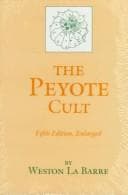
Indians of North America -- Religion; Indians of North America -- Rites and ceremonies; Peyotism
Complete social informality now reigns as the food is passed to the man
south of the door and thence clockwise. Much joking[118] goes on during
this meal, which has none of the seriousness of the Christian partaking
of the Host. When the fireman has finished eating, at the leader’s
instruction, he leads the line out of the tipi.[119] The tipi may be
taken down immediately, or moved bodily a little, but the older men
drift back into its shade and lie around talking and exchanging peyote
experiences.[120] As meetings are ordinarily held on Saturday nights,
Sunday forenoon is free for such visiting, talking and dozing under
arbors. Nearly everyone stays for a secular dinner at noon, and they
take home what they cannot eat; sometimes other guests come who have not
attended the meeting.
COMPARISON OF MEXICAN, TRANSITIONAL, AND PLAINS PEYOTISM
Having now characterized the Huichol-Tarahumari type-rite for Mexico,
the Lipan-Mescalero for the transitional nomad Southwest, and the
Kiowa-Comanche as the historical prototype for the Plains, we may attempt
a comparison and contrasting of them.
In Mexico as a whole “curing” is perhaps the most salient characteristic,
while both curing and doctoring are conspicuous in Mescalero. In the
Plains, while doctoring is an important feature it is by no means
indispensable.[121] Peyotism in Mexico, therefore, has a tribal
character, while in Mescalero the ceremony is a _forum for rival
shamans_—a trait not altogether absent in early Plains rites—and in the
Plains peyotism has a societal nature. These facts have an important
bearing on the cultural manifestations of the physiological action of
peyote. In Mexico visions are turned to the uses of prophecy;[122] in
Mescalero they enable a shaman to detect rival witchcraft; while in
the Plains, visions are a source of individual power. These categories
should not be made too rigid, however, for clairvoyance, if not prophecy,
as well as witchcraft anxiety are known for early Plains peyotism,
and on the other hand, peyote medicine-power is a source of Mescalero
shamanistic rivalry. Yet as indications of relative emphasis these
statements might be allowed to stand.
The Mexican symbolisms point to an association with hunting, agriculture
and gathering activities, and the typical anxiety expressed in the
religion is the desire for rain. In Mescalero, peyote is the focal
point for the warfare of antagonistic powers, and expresses the mutual
suspicion of formerly small local groups; the intense and ever-present
anxiety is the fear of aggression and reprisal by witchcraft. In the
early Plains peyote ceremonies, associations with warfare were prominent
(influenced no doubt by a forerunner of peyotism there, the mescal bean
ceremonialism), though in later times this element had become so nearly
absent that Mooney could point quite properly to the “international”
character of the cult in his time.[123]
Public-domain text, read in full here on John Shaqi.
Reviews
Reviews
No reviews yet
Be the first to share your thoughts on this work.
Join the Discussion
Join the discussion
Sign in to leave a comment or review.
Sign InorCreate an account