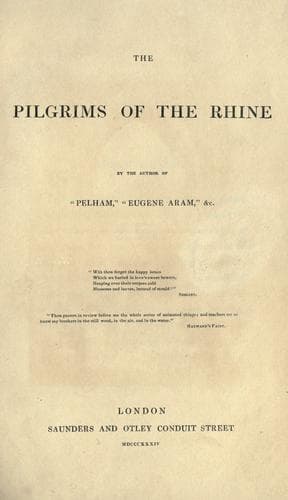
The Pilgrims of the RhineLytton, Edward Bulwer Lytton, Baron
Science
The Pilgrims of the Rhine
Lytton, Edward Bulwer Lytton, Baron
Fairies -- Fiction; Fantasy fiction; Rhine River Valley -- Fiction
I have said, dear Gertrude, that this story made a deep impression upon
Lucille. A misfortune so nearly akin to that of St. Amand removed by the
prayer of another filled her with devoted thoughts and a beautiful hope.
“Is not the tomb still standing?” thought she. “Is not God still in
heaven?--He who heard the guilty, may He not hear the guiltless? Is He
not the God of love? Are not the affections the offerings that please
Him best? And what though the child’s mediator was his mother, can
even a mother love her child more tenderly than I love Eugene? But if,
Lucille, thy prayer be granted, if he recover his sight, _thy_ charm
is gone, he will love thee no longer. No matter! be it so,--I shall at
least have made him happy!”
Such were the thoughts that filled the mind of Lucille; she cherished
them till they settled into resolution, and she secretly vowed to
perform her pilgrimage of love. She told neither St. Amand nor her
parents of her intention; she knew the obstacles such an announcement
would create. Fortunately she had an aunt settled at Bruxelles, to whom
she had been accustomed once in every year to pay a month’s visit, and
at that time she generally took with her the work of a twelvemonths’
industry, which found a readier sale at Bruxelles than at Malines.
Lucille and St. Amand were already betrothed; their wedding was shortly
to take place; and the custom of the country leading parents, however
poor, to nourish the honourable ambition of giving some dowry with their
daughters, Lucille found it easy to hide the object of her departure,
under the pretence of taking the lace to Bruxelles, which had been the
year’s labour of her mother and herself,--it would sell for sufficient,
at least, to defray the preparations for the wedding.
“Thou art ever right, child,” said Madame le Tisseur; “the richer St.
Amand is, why, the less oughtest thou to go a beggar to his house.”
In fact, the honest ambition of the good people was excited; their pride
had been hurt by the envy of the town and the current congratulations on
so advantageous a marriage; and they employed themselves in counting
up the fortune they should be able to give to their only child, and
flattering their pardonable vanity with the notion that there would
be no such great disproportion in the connection after all. They were
right, but not in their own view of the estimate; the wealth that
Lucille brought was what fate could not lessen, reverse could not reach;
the ungracious seasons could not blight its sweet harvest; imprudence
could not dissipate, fraud could not steal, one grain from its abundant
coffers! Like the purse in the Fairy Tale, its use was hourly, its
treasure inexhaustible.
Public-domain text, read in full here on John Shaqi.
Reviews
Reviews
No reviews yet
Be the first to share your thoughts on this work.
Join the Discussion
Join the discussion
Sign in to leave a comment or review.
Sign InorCreate an account