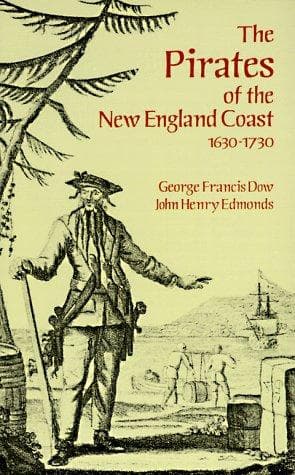
The pirates of the New England coast, 1630-1730Dow, George Francis
History
The pirates of the New England coast, 1630-1730
Dow, George Francis
New England -- History -- Colonial period, ca. 1600-1775; Pirates -- New England -- History
The capture of Panama took place in 1671. Morgan’s fleet sailed from
Jamaica and with only twelve hundred men he crossed the Isthmus. The
Spaniards learned of his coming and carried away or destroyed all food
stuffs along the route so that when the buccaneers came in sight of
the South Sea, after a nine days’ march, they were nearly famished and
in desperate straits. A few days’ rest put them in condition again and
with many revengeful oaths they fell upon the defences of the city with
irresistible fury. No quarter was given on either side. Soon Panama was
in flames. It was four weeks before the fires at last were extinguished
and over two hundred great warehouses, seven thousand houses, huge
stables that sheltered the horses and mules that transported the golden
ingots of the King of Spain, and many other buildings were entirely
destroyed. The plunder was immense. On the way back a dispute broke out
and when Morgan reached the ships he scuttled all but one and set sail
with only his chosen followers. Such treachery was unforgivable and he
never afterward led the “Brethren of the Coast.”
Morgan became governor of Jamaica with strict orders to enforce the
treaty concluded between England and Spain and relentlessly persecuted
those of his late associates who neglected to accept the royal pardon
which provided grants of lands to all buccaneers who would abandon the
sea and become planters. By proclamation all cruising against Spain
was forbidden under severe penalties. Many of the English filibusters
accepted the pardon while others became logwood cutters in the Bay of
Honduras or raised a black flag and preyed upon the ships of every
nation.
The pirate commonwealth at Port Royal was abandoned and such Englishmen
as continued to rove joined their French brethren who frequented the
island of Tortuga, or crossed the Isthmus and preyed upon the Spanish
towns in Peru and the shipping of the Great South Sea. They also
captured immense booty at Acapulco where the Spanish ships landed the
riches of the Philippines. The peace of Ryswick in 1697 settled the
disputes between France and Spain and also sounded the knell of the
French filibusters. Before long the buccaneers were absorbed in the
population of the various islands in the West Indies and the Spanish
galleons again sailed peacefully through the tropic seas.
Another strong influence that led to insecurity on the high seas
and eventually to outright piracy was the operation of the English
Navigation Acts. European nations were in agreement that the
possession of colonies meant the exclusive control of their trade and
manufactures. Lord Chatham wrote, “The British Colonists in North
America have no right to manufacture so much as a nail for a horse
shoe,” and Lord Sheffield went further and said, “The only use of
American Colonies, is the monopoly of their consumption, and the
carriage of their produce.”[14]
Public-domain text, read in full here on John Shaqi.
Reviews
Reviews
No reviews yet
Be the first to share your thoughts on this work.
Join the Discussion
Join the discussion
Sign in to leave a comment or review.
Sign InorCreate an account