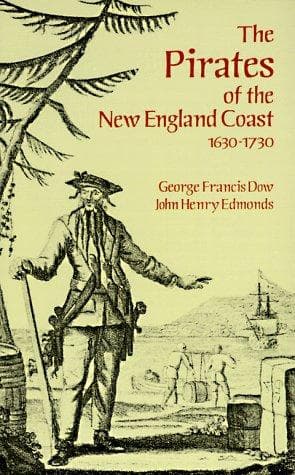
The pirates of the New England coast, 1630-1730 — John Shaqi
The pirates of the New England coast, 1630-1730Dow, George Francis
History
The pirates of the New England coast, 1630-1730
Dow, George Francis
New England -- History -- Colonial period, ca. 1600-1775; Pirates -- New England -- History
English merchants naturally wished to sell at high prices and to buy
colonial raw materials as low as possible and as they were unable to
supply a market for all that was produced, the colonies were at a
disadvantage in both buying and selling. By the Acts of Navigation
certain “enumerated articles” could be marketed only in England.
Lumber, salt provisions, grain, rum and other non-enumerated articles
might be sold within certain limits but must be transported in English
or plantation built vessels of which the owners and three-fourths of
the mariners were British subjects. Freight rates also advanced as
other nations, notably the Dutch, had previously enjoyed a good share
of the carrying trade.
The first Navigation Act was passed in 1647. It was renewed and its
provisions enlarged in 1651, 1660, 1663 and later. Before long it was
found that these attempts to monopolize the colonial markets resulted
in a natural resistance and smuggling began and also an extensive trade
with privateers and pirates who brought into all the smaller ports of
New England captured merchandise that was sold at prices below the
usual market values. Matters went from bad to worse and servants of the
Crown frequently combined with the colonists to evade the obnoxious
laws. Even the royal governors connived at what was going on. This
was particularly true in the colonies south of New England. Colonel
Fletcher, the governor of New York, commissioned numerous privateers
and received a fee, the equivalent of one hundred dollars per man.
These vessels when well away from local jurisdiction became pirates in
earnest and ravaged the Red Sea and brought home rich cargoes of East
India goods in which the members of the governor’s council obtained
their share. Hore, a famous privateer and pirate, was very successful
in this trade and Thomas Tew, another freebooter, divided his time
between New York, Newport and the Madagascar coast. He was on the
black list of the East India Company but Governor Fletcher entertained
him at his table and when the Lords of Trade remonstrated, the artful
governor replied that he wished to make Captain Tew a sober man and in
particular “to reclaime him from a vile habit of swearing,”[15] and as
for coming to his table, that was but a common hospitality.
Public-domain text, read in full here on John Shaqi.
Reviews
Reviews
No reviews yet
Be the first to share your thoughts on this work.
Join the Discussion
Join the discussion
Sign in to leave a comment or review.
Sign InorCreate an account