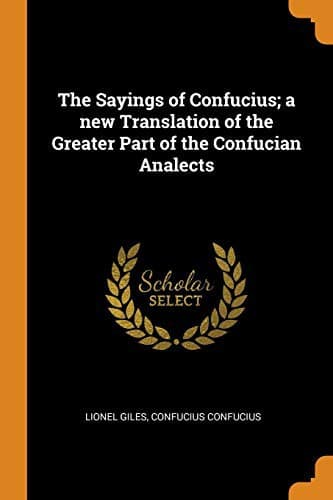
The Sayings of Confucius: A New Translation of the Greater Part of the Confucian AnalectsConfucius
ReligionEastern
The Sayings of Confucius: A New Translation of the Greater Part of the Confucian Analects
Confucius
Ethics -- China; Philosophy, Chinese
Tzŭ Chang asked how to attain exalted virtue. ... The Master said: Make
conscientiousness and truth your guiding principles, and thus pass on
to the cultivation of duty to your neighbour. This is exalted virtue.
The Master said: The nobler sort of man emphasises the good qualities
in others, and does not accentuate the bad. The inferior sort does the
reverse.
Tzŭ Chang asked: What must a man do in order to be considered
distinguished?--The Master said: What do you mean by the term
"distinguished"?--Tzŭ Chang replied: I mean one whose fame fills both
his own private circle and the State at large.--The Master said: That
is notoriety, not distinction. The man of true distinction is simple,
honest, and a lover of justice and duty. He weighs men's words, and
observes the expression of their faces.[25] He is anxious to put
himself below others. Such a one is truly distinguished in his private
and his public life. As to the man who is merely much talked about, he
puts on an appearance of charity and benevolence, but his actions belie
it. He is self-satisfied and has no misgivings. Neither in private nor
in public life does he achieve more than notoriety.
Tzŭ Kung asked a question about friendship. The Master said: Be
conscientious in speaking to your friend, but tactful in your efforts
to guide him aright. If these fail, stop. Do not court a personal
rebuff.
The Duke of Shê addressed Confucius, saying: We have an upright man
in our country. His father stole a sheep, and the son bore witness
against him.--In our country, Confucius replied, uprightness is
something different from this. A father hides the guilt of his son, and
a son hides the guilt of his father. It is in such conduct that true
uprightness is to be found.
Fan Ch‘ih asked a question about moral virtue. The Master said: In
private life, show self-respect; in the management of affairs, be
attentive and thorough; in your dealings with others, be honest and
conscientious. Never abandon these principles, even among savages.
The Master said: The nobler sort of man is accommodating but not
obsequious; the inferior sort is obsequious but not accommodating.
The nobler sort of man is easy to serve yet difficult to please. Who
seeks to please him in wrongful ways will not succeed. In exacting
service from others, he takes account of aptitudes and limitations.
The baser sort of man is difficult to serve yet easy to please. Who
seeks to please him in any wrongful way will assuredly succeed. And he
requires absolute perfection in those from whom he exacts service.
The nobler sort of man is dignified but not proud; the inferior man is
proud but not dignified.
Hsien said: To refrain from self-glorification, to subdue feelings of
resentment, to control selfish desire--may this be held to constitute
perfect virtue?--The Master said: These things may certainly be
considered hard to achieve, but I am not so sure that they constitute
perfect virtue.[26]
Public-domain text, read in full here on John Shaqi.
Reviews
Reviews
No reviews yet
Be the first to share your thoughts on this work.
Join the Discussion
Join the discussion
Sign in to leave a comment or review.
Sign InorCreate an account