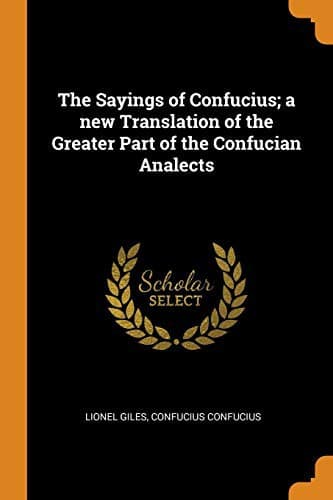
The Sayings of Confucius: A New Translation of the Greater Part of the Confucian AnalectsConfucius
ReligionEastern
The Sayings of Confucius: A New Translation of the Greater Part of the Confucian Analects
Confucius
Ethics -- China; Philosophy, Chinese
He would not eat meat that was clumsily cut, or served without its
proper sauce. Although there might be an abundance of meat, he never
let it exceed in quantity the vegetable food. In wine alone he laid
down for himself no particular limit, but he never reached the stage of
intoxication. He took ginger at every meal. He did not eat much. When
eating, he did not converse; when in bed, he did not speak. Even though
he had nothing but coarse rice and vegetable soup, he would always
reverently offer some to the ancestral spirits.
He would not sit on a mat[8] that was placed awry.
On one occasion, Chi K‘ang Tzŭ having sent him some medicine, he bowed
as he received it, saying: Not being familiar with this drug, I would
not venture to try it.
His stables having been burnt down, the Master on his return from the
Court said: Has any one been hurt?--He did not ask about the horses.[9]
If the Prince sent him a present of cooked meat, he would sit down to
taste it on a properly placed mat. If the Prince sent him a present of
raw meat, he would have it cooked and offer it in sacrifice. If the
Prince sent him a live animal, he would keep it alive.
When the Prince summoned him to his presence, he would go on foot
without waiting for his carriage.
If any of his friends died who was without a home or relations, he
would say: I will see to the funeral.
In bed, he did not lie like a corpse. In his home life, his manner was
not too formal.
At the sight of a person in mourning, though it might be an intimate
acquaintance, he would always look grave. On meeting an official in
uniform, or a blind man, however ragged, he would always show him some
mark of respect.
When a rich banquet was set before him, he would show his appreciation
in his looks, and rise to return thanks.
He would change countenance at a thunderclap or a sudden squall of wind.
When in his carriage, he would not look behind him, talk rapidly, or
point with his finger.[10]
Duke Ling of Wei asked Confucius about the disposition of troops
in warfare. Confucius answered: I know something about the arts of
peace,[11] but I have never studied the art of war. And on the morrow
he departed. But when he came to the State of Ch‘ên, he was cut off
from supplies,[12] and his followers were so enfeebled that they could
hardly stand. Tzŭ Lu indignantly sought the Master's presence, saying:
Is it for the princely man to feel the pinch of privation?--The Master
replied: Assuredly privation may come his way, but it is only the
baser type of man who under it grows demoralised and reckless.
Public-domain text, read in full here on John Shaqi.
Reviews
Reviews
No reviews yet
Be the first to share your thoughts on this work.
Join the Discussion
Join the discussion
Sign in to leave a comment or review.
Sign InorCreate an account