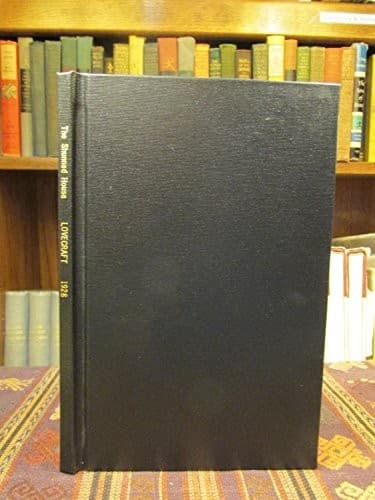
The Shunned HouseLovecraft, H. P. (Howard Phillips)
Science
The Shunned House
Lovecraft, H. P. (Howard Phillips)
Haunted houses -- Fiction; Horror tales, American
It may well be imagined how powerfully I was affected by the annals of
the Harrises. In this continuous record there seemed to me to brood a
persistent evil beyond anything in nature as I had known it; an evil
clearly connected with the house and not with the family. This
impression was confirmed by my uncle's less systematic array of
miscellaneous data--legends transcribed from servant gossip, cuttings
from the papers, copies of death certificates by fellow-physicians, and
the like. All of this material I cannot hope to give, for my uncle was a
tireless antiquarian and very deeply interested in the shunned house;
but I may refer to several dominant points which earn notice by their
recurrence through many reports from diverse sources. For example, the
servant gossip was practically unanimous in attributing to the fungous
and malodorous _cellar_ of the house a vast supremacy in evil influence.
There had been servants--Ann White especially--who would not use the
cellar kitchen, and at least three well-defined legends bore upon the
queer quasi-human or diabolic outlines assumed by tree-roots and patches
of mold in that region. These latter narratives interested me
profoundly, on account of what I had seen in my boyhood, but I felt that
most of the significance had in each case been largely obscured by
additions from the common stock of local ghost lore.
Ann White, with her Exeter superstition, had promulgated the most
extravagant and at the same time most consistent tale; alleging that
there must lie buried beneath the house one of those vampires--the dead
who retain their bodily form and live on the blood or breath of the
living--whose hideous legions send their preying shapes or spirits
abroad by night. To destroy a vampire one must, the grandmothers say,
exhume it and burn its heart, or at least drive a stake through that
organ; and Ann's dogged insistence on a search under the cellar had been
prominent in bringing about her discharge.
Her tales, however, commanded a wide audience, and were the more readily
accepted because the house indeed stood on land once used for burial
purposes. To me their interest depended less on this circumstance than
on the peculiarly appropriate way in which they dovetailed with certain
other things--the complaint of the departing servant Preserved Smith,
who had preceded Ann and never heard of her, that something "sucked his
breath" at night; the death-certificates of the fever victims of 1804,
issued by Doctor Chad Hopkins, and showing the four deceased persons all
unaccountably lacking in blood; and the obscure passages of poor Rhoby
Harris's ravings, where she complained of the sharp teeth of a
glassy-eyed, half-visible presence.
Public-domain text, read in full here on John Shaqi.
Reviews
Reviews
No reviews yet
Be the first to share your thoughts on this work.
Join the Discussion
Join the discussion
Sign in to leave a comment or review.
Sign InorCreate an account