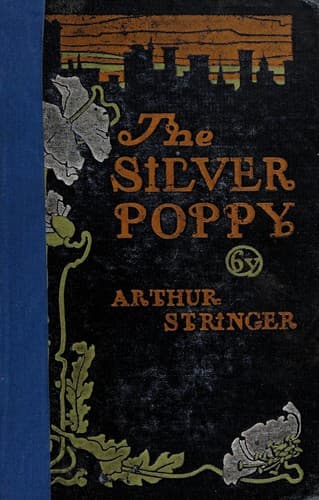
Authors -- Fiction; Canadian fiction; Impostors and imposture -- Fiction; New York (N.Y.) -- Social life and customs -- Fiction
So Hartley rewrote his article on Cordelia Vaughan. If there was any
little rift in the throbbing lute of his enthusiasm he solaced himself
with the thought that he was moving with the times, that he was growing
more politic, that being down on his luck had knocked some of the
sensitiveness out of him. He felt, too, that life of late had been
making him more humble. "You're so damned hopelessly honest!" his
editor had once disgustedly said of him. But now, as he wrote late into
the night, page after page, The Silver Poppy, though still unread by
him, paragraph by paragraph grew into a wonderful and still more
wonderful work, and Cordelia Vaughan, if not the openly accredited
George Eliot of America, was at least the apostle of that newer upward
movement which was to carry the American novel from the valley of mental
mediocrity to the clearest heights of the intellectual.
CHAPTER VII
THE APRIL OF LOVE
From the book to the battle we go,
And it comes that we travel afar
Unto marts that we do not know,
Where a Philistine people are.
JOHN HARTLEY, "The Market-Place."
"I'm not very big," she said wistfully; "I'm only one of those
little harbor-tugs that wear the liners of life into their
berths--for the port has its perils as well as the open sea."--"The
Silver Poppy."
Mrs. Spaulding usually breakfasted at half-past eleven, just four hours
later than her husband. That gentleman, indeed, had passed through half
a day of delirious Wall Street business before the plump and loosely
gowned figure of his belated spouse rustled languidly down to the
breakfast room.
Mrs. Spaulding--and at the breakfast hour above all other times--liked
to believe that she was a very ill-used and lonely woman. If a touch of
forlorn desolation did cling about her even days, it was a desolation
quite different to her husband's. Through her loneliness she still
groped for something tangible and material; he found little toward which
he cared to reach.
He had first made his money in wheat, at Indianapolis. Later he had
doubled a substantial fortune by prompt and shrewd investments in the
then half-prospected iron-mines of the Lake Superior district. He was
an honest and simple-minded man, with a straight-forward and workaday
bent of mind, who still fretted at idleness, and was still wordlessly
oppressed by the gaieties of life when they chanced to fall before the
hour of the dinner gong and the Tuxedo coat.
It was not until his fortune had crept up to the million mark that he
ventured to ask for the hand of the youthful and overpretty Lillian
Bunting, a belle in her time, and a young lady, it was said, with marked
social aspirations for the Middle West.
Public-domain text, read in full here on John Shaqi.
Reviews
Reviews
No reviews yet
Be the first to share your thoughts on this work.
Join the Discussion
Join the discussion
Sign in to leave a comment or review.
Sign InorCreate an account