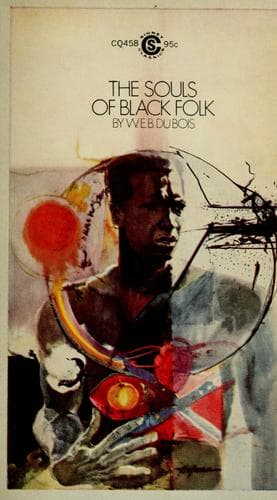
The Souls of Black FolkDu Bois, W. E. B. (William Edward Burghardt)
History
The Souls of Black Folk
Du Bois, W. E. B. (William Edward Burghardt)
African Americans
Evidently, Congress must soon legislate again on the hastily organized
Bureau, which had so quickly grown into wide significance and vast
possibilities. An institution such as that was well-nigh as difficult
to end as to begin. Early in 1866 Congress took up the matter, when
Senator Trumbull, of Illinois, introduced a bill to extend the Bureau
and enlarge its powers. This measure received, at the hands of
Congress, far more thorough discussion and attention than its
predecessor. The war cloud had thinned enough to allow a clearer
conception of the work of Emancipation. The champions of the bill
argued that the strengthening of the Freedmen’s Bureau was still a
military necessity; that it was needed for the proper carrying out of
the Thirteenth Amendment, and was a work of sheer justice to the
ex-slave, at a trifling cost to the government. The opponents of the
measure declared that the war was over, and the necessity for war
measures past; that the Bureau, by reason of its extraordinary powers,
was clearly unconstitutional in time of peace, and was destined to
irritate the South and pauperize the freedmen, at a final cost of
possibly hundreds of millions. These two arguments were unanswered, and
indeed unanswerable: the one that the extraordinary powers of the
Bureau threatened the civil rights of all citizens; and the other that
the government must have power to do what manifestly must be done, and
that present abandonment of the freedmen meant their practical
reenslavement. The bill which finally passed enlarged and made
permanent the Freedmen’s Bureau. It was promptly vetoed by President
Johnson as “unconstitutional,” “unnecessary,” and “extrajudicial,” and
failed of passage over the veto. Meantime, however, the breach between
Congress and the President began to broaden, and a modified form of the
lost bill was finally passed over the President’s second veto, July 16.
Public-domain text, read in full here on John Shaqi.
Reviews
Reviews
No reviews yet
Be the first to share your thoughts on this work.
Join the Discussion
Join the discussion
Sign in to leave a comment or review.
Sign InorCreate an account