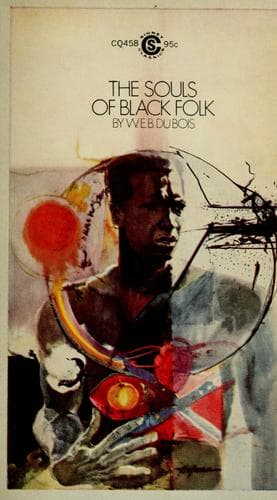
The Souls of Black FolkDu Bois, W. E. B. (William Edward Burghardt)
History
The Souls of Black Folk
Du Bois, W. E. B. (William Edward Burghardt)
African Americans
Then amid all crouched the freed slave, bewildered between friend and
foe. He had emerged from slavery,—not the worst slavery in the world,
not a slavery that made all life unbearable, rather a slavery that had
here and there something of kindliness, fidelity, and happiness,—but
withal slavery, which, so far as human aspiration and desert were
concerned, classed the black man and the ox together. And the Negro
knew full well that, whatever their deeper convictions may have been,
Southern men had fought with desperate energy to perpetuate this
slavery under which the black masses, with half-articulate thought, had
writhed and shivered. They welcomed freedom with a cry. They shrank
from the master who still strove for their chains; they fled to the
friends that had freed them, even though those friends stood ready to
use them as a club for driving the recalcitrant South back into
loyalty. So the cleft between the white and black South grew. Idle to
say it never should have been; it was as inevitable as its results were
pitiable. Curiously incongruous elements were left arrayed against each
other,—the North, the government, the carpet-bagger, and the slave,
here; and there, all the South that was white, whether gentleman or
vagabond, honest man or rascal, lawless murderer or martyr to duty.
Thus it is doubly difficult to write of this period calmly, so intense
was the feeling, so mighty the human passions that swayed and blinded
men. Amid it all, two figures ever stand to typify that day to coming
ages,—the one, a gray-haired gentleman, whose fathers had quit
themselves like men, whose sons lay in nameless graves; who bowed to
the evil of slavery because its abolition threatened untold ill to all;
who stood at last, in the evening of life, a blighted, ruined form,
with hate in his eyes;—and the other, a form hovering dark and
mother-like, her awful face black with the mists of centuries, had
aforetime quailed at that white master’s command, had bent in love over
the cradles of his sons and daughters, and closed in death the sunken
eyes of his wife,—aye, too, at his behest had laid herself low to his
lust, and borne a tawny man-child to the world, only to see her dark
boy’s limbs scattered to the winds by midnight marauders riding after
“damned Niggers.” These were the saddest sights of that woful day; and
no man clasped the hands of these two passing figures of the
present-past; but, hating, they went to their long home, and, hating,
their children’s children live today.
Public-domain text, read in full here on John Shaqi.
Reviews
Reviews
No reviews yet
Be the first to share your thoughts on this work.
Join the Discussion
Join the discussion
Sign in to leave a comment or review.
Sign InorCreate an account