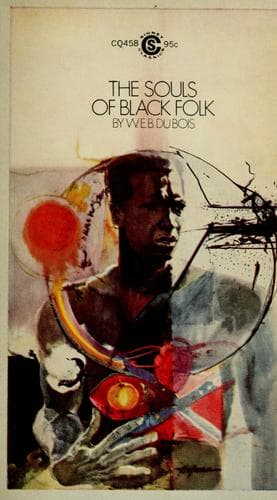
The Souls of Black FolkDu Bois, W. E. B. (William Edward Burghardt)
History
The Souls of Black Folk
Du Bois, W. E. B. (William Edward Burghardt)
African Americans
Here, then, was the field of work for the Freedmen’s Bureau; and since,
with some hesitation, it was continued by the act of 1868 until 1869,
let us look upon four years of its work as a whole. There were, in
1868, nine hundred Bureau officials scattered from Washington to Texas,
ruling, directly and indirectly, many millions of men. The deeds of
these rulers fall mainly under seven heads: the relief of physical
suffering, the overseeing of the beginnings of free labor, the buying
and selling of land, the establishment of schools, the paying of
bounties, the administration of justice, and the financiering of all
these activities.
Up to June, 1869, over half a million patients had been treated by
Bureau physicians and surgeons, and sixty hospitals and asylums had
been in operation. In fifty months twenty-one million free rations were
distributed at a cost of over four million dollars. Next came the
difficult question of labor. First, thirty thousand black men were
transported from the refuges and relief stations back to the farms,
back to the critical trial of a new way of working. Plain instructions
went out from Washington: the laborers must be free to choose their
employers, no fixed rate of wages was prescribed, and there was to be
no peonage or forced labor. So far, so good; but where local agents
differed _toto cælo_ in capacity and character, where the _personnel_
was continually changing, the outcome was necessarily varied. The
largest element of success lay in the fact that the majority of the
freedmen were willing, even eager, to work. So labor contracts were
written,—fifty thousand in a single State,—laborers advised, wages
guaranteed, and employers supplied. In truth, the organization became a
vast labor bureau,—not perfect, indeed, notably defective here and
there, but on the whole successful beyond the dreams of thoughtful men.
The two great obstacles which confronted the officials were the tyrant
and the idler,—the slaveholder who was determined to perpetuate slavery
under another name; and, the freedman who regarded freedom as perpetual
rest,—the Devil and the Deep Sea.
Public-domain text, read in full here on John Shaqi.
Reviews
Reviews
No reviews yet
Be the first to share your thoughts on this work.
Join the Discussion
Join the discussion
Sign in to leave a comment or review.
Sign InorCreate an account