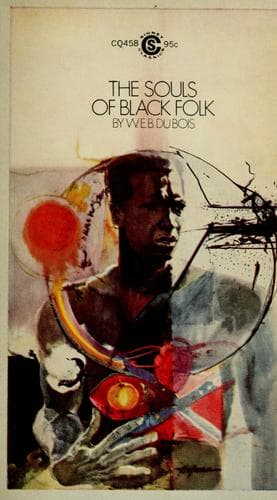
The Souls of Black FolkDu Bois, W. E. B. (William Edward Burghardt)
History
The Souls of Black Folk
Du Bois, W. E. B. (William Edward Burghardt)
African Americans
In the work of establishing the Negroes as peasant proprietors, the
Bureau was from the first handicapped and at last absolutely checked.
Something was done, and larger things were planned; abandoned lands
were leased so long as they remained in the hands of the Bureau, and a
total revenue of nearly half a million dollars derived from black
tenants. Some other lands to which the nation had gained title were
sold on easy terms, and public lands were opened for settlement to the
very few freedmen who had tools and capital. But the vision of “forty
acres and a mule”—the righteous and reasonable ambition to become a
landholder, which the nation had all but categorically promised the
freedmen—was destined in most cases to bitter disappointment. And those
men of marvellous hindsight who are today seeking to preach the Negro
back to the present peonage of the soil know well, or ought to know,
that the opportunity of binding the Negro peasant willingly to the soil
was lost on that day when the Commissioner of the Freedmen’s Bureau had
to go to South Carolina and tell the weeping freedmen, after their
years of toil, that their land was not theirs, that there was a
mistake—somewhere. If by 1874 the Georgia Negro alone owned three
hundred and fifty thousand acres of land, it was by grace of his thrift
rather than by bounty of the government.
The greatest success of the Freedmen’s Bureau lay in the planting of
the free school among Negroes, and the idea of free elementary
education among all classes in the South. It not only called the
school-mistresses through the benevolent agencies and built them
schoolhouses, but it helped discover and support such apostles of human
culture as Edmund Ware, Samuel Armstrong, and Erastus Cravath. The
opposition to Negro education in the South was at first bitter, and
showed itself in ashes, insult, and blood; for the South believed an
educated Negro to be a dangerous Negro. And the South was not wholly
wrong; for education among all kinds of men always has had, and always
will have, an element of danger and revolution, of dissatisfaction and
discontent. Nevertheless, men strive to know. Perhaps some inkling of
this paradox, even in the unquiet days of the Bureau, helped the
bayonets allay an opposition to human training which still to-day lies
smouldering in the South, but not flaming. Fisk, Atlanta, Howard, and
Hampton were founded in these days, and six million dollars were
expended for educational work, seven hundred and fifty thousand dollars
of which the freedmen themselves gave of their poverty.
Public-domain text, read in full here on John Shaqi.
Reviews
Reviews
No reviews yet
Be the first to share your thoughts on this work.
Join the Discussion
Join the discussion
Sign in to leave a comment or review.
Sign InorCreate an account