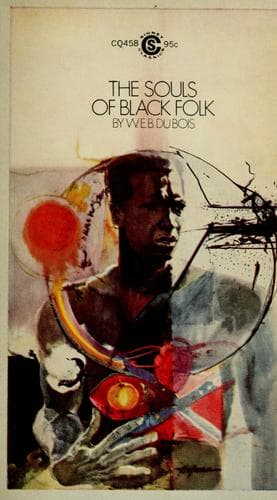
The Souls of Black FolkDu Bois, W. E. B. (William Edward Burghardt)
History
The Souls of Black Folk
Du Bois, W. E. B. (William Edward Burghardt)
African Americans
Among his own people, however, Mr. Washington has encountered the
strongest and most lasting opposition, amounting at times to
bitterness, and even today continuing strong and insistent even though
largely silenced in outward expression by the public opinion of the
nation. Some of this opposition is, of course, mere envy; the
disappointment of displaced demagogues and the spite of narrow minds.
But aside from this, there is among educated and thoughtful colored men
in all parts of the land a feeling of deep regret, sorrow, and
apprehension at the wide currency and ascendancy which some of Mr.
Washington’s theories have gained. These same men admire his sincerity
of purpose, and are willing to forgive much to honest endeavor which is
doing something worth the doing. They cooperate with Mr. Washington as
far as they conscientiously can; and, indeed, it is no ordinary tribute
to this man’s tact and power that, steering as he must between so many
diverse interests and opinions, he so largely retains the respect of
all.
But the hushing of the criticism of honest opponents is a dangerous
thing. It leads some of the best of the critics to unfortunate silence
and paralysis of effort, and others to burst into speech so
passionately and intemperately as to lose listeners. Honest and earnest
criticism from those whose interests are most nearly touched,—criticism
of writers by readers,—this is the soul of democracy and the safeguard
of modern society. If the best of the American Negroes receive by outer
pressure a leader whom they had not recognized before, manifestly there
is here a certain palpable gain. Yet there is also irreparable loss,—a
loss of that peculiarly valuable education which a group receives when
by search and criticism it finds and commissions its own leaders. The
way in which this is done is at once the most elementary and the nicest
problem of social growth. History is but the record of such
group-leadership; and yet how infinitely changeful is its type and
character! And of all types and kinds, what can be more instructive
than the leadership of a group within a group?—that curious double
movement where real progress may be negative and actual advance be
relative retrogression. All this is the social student’s inspiration
and despair.
Public-domain text, read in full here on John Shaqi.
Reviews
Reviews
No reviews yet
Be the first to share your thoughts on this work.
Join the Discussion
Join the discussion
Sign in to leave a comment or review.
Sign InorCreate an account