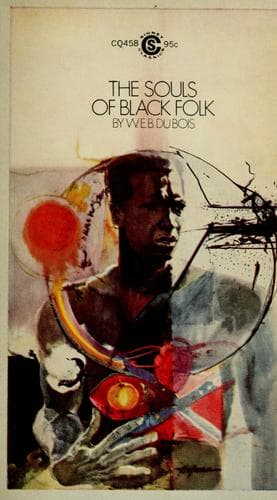
The Souls of Black FolkDu Bois, W. E. B. (William Edward Burghardt)
History
The Souls of Black Folk
Du Bois, W. E. B. (William Edward Burghardt)
African Americans
Now in the past the American Negro has had instructive experience in
the choosing of group leaders, founding thus a peculiar dynasty which
in the light of present conditions is worth while studying. When sticks
and stones and beasts form the sole environment of a people, their
attitude is largely one of determined opposition to and conquest of
natural forces. But when to earth and brute is added an environment of
men and ideas, then the attitude of the imprisoned group may take three
main forms,—a feeling of revolt and revenge; an attempt to adjust all
thought and action to the will of the greater group; or, finally, a
determined effort at self-realization and self-development despite
environing opinion. The influence of all of these attitudes at various
times can be traced in the history of the American Negro, and in the
evolution of his successive leaders.
Before 1750, while the fire of African freedom still burned in the
veins of the slaves, there was in all leadership or attempted
leadership but the one motive of revolt and revenge,—typified in the
terrible Maroons, the Danish blacks, and Cato of Stono, and veiling all
the Americas in fear of insurrection. The liberalizing tendencies of
the latter half of the eighteenth century brought, along with kindlier
relations between black and white, thoughts of ultimate adjustment and
assimilation. Such aspiration was especially voiced in the earnest
songs of Phyllis, in the martyrdom of Attucks, the fighting of Salem
and Poor, the intellectual accomplishments of Banneker and Derham, and
the political demands of the Cuffes.
Stern financial and social stress after the war cooled much of the
previous humanitarian ardor. The disappointment and impatience of the
Negroes at the persistence of slavery and serfdom voiced itself in two
movements. The slaves in the South, aroused undoubtedly by vague rumors
of the Haytian revolt, made three fierce attempts at insurrection,—in
1800 under Gabriel in Virginia, in 1822 under Vesey in Carolina, and in
1831 again in Virginia under the terrible Nat Turner. In the Free
States, on the other hand, a new and curious attempt at
self-development was made. In Philadelphia and New York
color-prescription led to a withdrawal of Negro communicants from white
churches and the formation of a peculiar socio-religious institution
among the Negroes known as the African Church,—an organization still
living and controlling in its various branches over a million of men.
Public-domain text, read in full here on John Shaqi.
Reviews
Reviews
No reviews yet
Be the first to share your thoughts on this work.
Join the Discussion
Join the discussion
Sign in to leave a comment or review.
Sign InorCreate an account