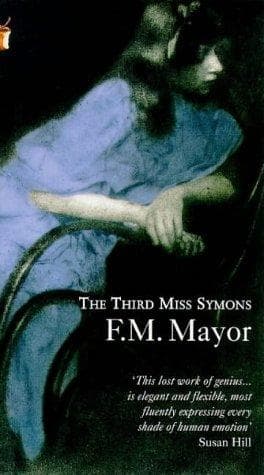
The Third Miss SymonsMayor, F. M. (Flora Macdonald)
General
The Third Miss Symons
Mayor, F. M. (Flora Macdonald)
England -- Social life and customs -- 19th century -- Fiction; Single women -- Fiction
She had been snarling with two or three of her classmates over the
afternoon preparation, and had flounced off in a rage by herself. She
felt a touch on her arm, and turning round saw Emily Mence, a rather
uncouth, clever girl, whom she hardly knew.
"I just came to say, Why _are_ you such an idiot?"
"Me?"
"Yes, why do you lose your temper like that? All the girls are laughing
at you; they always do when you get cross."
"Then I think it's horrid of them."
"Well, you can't be surprised; of course people won't stand you, if
you're so cross."
"Won't they?" said Henrietta. "And the one thing I want in the world is
to be liked."
"Do you really? Fancy wanting these girls to like you; they're such
silly little things."
"I shouldn't mind that if only they liked me."
"_I_ like you," said Emily. "Do you remember you said Charles I.
deserved to have his head cut off because he was so stupid, and all the
others gushed over him?"
"Did I?"
"I don't like the other girls to laugh at you; that's why I thought I
would tell you."
They walked up and down the path and talked about Charles I. Here there
seemed the beginning of a friendship, but it was nipped in the bud, for
Emily left unexpectedly at the end of the term. Henrietta received no
further overtures from any of the girls.
Emily's words had made an impression however, and for six weeks
Henrietta took a great deal of pains with her temper. For this
concession on her part she expected Providence to give her an immediate
and abundant measure of popularity. It did not. The Symons family had
not the friend-making quality--a capricious quality, which withholds
itself from those who have the greatest desire, and even apparently the
best right, to possess it. The girls were kind, kinder, on the whole,
than the grown-up world, and they were perfectly willing to give her
their left arms round the garden, but their right would be occupied by
their real friends, to whom they would be telling their experiences, and
Henrietta would only come in for a, "Wasn't it sickening, Etta?" now
and then. She was disappointed, and she relaxed her efforts. She had
missed the excitement of saying disagreeable things. The day had become
chilly without them. By the middle of the term she was as disagreeable
as ever.
Public-domain text, read in full here on John Shaqi.
Reviews
Reviews
No reviews yet
Be the first to share your thoughts on this work.
Join the Discussion
Join the discussion
Sign in to leave a comment or review.
Sign InorCreate an account