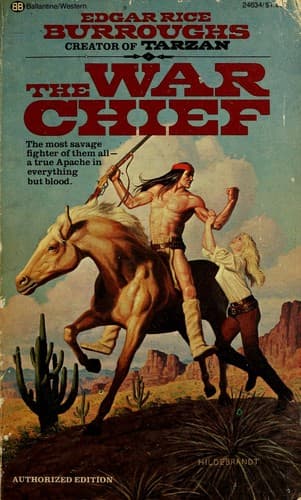
Apache Indians -- Fiction; Historical fiction; Western stories
Little Ish-kay-nay watched her, for she loved tortillas and wished to
learn how to make them. Ish-kay-nay was eleven, very dirty, almost naked
and entirely lovely. Her lithe young body approximated perfection as
closely as may anything mortal. Her tangled hair fell over a
mischievous, beautiful face from which laughing eyes, serious now,
watched intently every move of the Yuma. The long, black lashes and the
arched brows had not yet been plucked, for Ish-kay-nay still had three
years of childhood before her. Her name means _boy_, and to see her romp
and play was all that was necessary to make one understand why she was
given that name.
Night had come. The sacrificial hoddentin had been offered to the
evening and to the moon. The dancing, the feasting, the drinking
commenced. Among the dancers moved the medicine men, the izze-nantan of
the Apaches, tossing hoddentin, mumbling gibberish, whirling their
tzi-ditindes to frighten away the evil spirits.
That night the braves got gloriously drunk. Perhaps the medicine of the
izze-nantan was good medicine, for the Mexican soldiers who had come up
out of the south to raid them made camp a few miles away instead of
attacking that night. Had they done so the flower of the six tribes of
the Apaches would have been wiped out, for even Cochise, the war chief,
lay unconscious in the grip of the tizwin.
The following day the braves were tired and cross. They lay around the
camp and there was much quarrelling. Cochise was very sick.
Go-yat-thlay, Victorio, Juh, Hash-ka-ai-la, Chief of the White Mountain
Apaches, and Co-si-to, Chief of the Chi-e-a-hen, foregathered and
discussed the wisdom of immediately separating the tribes before there
was an open break. Well they knew their savage followers. Not for long
could the tribes associate without squabbles, brawls and bloody duels.
Tomorrow, at the latest, they decided, each tribe would take up its
trail to its own hunting grounds.
Shoz-Dijiji, tiring of play with the other children, took his bow and
arrows and his lance and started up the ridge above camp. Today he was a
scout under orders from Cochise. The enemy was thought to be close and
because Shoz-Dijiji had the eyes of itza-chu, the eagle, and was as
brave as shoz-litzogue, the yellow bear, Cochise had sent him out alone
to discover the whereabouts of the foe. Thus dreamed Shoz-Dijiji as he
moved silently and swiftly up the steep mountain, taking advantage of
every cover, noiseless, invisible. Thus learned Shoz-Dijiji the ways of
his people—the ways of the Apache.
Public-domain text, read in full here on John Shaqi.
Reviews
Reviews
No reviews yet
Be the first to share your thoughts on this work.
Join the Discussion
Join the discussion
Sign in to leave a comment or review.
Sign InorCreate an account