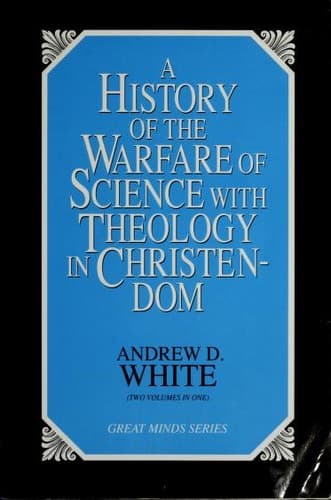
Religion and science; Religion and science -- History; Science -- History
First among the distinguished men who, in that century, laid
foundations for modern science, was Albert of Bollstadt, better known
as Albert the Great, the most renowned scholar of Germany.
Fettered though he was by the absurd methods of his time, led astray
as he was by the scholastic spirit, he had conceived ideas of better
methods and aims. His eye pierces the mists of scholasticism; he sees
the light, and draws the world toward it. He stands among the great
pioneers of modern physical and natural science. He aids in giving
foundations to botany and chemistry, and Humboldt finds in his works
the germ of the comprehensive science of physical geography.[87]
The conscience of the time, acting, as it supposed, in defense of
religion, brought out a missile which it hurled with deadly effect. You
see those mediæval scientific battle-fields strewed with such: it was
the charge of sorcery, of unlawful compact with the devil.
This missile was effective. You find it used against every great
investigator of Nature in those times and for centuries after. The list
of great men charged with magic, as given by Naudé, is astounding. It
includes every man of real mark, and the most thoughtful of the popes,
Sylvester II. (Gerbert), stands in the midst of them. It seemed to be
the received idea that, as soon as a man conceived a wish to study the
works of God, his first step must be a league with the devil.[88]
This missile was hurled against Albert. He was condemned by
the authorities of the Dominican order, subjected to suspicion
and indignity, and only escaped persecution by yielding to the
ecclesiastical spirit of the time, and working mainly in theological
channels by scholastic methods. It was a sad loss to the earth; and
certainly, of all organizations that have reason to lament the pressure
of those ecclesiastical forces which turned Albert the Great from the
path of experimental philosophy, foremost of all in regret should be
the Christian Church, and especially the Roman branch of it. Had the
Church of the thirteenth century been so full of faith as to accept the
truths in natural science brought by Albert and his compeers, and to
have encouraged their growth, this faith and this encouragement would
to this day have formed the greatest argument for proving the Church
directly under Divine guidance; they would have been the brightest
jewels in her crown. The loss to the Church, by this want of faith and
courage, has proved, in the long-run, even greater than the loss to
science.
The next great man of that age whom the theological and ecclesiastical
forces of the time turn from the right path is Vincent of Beauvais.
Public-domain text, read in full here on John Shaqi.
Reviews
Reviews
No reviews yet
Be the first to share your thoughts on this work.
Join the Discussion
Join the discussion
Sign in to leave a comment or review.
Sign InorCreate an account