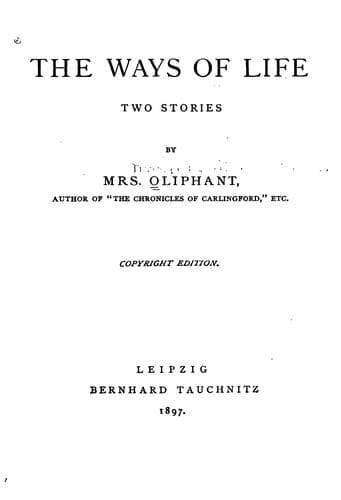
The Ways of Life: Two StoriesOliphant, Mrs. (Margaret)
General
The Ways of Life: Two Stories
Oliphant, Mrs. (Margaret)
Fiction
I have often felt while sick or sorry, and craving a little rational
entertainment and distraction--which, in my opinion, it is one of the
highest aims of the novelist to supply--that the everlasting treatment
of the primary problem of youth, as if there was no other in the world,
was at once fatiguing to the reader and injudicious on the part of the
writer. When we want to be taken out of ourselves by the lively
presentment of other people’s difficulties and troubles, it is tiresome
to be always turned back to the disappointments or the successes of
eighteen, or--in deference to the different standard of age held to be
interesting by this generation--let us say five-and-twenty. I do not in
the least deny the great advantages of that episode in life for
treatment in fiction. It is almost the only episode which comes to a
distinct, while it may be, at the same time, a cheerful, end; and its
popularity is obvious: and it is a subject which women, who form the
bulk of readers of fiction, are rarely tired of; all of which points are
important. The elder writers made it the chief thread in the web of
fancy, but surrounded the young people with plenty of fathers and
mothers, neighbours and servants, doctors, clergymen, lawyers, etc., and
all the paraphernalia of common life. But I weary of the two by
themselves, or almost by themselves, as happens so often; and if the
artifices, with which we are so familiar, by which they are brought
together, are fatiguing, how much more so are those uglier artifices by
which, being linked together, they are torn asunder again, and a fierce
duel of what is called passion is set before us against the lurid skies
as the chief object of interest in the world? Novelists make a great
moan when they are hindered in the working out of such subjects, and cry
loudly to heaven and earth against the limited intelligences which
object to them, the British matron, the young person, and so forth. It
seems to me that they would be more reasonable if they complained of the
monotonous demand for a love-story which crushes out of court all the
rest of life--so infinite in variety, so full of complication, so
humorous, so mysterious, so natural and true.
Public-domain text, read in full here on John Shaqi.
Reviews
Reviews
No reviews yet
Be the first to share your thoughts on this work.
Join the Discussion
Join the discussion
Sign in to leave a comment or review.
Sign InorCreate an account