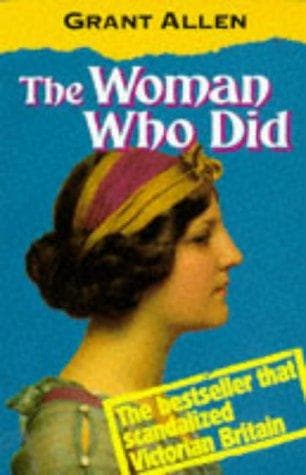
Domestic fiction; England -- Fiction; Feminists -- Fiction; Mothers and daughters -- Fiction; Women -- England -- Fiction
“As you will,” she answered with a woman’s meekness. “But remember,
Alan, what I say I mean; on these terms it shall be, and upon none
others. Brave women before me have tried for a while to act on their
own responsibility, for the good of their sex; but never of their own
free will from the very beginning. They have avoided marriage, not
because they thought it a shame and a surrender, a treason to their
sex, a base yielding to the unjust pretensions of men, but because
there existed at the time some obstacle in their way in the shape of
the vested interest of some other woman. When Mary Godwin chose to mate
herself with Shelley, she took her good name in her hands;—but still
there was Harriet. As soon as Harriet was dead, Mary showed she had no
deep principle of action involved, by marrying Shelley. When George
Eliot chose to pass her life with Lewes on terms of equal freedom, she
defied the man-made law; but still, there was his wife to prevent the
possibility of a legalised union. As soon as Lewes was dead, George
Eliot showed she had no principle involved, by marrying another man.
Now, _I_ have the rare chance of acting otherwise; I can show the world
from the very first that I act from principle, and from principle only.
I can say to it in effect, ‘See, here is the man of my choice, the man
I love, truly, and purely, the man any one of you would willingly have
seen offering himself in lawful marriage to your own daughters. If I
would, I might go the beaten way you prescribe, and marry him legally.
But of my own free will I disdain that degradation; I choose rather to
be free. No fear of your scorn, no dread of your bigotry, no shrinking
at your cruelty, shall prevent me from following the thorny path I know
to be the right one. I seek no temporal end. I will not prove false to
the future of my kind in order to protect myself from your hateful
indignities. I know on what vile foundations your temple of wedlock is
based and built, what pitiable victims languish and die in its
sickening vaults; and I will not consent to enter it. Here, of my own
free will, I take my stand for the right, and refuse your sanctions! No
woman that I know of has ever yet done that. Other women have fallen,
as men choose to put it in their odious dialect; no other has
voluntarily risen as I propose to do.’” She paused a moment for breath.
“Now you know how I feel,” she continued, looking straight into his
eyes. “Say no more at present; it is wisest so. But go home and think
it out, and talk it over with me tomorrow.”
CHAPTER IV
Public-domain text, read in full here on John Shaqi.
Reviews
Reviews
No reviews yet
Be the first to share your thoughts on this work.
Join the Discussion
Join the discussion
Sign in to leave a comment or review.
Sign InorCreate an account