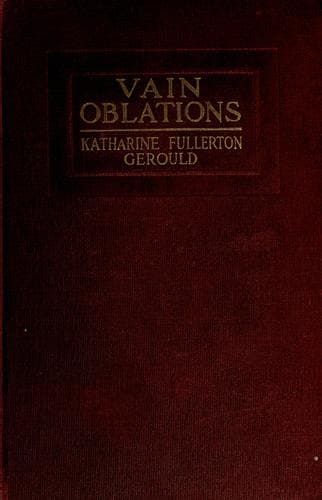
American fiction -- 20th century; Short stories, American
It must have taken me, for my broken, difficult account, half an hour.
Not once in that time was I interrupted. She seemed hardly to breathe. I
told her to the very date and hour of his execution. I could give her no
comfort; only, at best, bald facts. For what exhibition of self-loathing
or self-pity I had been prepared I do not know; but surely for some. I
had been bracing myself throughout for any kind of scene. No scene of
any kind occurred. She was hard and mute as stone. I could have dealt
better, when at last I stopped, with hysterics than with that figure
before me--tense, exhausted, terrible. I found myself praying for her
tears. But none came.
At last I rose--hoping by the sudden gesture to break her trance. Her
eyes followed me. “Terrible--terrible--beyond anything I ever dreamed.”
I caught the whispered words. I took the chance for pity; found
myself--though I detested the woman as never before--wanting to comfort
her.
“He never appealed,” I reminded her. “Perhaps he was glad to die.” It
sounded weak and strange; but who could tell what words would reach that
weak, strange heart?
I stood before her, more perplexed than at any other moment of my life.
At last she opened her eyes and spoke. “Leave me. And do not tell your
sister who I am. I shall pull myself together by dinnertime. Go!” She
just lifted her hand, then closed her eyes again.
I went out, and, stumbling across a Chinese servant, got him to show me
my room.
Of what use would it be to recall, after all the years, what I felt and
thought during the next hours? I did not try to send Letitia to Mrs.
Upcher. Letitia would have been of no use, even if she had consented to
go. It was sheerest wisdom to obey Rachel Upcher, and not to tell. But I
had a spasm of real terror when I thought of her “pulling herself
together” in her lonely chamber. I listened for a scream, a pistol-shot.
It did not seem to me that a woman could hear news like that which it
had been my tragic luck to give, without some according show of emotion.
Yet a little later I asked myself in good faith what show could ever fit
that situation. What speech, what gesture, in that hour, would have been
adequate? The dangerous days, in point of fact, would probably come
later. I thought more of her, in those two hours, than of Filippo.
Though she might well, from all the evidence, have hated him quite
honestly, hers was the ironic destiny that is harder to bear than mere
martyrdom. No death had ever been more accidental, more irrelevant, more
preventable than Filippo’s. One fortnight sooner, she could have turned
back the wheel that had now come full circle. That was to be her Hell,
and--well, having descended into it in those two hours, I was glad
enough to mount once more into the free air.
Public-domain text, read in full here on John Shaqi.
Reviews
Reviews
No reviews yet
Be the first to share your thoughts on this work.
Join the Discussion
Join the discussion
Sign in to leave a comment or review.
Sign InorCreate an account