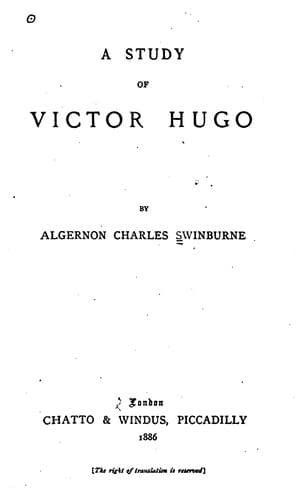
Hugo, Victor, 1802-1885 -- Criticism and interpretation
of English journalists as that of a practical worshipper of their great
god Compromise, and a professional enemy of all tyranny or villainy that
was not serviceable and obsequious to his Church)--to study, I say, the
speeches delivered by Victor Hugo in the Legislative Assembly during a
space of exactly two years and eight days. The first of these speeches
dealt with the question of what in England we call pauperism--with the
possibility, the necessity, and the duty of its immediate relief and its
ultimate removal: the second, with the infamous and inexpiable crime
which diverted against the Roman republic an expedition sent out under
the plea of protecting Rome against the atrocities of Austrian triumph.
A double-faced and double-dealing law, which under the name or the mask
of free education aimed at securing for clerical instruction a monopoly
of public support and national encouragement, was exposed and denounced
by Hugo in a speech which insisted no less earnestly and eloquently on
the spiritual duty and the spiritual necessity of faith and hope than on
the practical necessity and duty of vigilant resistance to priestly
pretension, and vigilant exposure of ecclesiastical hypocrisy and
reactionary intrigue. Against "the dry guillotine" of imprisonment in a
tropical climate added to transportation for political offences, the
whole eloquence of a heart as great as his genius was poured forth in
fervor of indignation and pity, of passion and reason combined. The next
trick of the infamous game played by the conspirators against the
commonwealth, who were now beginning to show their hand, was the
mutilation of the suffrage. To this again Victor Hugo opposed the same
steadfast front of earnest and rational resistance; and yet again to the
sidelong attack of the same political gang on the existing freedom of
the press. A year and eight days elapsed before the delivery of his next
and last great speech in the Assembly which he would fain have saved
from the shame and ruin then hard at hand--the harvest of its own
unprincipled infatuation. The fruit of conspiracy, long manured with
fraud and falsehood and all the furtive impurities of intrigue, was now
ripe even to rottenness, and ready to fall into the hands already
stretched towards it--into the lips yet open to protest that no one--the
accuser himself must know it--that no one was dreaming of a second
French empire. All that reason and indignation, eloquence and argument,
loyalty and sincerity could do to save the commonwealth from destruction
and the country from disgrace, was done: how utterly in vain is matter
of history--of one among the darkest pages in the roll of its criminal
records. The voice of truth and honor was roared and hooted down by the
faction whose tactics would have discredited a den of less dishonest and
more barefaced thieves; the stroke of state was ready for striking; and
the orator's next address was the utterance of an exile.
Public-domain text, read in full here on John Shaqi.
Reviews
Reviews
No reviews yet
Be the first to share your thoughts on this work.
Join the Discussion
Join the discussion
Sign in to leave a comment or review.
Sign InorCreate an account