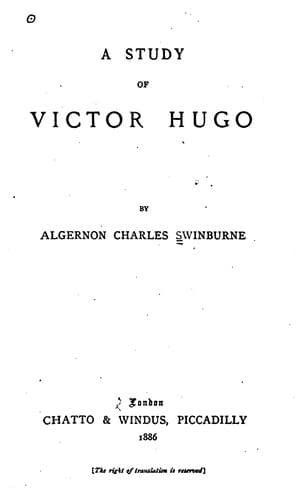
Hugo, Victor, 1802-1885 -- Criticism and interpretation
There is not, it seems to me, in all this marvelous life, to which well
nigh every year brought its additional aureole of glory, a point more
important, a date more memorable, than the publication of the
_Châtiments._ Between the prologue _Night_ and the epilogue _Light_ the
ninety-eight poems that roll and break and lighten and thunder like
waves of a visible sea fulfill the choir of their crescent and refluent
harmonies with hardly less depth and change and strength of music, with
no less living force and with no less passionate unity, than the waters
on whose shores they were written. Two poems, the third and the sixth,
in the first of the seven books into which the collection is divided,
may be taken as immediate and sufficient instances of the two different
keys in which the entire book is written; of the two styles, one
bitterly and keenly realistic, keeping scornfully close to shameful
fact--one higher in flight and wider in range of outlook, soaring
strongly to the very summits of lyric passion--which alternate in
terrible and sublime antiphony throughout the living pages of this
imperishable record. A second Juvenal might have drawn for us with not
less of angry fidelity and superb disgust the ludicrous and loathsome
inmates of the den infested by holy hirelings of the clerical press; no
Roman satirist could have sung, no Roman lyrist could have thundered,
such a poem as that which has blasted for ever the name and the memory
of the prostitute archbishop Sibour. The poniard of the priest who
struck him dead at the altar he had desecrated struck a blow less deep
and deadly than had been dealt already on the renegade pander of a far
more infamous assassin. The next poem is a notable and remarkable
example of the fusion sometimes accomplished--or, if this be thought a
phrase too strong for accuracy, of the middle note sometimes touched, of
the middle way sometimes taken--between the purely lyric and the purely
satiric style or method. But it would be necessary to dwell on every
poem, to pause at every page, if adequate justice were to be done to
this or indeed to any of the volumes of verse published from this time
forth by Victor Hugo. I will therefore, not without serious diffidence,
venture once more to indicate by selection such poems as seem to me most
especially notable among the greatest even of these. In the first book,
besides the three already mentioned, I take for examples the solemn
utterance of indignant mourning addressed to the murdered dead of the
fourth of December; the ringing song in praise of art which ends in a
note of noble menace; the scornful song that follows it, with a burden
so majestic in its variations; the fearful and faithful "map of Europe"
in 1852, with its closing word of witness for prophetic hope and faith;
and the simple perfection of pathos in the song of the little forsaken
birds and lambs and children. In the second book, the appeal "To the
Public-domain text, read in full here on John Shaqi.
Reviews
Reviews
No reviews yet
Be the first to share your thoughts on this work.
Join the Discussion
Join the discussion
Sign in to leave a comment or review.
Sign InorCreate an account