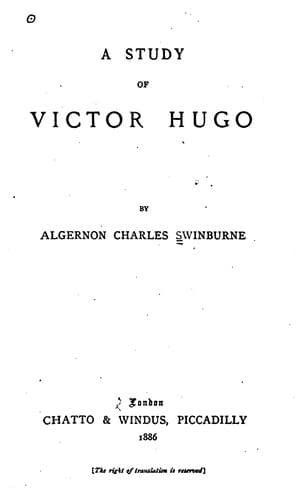
Hugo, Victor, 1802-1885 -- Criticism and interpretation
The first of all to see the light appeared in a magazine which has long
ago collapsed under the influence of far other writers than the greatest
of the century. Every word of the thirty-eight lines which compose _La
Sieste de Jeanne_--if any speech or memory of man endure so long--will
be treasured as tenderly by generations as remote from the writer's as
now treasure up with thankful wonder and reverence every golden fragment
and jeweled spar from the wreck of Simonides or of Sappho. It has all
the subtle tenderness which invests the immortal song of Danaë; and the
union of perfect grace with living passion, as it were the suffusion of
human flesh and blood with heavenly breath and fire, brings back once
again upon our thoughts the name which is above every name in lyric
song. There is not one line which could have been written and set where
it stands by the hand of any lesser than the greatest among poets. For
once even the high priest and even the high priestess of baby-worship
who have made their names immortal among our own by this especial and
most gracious attribute--even William Blake and Christina Rossetti for
once are distanced in the race of song, on their own sweet ground,
across their own peculiar field of Paradise. Not even in the pastures
that heard his pipe keep time to the "Songs of Innocence," or on the
"wet bird-haunted English lawn" set ringing as from nursery windows at
summer sunrise to the faultless joyous music and pealing birdlike
laughter of her divine "Sing-Song," has there sounded quite such a note
as this from the heaven of heavens in which little babies are adored by
great poets, the frailest by the most potent of divine and human kind.
And above the work in this lovely line of all poets in all time but one,
there sits and smiles eternally the adorable baby who helps us for ever
to forget all passing perversities of Christianized socialism or bastard
Cæsarism which disfigure and diminish the pure proportions and the
noble charm of "Aurora Leigh." Even the most memorable children born to
art in Florence, begotten upon stone or canvas by Andrea del Sarto or by
Luca della Robbia's very self, must yield to that one the crown of
sinless empire and the palm of powerless godhead which attest the
natural mystery of their omnipotence; and which haply may help to
explain why no accumulated abominations of cruelty and absurdity which
inlay the record of its history and incrust the fabric of its creed can
utterly corrode the natal beauty or corrupt the primal charm of a faith
which centres at its opening round the worship of a new-born child.
Public-domain text, read in full here on John Shaqi.
Reviews
Reviews
No reviews yet
Be the first to share your thoughts on this work.
Join the Discussion
Join the discussion
Sign in to leave a comment or review.
Sign InorCreate an account