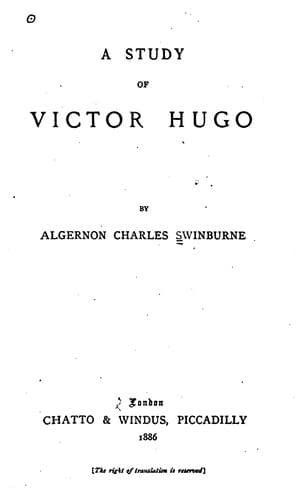
Hugo, Victor, 1802-1885 -- Criticism and interpretation
And next year Victor Hugo gave us _Les Quatre Vents de l'Esprit._ In the
first division, the book of satire, every page bears witness that the
hand which wrote the _Châtiments_ had neither lost its strength nor
forgotten its cunning; it is full of keen sense, of wise wrath, of
brilliant reason and of merciful equity, The double drama which follows
is one of the deepest and sweetest and richest in various effect among
the masterpieces of its author. In Margarita we breathe again the same
fresh air of heroic mountain-ranges and woodlands inviolable, of winds
and flowers and all fair things and thoughts, which blows through all
the brighter and more gracious interludes of the _Légende des
Siècles_: the figures of Gallus, the libertine by philosophy, and
Gunich, the philosopher of profligacy--the former a true man and true
lover at heart, the latter a cynic and a courtier to the core--are as
fresh in their novelty as the figures of noble old age and noble young
love are fresh in their renewal and reimpression of types familiar to
all hearts since the sunrise of _Hernani._ The tragedy which follows
this little romantic comedy is but the more penetrative and piercing in
its pathos and its terror for its bitter and burning vein of realism and
of humor. The lyric book is a casket of jewels rich enough to outweigh
the whole wealth of many a poet. After the smiling song of old times,
the stately song of to-day with its other stars and its other roses, in
sight of the shadow where grows the deathless flower of death, pale and
haggard, with its shadowy perfume: the song of all sweet waking dreams
and visions, and sweetest among them all the vision of a tyrant loyally
slain: the song on hearing a princess sing, sweeter than all singing and
simple as "the very virtue of compassion": the song of evening and rest
from trouble, and prayer in sorrow, and hope in death: the many-colored
and sounding song of seaside winter nights: the song of three nests, the
reed-warbler's and the martlet's made with moss and straw, in the wall
or on the water, and love's with glances and smiles, in the lover's
inmost heart: the song of the watcher by twilight on the cliff, which
strikes a note afterwards repeated and prolonged in the last issue of
the _Légende des Siècles_, full of mystery and mourning and fear and
faith: the brief deep note of bewildered sorrow that succeeds it: the
great wild vision of death and night, cast into words which have the
very sound of wind and storm and water, the very shape and likeness of
things actually touched or seen: the soft and sublime song of dawn as it
rises on the thinker deep sunk in meditation on death and on life to
come: the strange dialogue underground, grim and sweet, between the
corpse and the rose-tree: the song of exile in May, sweet as flowers and
bitter as tears: the lofty poem of suffering which rejects the old Roman
refuge of stoic suicide: the light swift song of a lover's quarrel
Public-domain text, read in full here on John Shaqi.
Reviews
Reviews
No reviews yet
Be the first to share your thoughts on this work.
Join the Discussion
Join the discussion
Sign in to leave a comment or review.
Sign InorCreate an account