China -- Social life and customs -- 1644-1912; Lee, Yan Phou, 1861-1938?
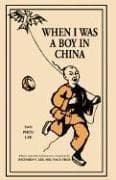
There is a story to account for the origin of the Kites’ Day. Back in
the world’s history, when Time was yet a boy, a man, while working in
the field, was told by a passing stranger with an august mien, that
a terrible plague was about to visit his house on the ninth day of
the ninth month, and that the only way to escape was to hie to a high
hill near by. After giving this warning, the stranger disappeared
mysteriously. This man, who was, by the way, a good man, went home, and
getting his whole family together before the fatal day arrived, set
out with them to the hill designated and remained there all day. To
while away the time probably, his children flew their kites. Hence the
custom. After sunset, they went home and found that all their cattle,
chickens and ducks had died. This proved that they themselves had been
saved by the intervention of some deity. Ever since, people have made
the day a national holiday.
Kicking the shuttlecock is a favorite outdoor amusement with both boys
and gentlemen. The shuttlecock consists of a bunch of feathers stuck
in small, round pieces of leather, or pasteboard, and tied together
by a string. The game is to kick it when it is served to you and not
allow it to drop on the ground. When one muffs, he has to serve some
one else. From two to six persons can play. Skilful players will keep
the shuttlecock above ground for some time. We also have something
which is a feeble apology for the manly sport of base-ball. A piece
of snake-skin is wound around with yarn till it attains the size of a
billiard ball. Boys in China toss it, or make it bound, as American
boys do their rubber balls.
Penny-tossing, or rolling, carries out the idea of marbles. But it is
not considered a nice game, and only bad boys indulge in it. Swimming
is not popular, although many Chinese boys learn to swim.
Fishing means work with the Chinese. A man, or boy, goes a-fishing
simply for the fish, and not for the fun; and I am of the opinion that
my countrymen are right.
Of indoor games and pastimes there is only a small list. Since young
ladies and gentlemen are not allowed, in China, to enjoy one another’s
society, dancing is, of course, out of the question. A Chinese
gentleman would consider it foolishness and an insensate waste of time
to hop about and twirl around for a whole night. Amusements requiring
so much exertion are not to his taste; and as for throwing his arm
around a girl’s waist in the whirl of the waltz, a Chinese gentleman
would not permit himself such an indecorum. Accordingly, gentlemen’s
indoor pastimes are cricket-fighting and quail-fighting.
Cricket-fighting is a sort of passion, or craze, with some Chinese. In
the cricket season, men and boys hunt for them by the wayside, or among
thickets on the mountains. When caught they are fed and afterwards
tested as to their fighting qualities. A good fighter will fetch quite
a large sum.
Public-domain text, read in full here on John Shaqi.
Reviews
Reviews
No reviews yet
Be the first to share your thoughts on this work.
Join the Discussion
Join the discussion
Sign in to leave a comment or review.
Sign InorCreate an account