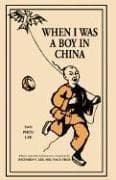
China -- Social life and customs -- 1644-1912; Lee, Yan Phou, 1861-1938?
Every person in China is in strict subjection to somebody. The child is
subject to his parents or guardian. They, in turn, are subject to their
parents, who are liable to be called to account by the elders of the
clan. The magistrate is considered the father of the people he rules
over; and the Emperor stands in the same relation to his subjects
as the father to his children. Women are subject to their fathers or
husbands. All are subject to the national laws.
Accordingly obedience and respect, rather than affection, are required
of the Chinese child. His home-life, therefore, is constrained,
sober and dull. The boy attains to the ideal character only when he
habitually checks his affectionate impulses, suppresses his emotions
and is uniformly respectful to his superiors and uniformly dignified
with his inferiors. Therefore the child is early taught to walk
respectfully behind his superiors, to sit only when he is bidden, to
speak only when questions are asked him, and to salute his superiors
by the correct designations. It would be the height of impropriety for
him to mention his father’s name, or call his uncles and elder brothers
by their names. (Children call their father “_A-dé_,” or “_A-ye_,”
which corresponds to papa in English. Mamma in Chinese is “_A-ma_.”
The syllable _A_ is prefixed for the sake of euphony or convenient
pronunciation. In the same way, we say, “_A-suk_” for uncle, “_A-ko_”
for elder brother, “_A-ka_” elder sister. Cousins on one’s father’s
side are reckoned as brothers.) He must rise from his seat when they
approach him. If he is taken to task for anything he has done, he must
never contradict, never seek to explain. Such an offence is not easily
forgiven and double punishment is likely to immediately overtake the
offender. How often have I rued my imprudence in contradicting my
parents, uncles or teachers! Often I was but simply trying to give
the explanation of seemingly bad conduct. But the Chinese take no
explanations from those subject to them. It is better for an accused
son, pupil, or servant to suffer punishment in silence although he may
be conscious of no wrong doing. This seems very unreasonable; and,
in fact, it does foster sullenness and a spirit of rebellion which
fear alone keeps under. But the Chinese deem this method absolutely
necessary for the preservation of authority. In every household the
rattan stick is always ready to the hand of the majestic wrath of
outraged family law. It is not my intention to represent the Chinese as
naturally cruel. They are not. They simply maintain family discipline
by customs handed down from one generation to another. Fathers and
teachers have undergone the same training. The customs of their
ancestors enjoin it, the teachings of Confucius prescribe it, and the
laws of the empire arm it with authority.
Public-domain text, read in full here on John Shaqi.
Reviews
Reviews
No reviews yet
Be the first to share your thoughts on this work.
Join the Discussion
Join the discussion
Sign in to leave a comment or review.
Sign InorCreate an account