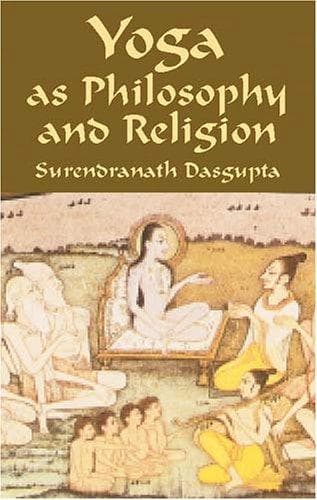
Yoga as philosophy and religionDasgupta, Surendranath
Religion
Yoga as philosophy and religion
Dasgupta, Surendranath
Hindu philosophy; Patañjali; Yoga
But according to the Vedānta philosophy, knowledge of ego is only false
knowledge—an illusion as many imposed upon the formless Brahman. Māyā,
according to the Vedāntist, can neither be said to exist nor to
non-exist. It is _anirvācyā_, i.e. can never be described or defined.
Such an unknown and unknowable māyā causes the Many of the world by
reflection upon the Brahman. But according to the Sāṃkhya doctrine,
prakṛti is as real as purusha himself. Prakṛti and purusha are two
irreducible metaphysical remainders whose connection is beginningless
(_anādisaṃyoga_). But this connection is not unreal in the Vedānta sense
of the term. We see that according to the Vedānta system, all notions of
ego or personality are false and are originated by the illusive action
of the māyā, so that when they ultimately vanish there are no other
remainders. But this is not the case with Sāṃkhya, for as purusha is the
real seer, his cognitions cannot be dismissed as unreal, and so purushas
or knowers as they appear to us to be, must be held real. As prakṛti is
not the māyā of the Vedāntist (the nature of whose influence over the
spiritual principle cannot be determined) we cannot account for the
plurality of purushas by supposing that one purusha is being reflected
into many minds and generating the many egos. For in that case it will
be difficult to explain the plurality of their appearances in the minds
(buddhis). For if there be one spiritual principle, how should we
account for the supposed plurality of the buddhis? For we should rather
expect to find one buddhi and not many to serve the supposed one
purusha, and this will only mean that there can be only one ego, his
enjoyment and release. Supposing for argument’s sake that there are many
buddhis and one purusha, which reflected in them, is the cause of the
plurality of selves, then we cannot see how prakṛti is moving for the
enjoyment and release of one purusha; it would rather appear to be moved
for the sake of the enjoyment and release of the reflected or unreal
self. For purusha is not finally released with the release of any number
of particular individual selves. For it may be released with reference
to one individual but remain bound to others. So prakṛti would not
really be moved in this hypothetical case for the sake of purusha, but
for the sake of the reflected selves only. If we wish to avoid the said
difficulties, then with the release of one purusha, all purushas will
have to be released. For in the supposed theory there would not really
be many different purushas, but the one purusha appearing as many, so
that with his release all the other so-called purushas must be released.
We see that if it is the enjoyment (_bhoga_) and salvation (_apavarga_)
of one purusha which appear as so many different series of enjoyments
and emancipations, then with his experiences all should have the same
experiences. With his birth and death, all should be born or all should
die at once.
Public-domain text, read in full here on John Shaqi.
Reviews
Reviews
No reviews yet
Be the first to share your thoughts on this work.
Join the Discussion
Join the discussion
Sign in to leave a comment or review.
Sign InorCreate an account