Crius
In Greek mythology, Crius, Krios or Kreios was one of the Titans, the children of Uranus (Sky) and Gaia (Earth).
Pantheon
Page 2 of 4.
400 entries
These three are recorded for the Greek pantheon as a whole. The archive holds no separate culture, civilization or period for the individual entries below.
Page 2 of 4
Showing 109–216 of 400, alphabetically.
In Greek mythology, Crius, Krios or Kreios was one of the Titans, the children of Uranus (Sky) and Gaia (Earth).
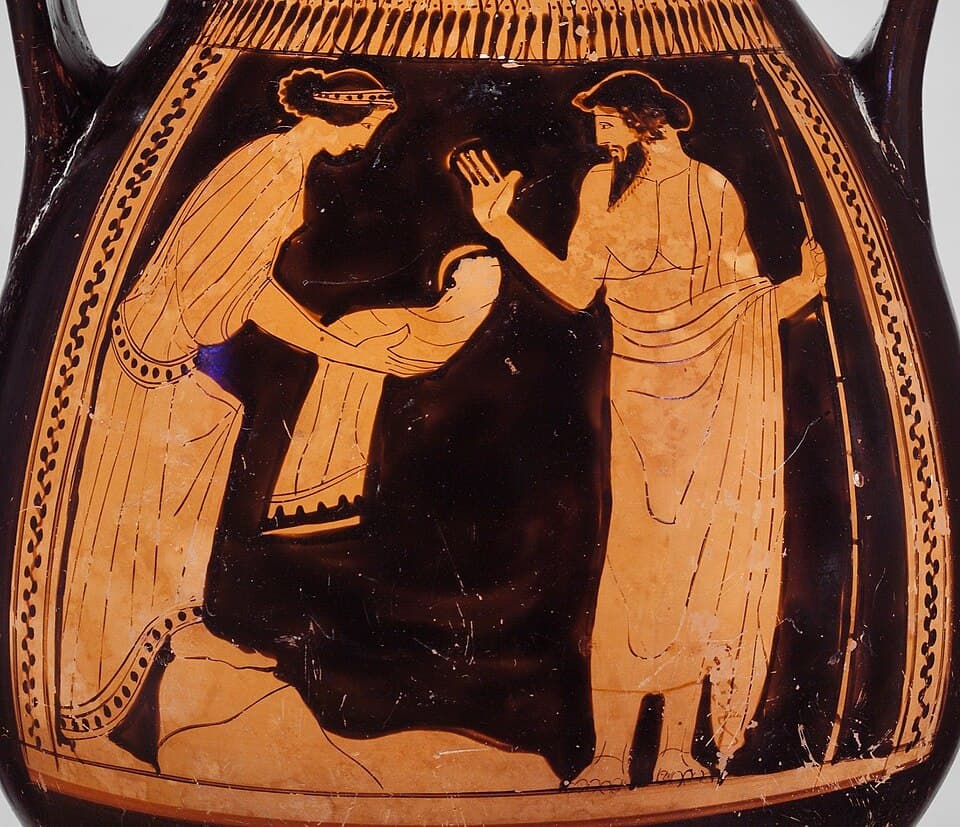
In ancient Greek religion and mythology, Cronus, Cronos, or Kronos was the leader and youngest of the Titans, the children of Gaia (Earth) and Uranus (Sky). He overthrew his father and ruled during the mythological Golden Age until he was overthrown by his son Zeus and imprisoned in Tartarus. According to Plato, however, Cronus, along with the deities Phorcys and Rhea, were the eldest children of Oceanus and Tethys.
In Greek mythology, Ctesius may refer to:Ctesius, king of the island called Syra and son of Ormenus. He was the father of Eumaeus. Ctesius, one of the Suitors of Penelope who came from Dulichium along with other 56 wooers.
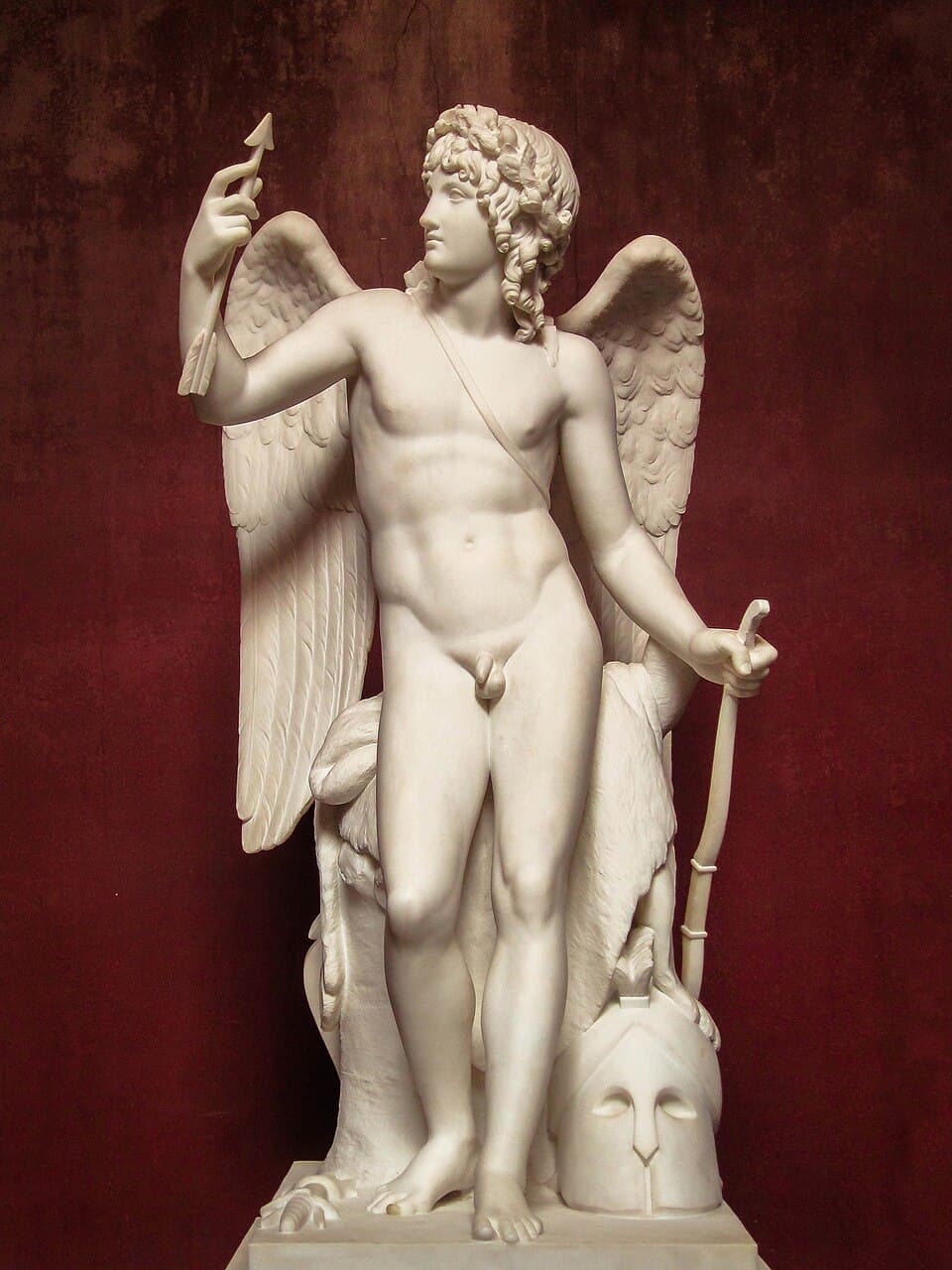
In classical mythology, Cupid is the god of desire, erotic love, attraction and affection. He is often portrayed as the son of the love goddess Venus and the god of war Mars. He is also known as Amor.
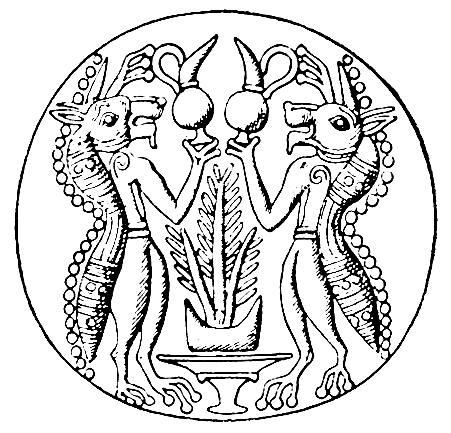
In ancient Greek religion, daimon, also spelled daemon, often referred to lesser deities, but could more broadly signify "the experience of divine power". The term's etymology is unclear, though it is often thought to originate from daíō. The Iliad describes the gods congregated atop Olympus as daimones; the term is employed by a Homeric character when they are unaware which deity is the agent of an event.
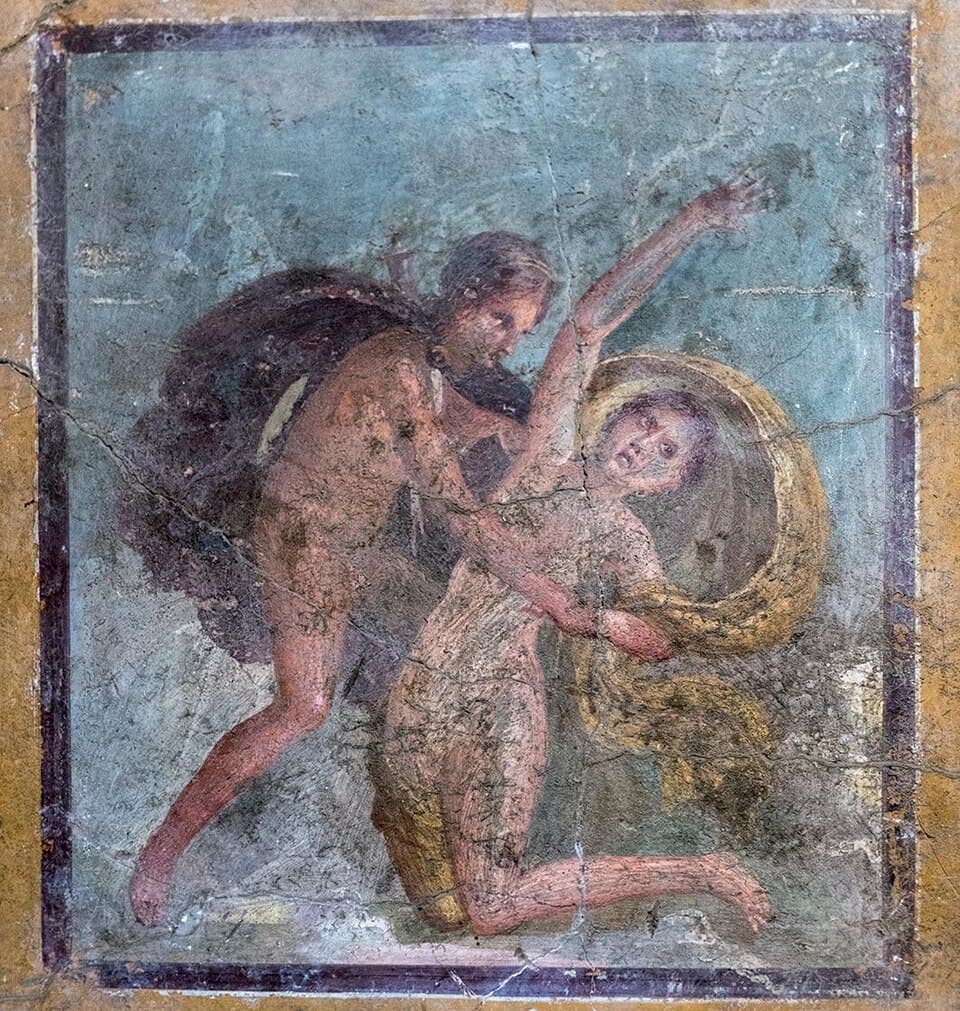
Daphne, a figure in Greek mythology, was in various retellings a mortal woman or a nymph, daughter of a river god. The god Apollo fell in love with Daphne and chased her against her wishes, but before he caught her, Daphne prayed for escape, and was transformed into a laurel tree. Thenceforth Apollo developed a special reverence for laurel.
Darrhon or Darron was a Paeonian god of healing, whose cult was adopted by the ancient Macedonians, as mentioned by Hesychius as a Macedonian Daemon and attested hapax in one inscription of Pella c. 200 – 150 BC. Ἀμφίπολις Δάρρωνι εὐξαμένη ἐπηκόωι.
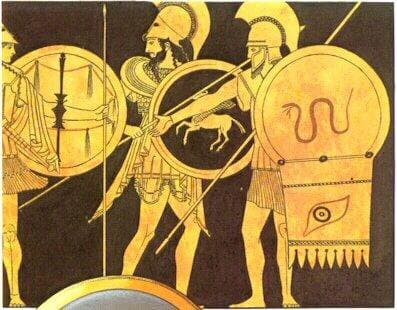
In Greek mythology, Deimos is the personification of fear. He is the son of Ares and Aphrodite, and the brother of Phobos.
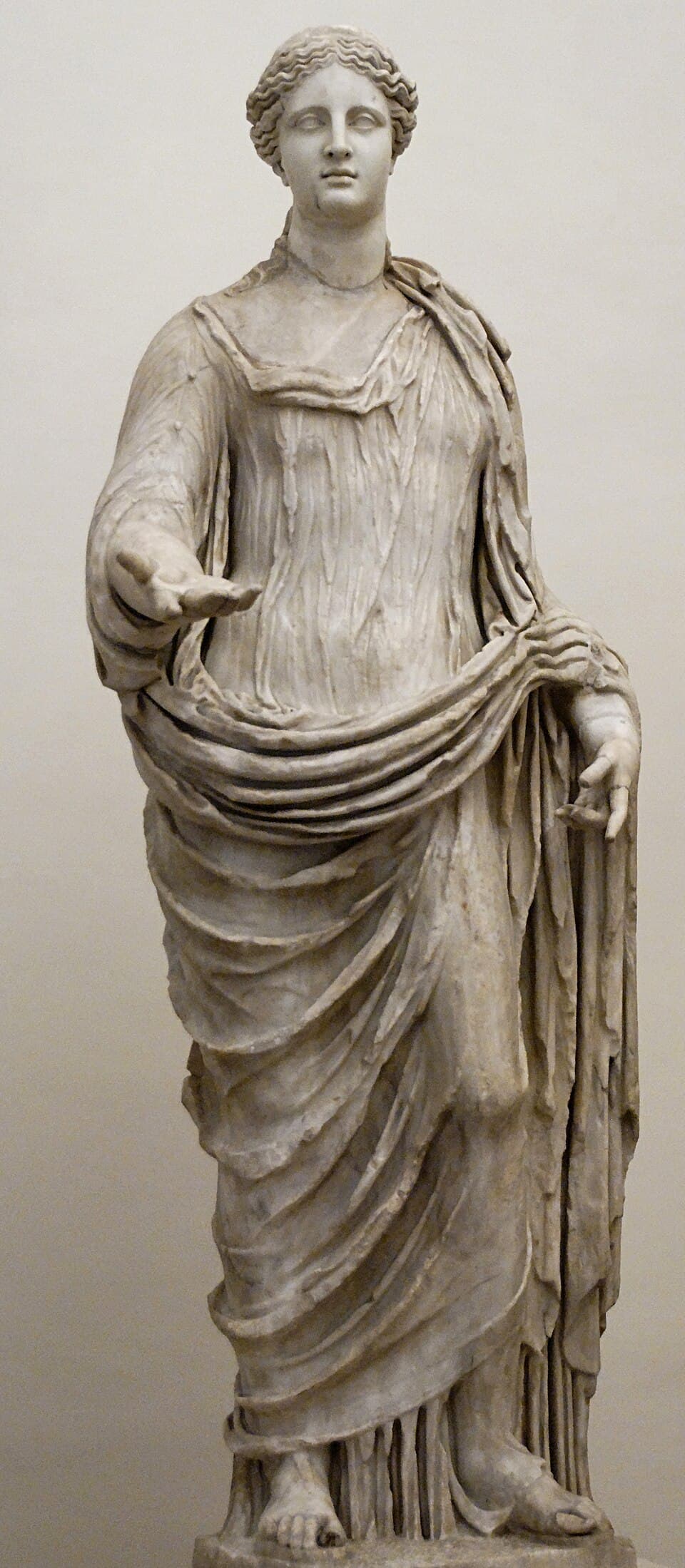
In ancient Greek religion and mythology, Demeter is the Olympian goddess of the harvest and agriculture, presiding over crops, grains, food, and the fertility of the earth. Although Demeter is mostly known as a grain goddess, she also appeared as a goddess of health, birth, and marriage, and had connections to the Underworld. She is also called Deo.
Despoina or Despoena was the epithet of a goddess worshipped by the Eleusinian Mysteries in Ancient Greece as the daughter of Demeter and Poseidon and the sister of Arion. Surviving sources refer to her exclusively under the title Despoina alongside her mother Demeter, as her real name could not be revealed to anyone except those initiated into her mysteries and was consequently lost with the extinction of the Eleusinian religion.
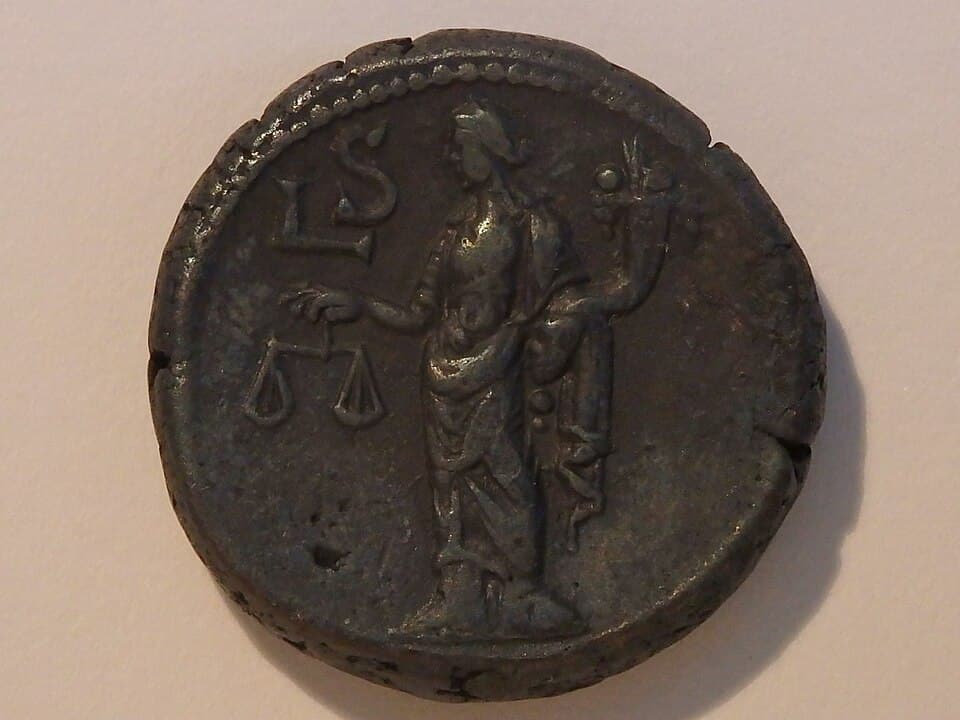
In Greek mythology, Dike or Dice, sometimes also called Dicaeosyne, is the goddess of justice and the spirit of moral order and fair judgement as a transcendent universal ideal or based on immemorial custom, in the sense of socially enforced norms and conventional rules. According to Hesiod, she was fathered by Zeus upon his second consort, Themis. She and her mother are both personifications of justice.

Doris, in Greek mythology, was a sea goddess. She was one of the 3,000 Oceanids, daughters of the Titans Oceanus and Tethys.
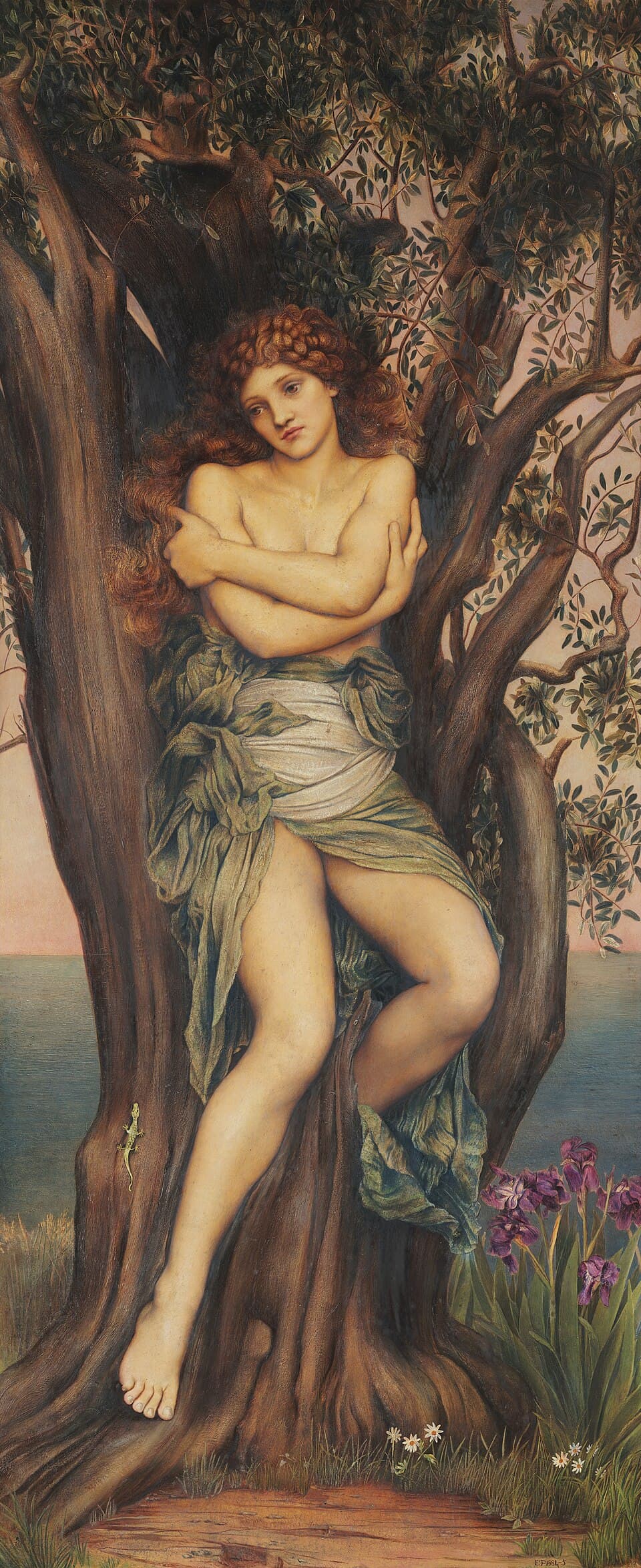
A dryad is an oak tree nymph or oak tree spirit in Greek mythology; Drys (δρῦς) means "tree", and more specifically "oak" in Greek. Today the term is often used to refer to tree nymphs in general.
In Greek mythology, Dysis was the eleventh Hora (Hour) who presided over the hour of sunset. She was the reputed nursemaid of Selene (Moon).
In Greek mythology, Dysnomia is the personification of lawlessness. According to Hesiod's Theogony, Dysnomia was the offspring of Eris (Strife), with no father mentioned. Like all of the children of Eris given by Hesiod, Dysnomia is a personified abstraction, allegorizing the meaning of their name, and representing one of the many harmful things which might be thought to result from discord and strife, with no other identity.
In Greek mythology, Dyssebeia was the caco-daimon and personification of impiety and ungodliness, as opposed to Eusebeia.
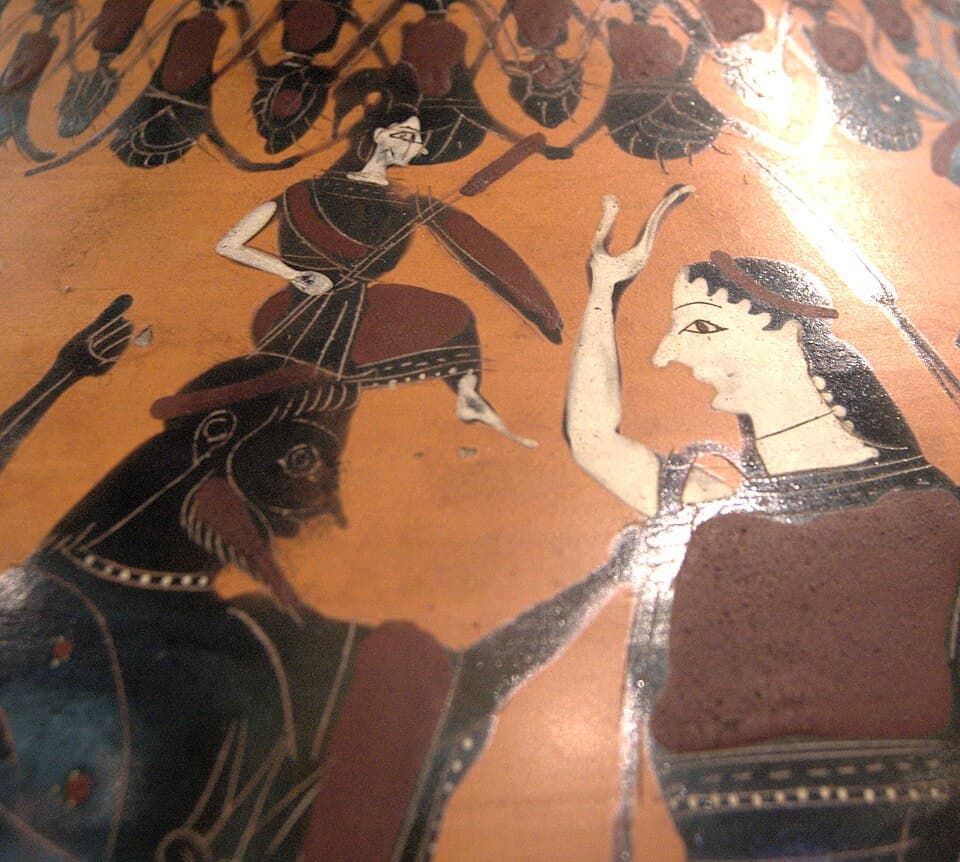
Eileithyia or Ilithyia was the Greek goddess of childbirth and midwifery, and the daughter of Zeus and Hera.
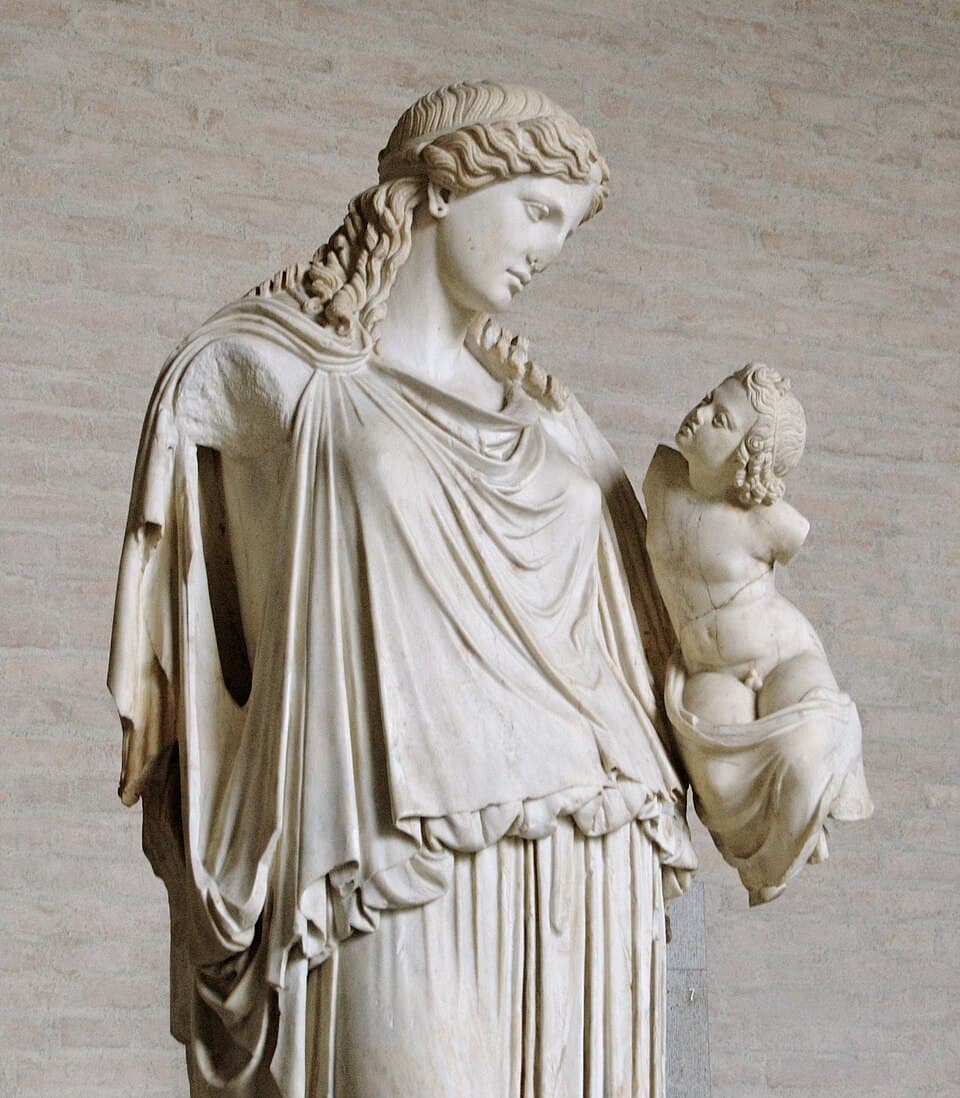
Eirene, more commonly known in English as Peace, is one of the Horae, the personification and goddess of peace in Greek mythology and ancient religion. She was depicted in art as a beautiful young woman carrying a cornucopia, sceptre, and a torch or rhyton. She is usually said to be the daughter of Zeus and Themis and thus sister of Dike and Eunomia.

Eirene, more commonly known in English as Peace, is one of the Horae, the personification and goddess of peace in Greek mythology and ancient religion. She was depicted in art as a beautiful young woman carrying a cornucopia, sceptre, and a torch or rhyton. She is usually said to be the daughter of Zeus and Themis and thus sister of Dike and Eunomia.
In Greek mythology, Eiresione or Iresione was the personification of an object very important in many Greek rituals and ceremonies: a branch of olive or laurel, covered with wool, fruits, cakes and olive flasks, dedicated to Apollo and carried about by singing boys during the festivals of Pyanopsia and Thargelia, and afterwards hung up at the house door. It could only be carried by children who had two living parents. The song they were singing during the ritual was also known as "eiresione":Eiresione for us brings figs and bread of the richest, brings us honey in pots and oil to rub off from the body, Strong wine too in a beaker, that one may go to bed mellow.
In Greek mythology, Ekecheiria, Ekekheiria, or Ecechiria is a personification associated with Zeus. A statue depicting Ekecheiria placing a crown atop the head of Iphitos was installed beside the Temple of Zeus at Olympia in 460 BC.
In ancient Athens, Eleos was the personification of compassion. Pausanias described her as "among all the gods the most useful to human life in all its vicissitudes.
In Greek mythology, Elete was the eight Hora (Hour) who presided over the hour of prayer, the first of the afternoon work hours.
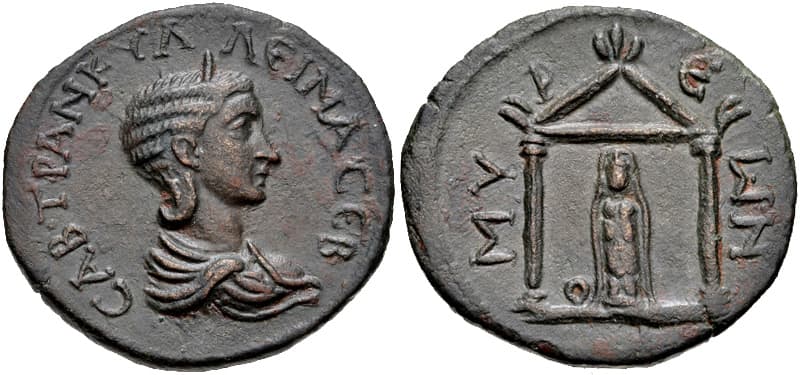
The Greek word "ἐλευθερία", transliterated as eleutheria or eleftheria, is a Greek term for, and personification of, the Goddess of Liberty. Eleutheria personified had a brief career on coins of Alexandria.
Enipeus, in ancient Greece, was a river god. Enipeus was loved by a mortal woman named Tyro, who was married to a mortal man named Cretheus. Poseidon, filled with lust for Tyro, disguised himself as Enipeus and from their union was born Pelias and Neleus, twin boys.
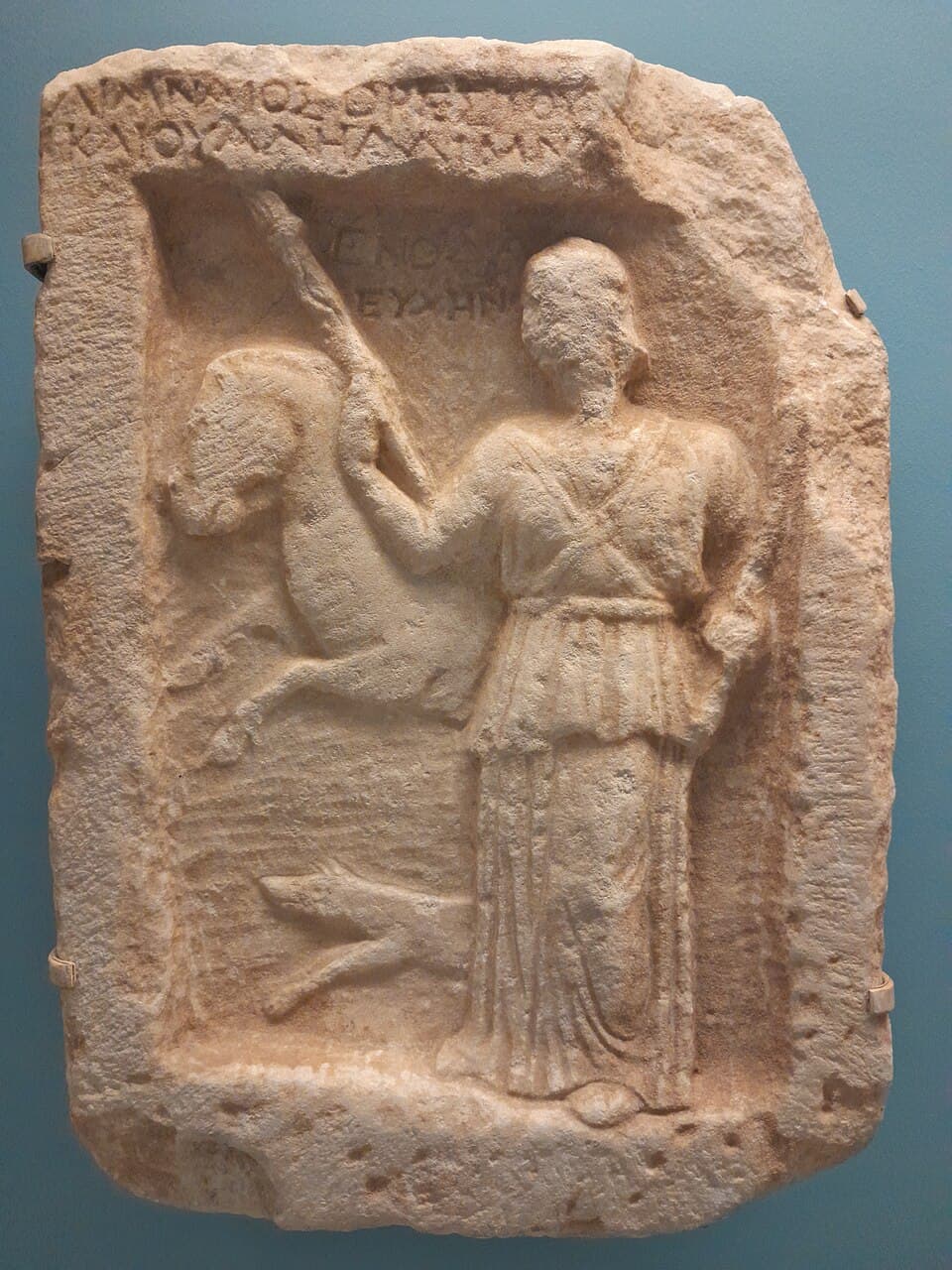
In Ancient Greek religion and mythology, Enodia, also spelled Ennodia and Einodia is a distinctly Thessalian goddess, identified in certain areas or by certain ancient writers with Artemis, Hecate or Persephone. She was paired with Zeus in cult and sometimes shared sanctuaries with him. Enodia was primarily worshipped in Ancient Thessaly and was well known in Hellenistic Macedonia.
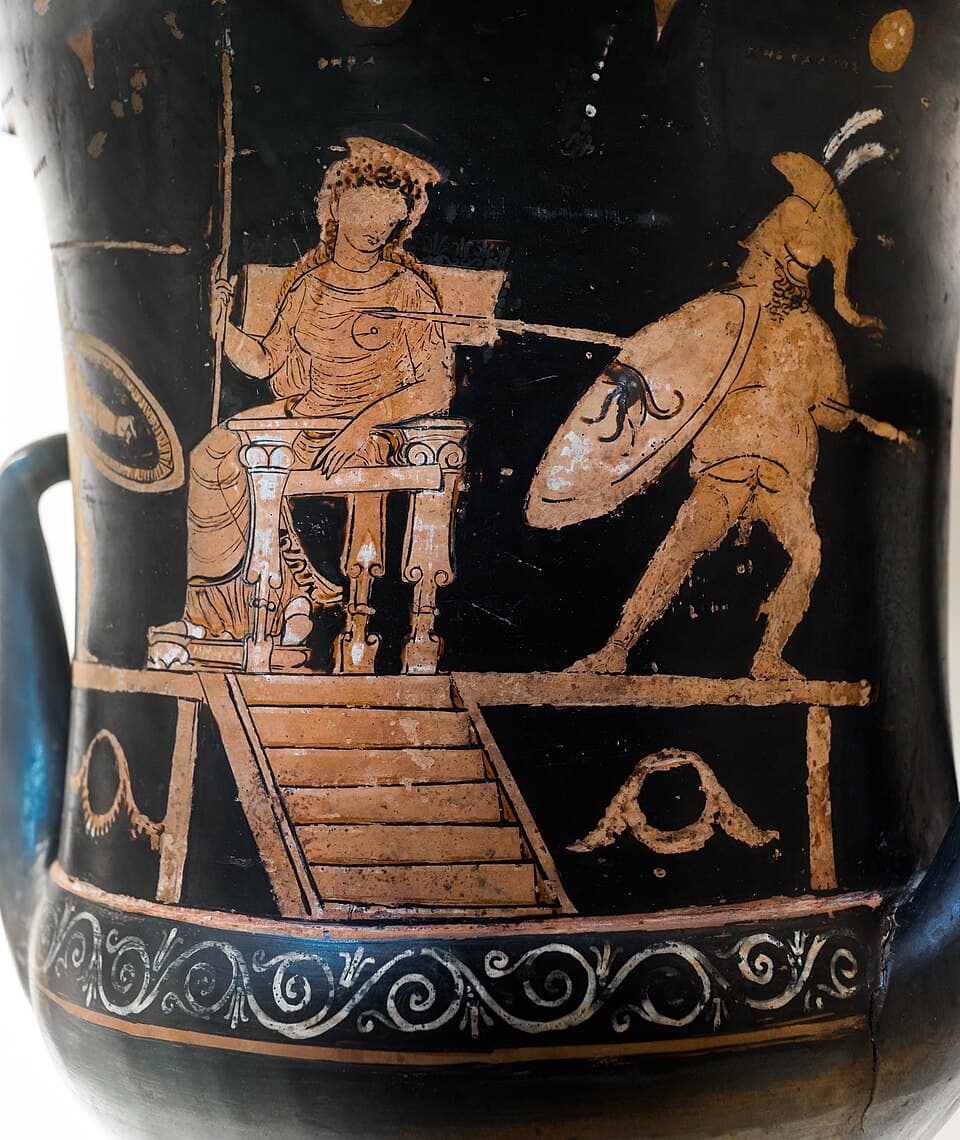
In ancient Greek mythology and religion, Enyalius is a war deity, either as an aspect of Ares or a separate god of combat. The identification of the two gods is early, as they are already interchangeable in the epic Iliad. Some later authors when presenting Enyalius as distinct from Ares, they make him his son or his foe.
In Greek mythology, Enyo is a war-goddess, frequently associated with the war-god Ares. The Romans identified her with Bellona.

In ancient Greek mythology and religion, Eos is the goddess and personification of the dawn, who rose each morning from her home at the edge of the river Oceanus to deliver light and disperse the night. She opened the gates of heaven for her brother Helios, the sun, to pass through, and was imagined in poetry and art as a radiant, often winged goddess driving her horse-drawn chariot across the sky, bringing with her the colours and dew of morning.
In Greek mythology, Epactaeus, Epactius, Epaktaios or Epaktios – that is, the god worshipped on the coast – was used as a surname of Poseidon in Samos, and of Apollo.
In Greek mythology, Epiales was a ghost daemon. Alternate spellings of the name were Epialos (Ἠπίαλος), Epioles (Ἠπιόλης), Epialtes (Ἐπιάλτης) or Ephialtes (Ἐφιάλτης).
In Greek mythology, Epidotes was a divinity who was worshipped at Lacedaemon, and averted the anger of Zeus Hicesius for a crime committed by the Spartan general Pausanias.
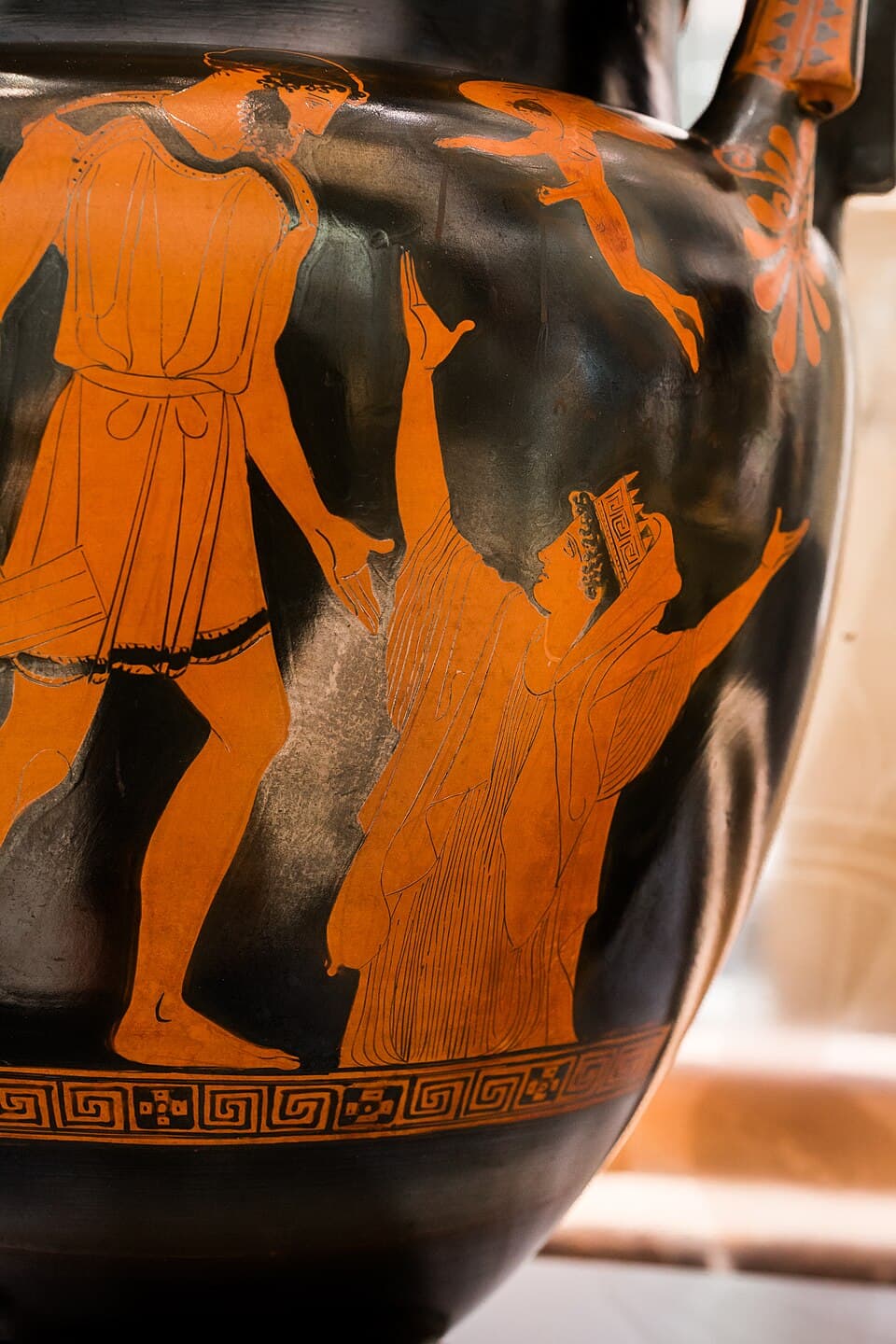
In Greek mythology, Epimetheus is the brother of Prometheus, with the complementary pair serving as archetypal representations of mankind. Both are sons of the Titan Iapetus; while Prometheus is portrayed as ingeniously clever, Epimetheus is considered inept and foolish. In some accounts of the myth, Epimetheus unleashes the unforeseen troubles in Pandora's box.
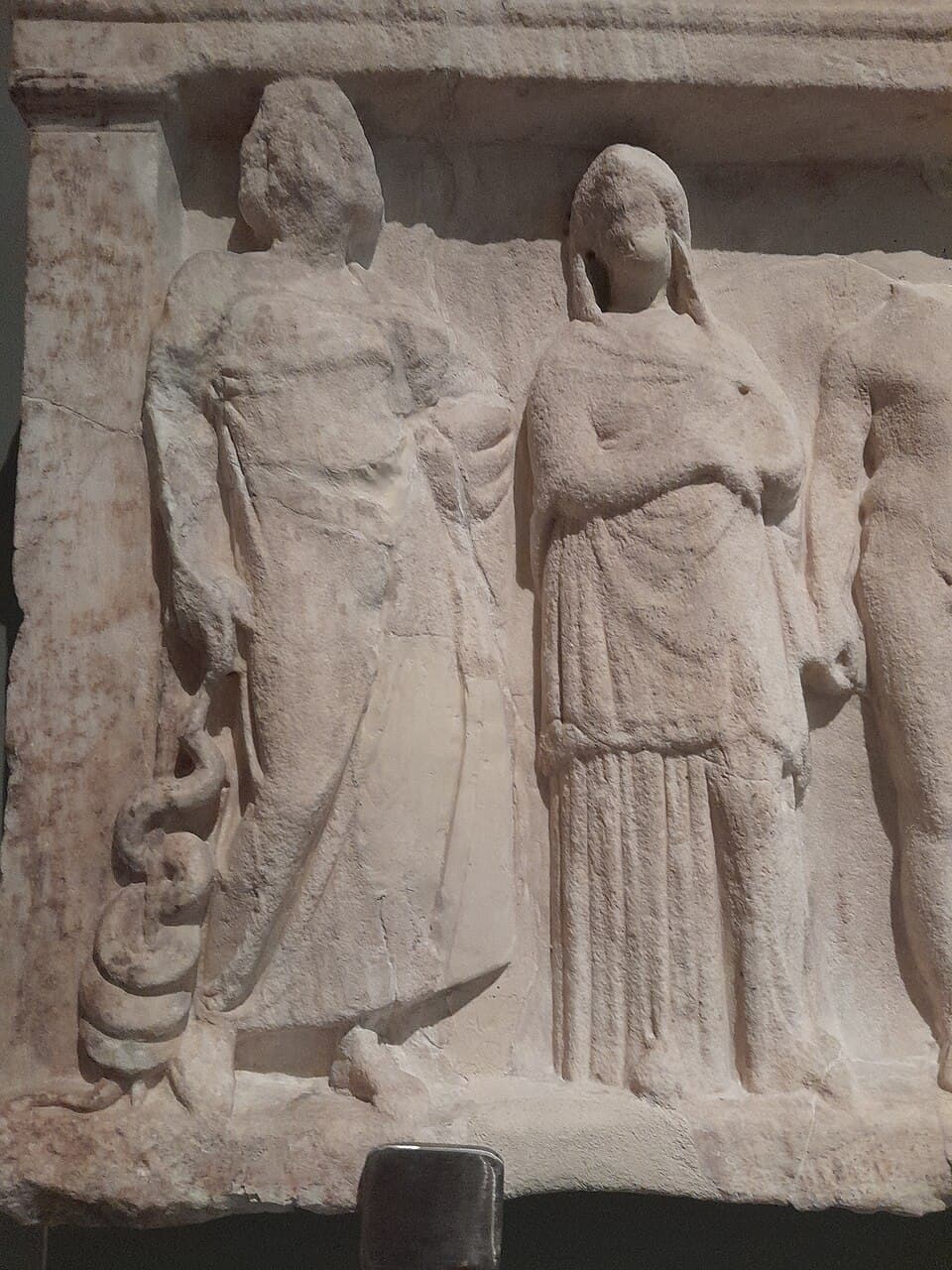
In Greek mythology, Epione is a minor health goddess, the wife of Asclepius, the Greek god of healing and medicine.
In Greek mythology, Epiphron was the daimon or spirit of prudence, shrewdness, thoughtfulness, carefulness, and sagacity. According to Hyginus, Epiphron was the son of Erebus (Darkness) and Nox.
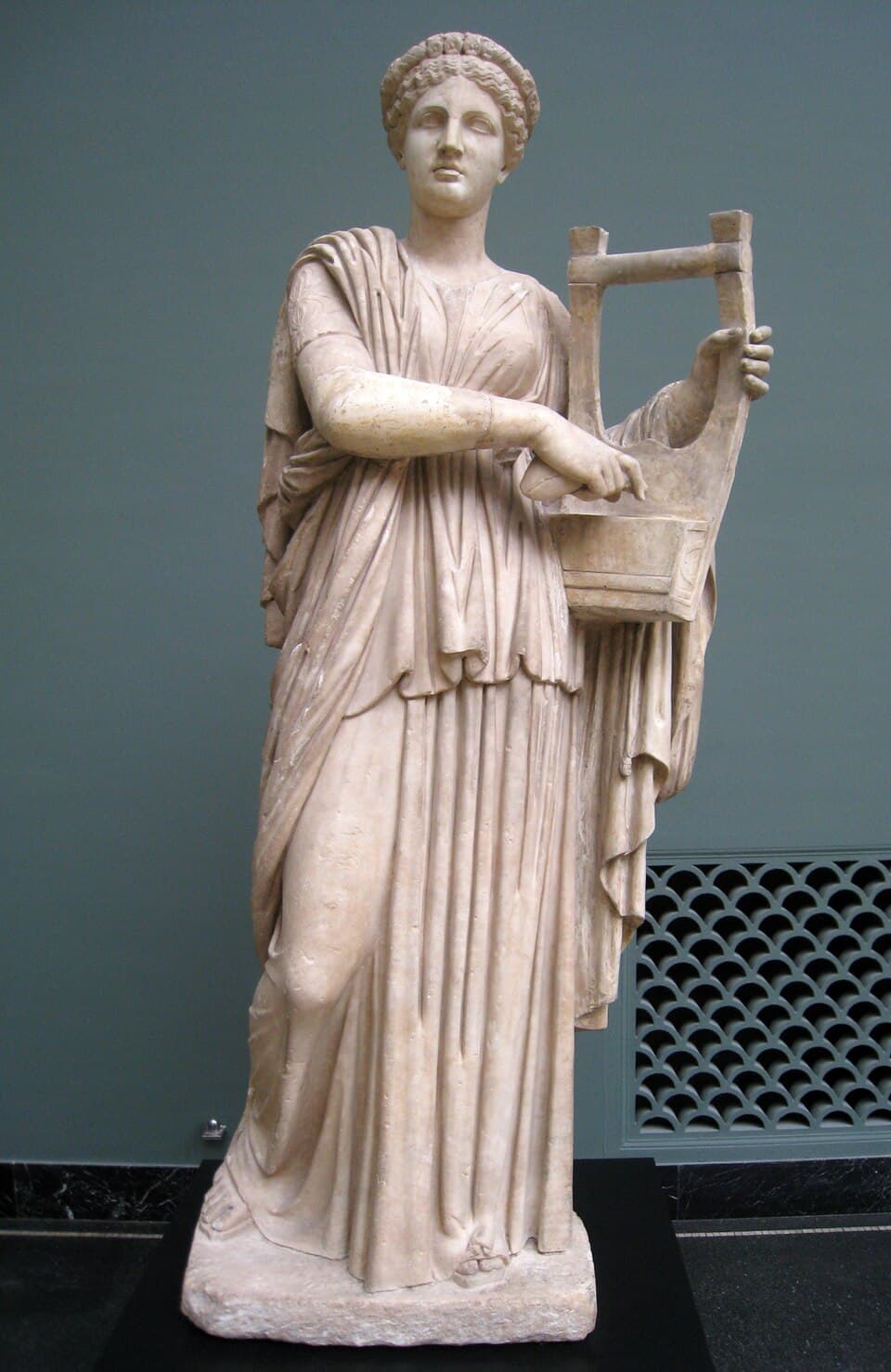
In Greek mythology, Erato is one of the Muses, associated with erotic lyric poetry. The name would mean "desired" or "lovely", if derived from the same root as Eros, as Apollonius of Rhodes playfully suggested in the invocation to Erato that begins Book III of his Argonautica.
In Greek mythology, Erebus, or Erebos, is the personification of darkness. In Hesiod's Theogony, he is the offspring of Chaos, and the father of Aether and Hemera (Day) by Nyx (Night); in other Greek cosmogonies, he is the father of Aether, Eros, and Metis, or the first ruler of the gods. In genealogies given by Roman authors, he begets a large progeny of personifications upon Nox, while in an Orphic theogony, he is the offspring of Chronos (Time).
In Greek mythology, the Eridanos or Eridanus is a river. Eridanus is also the name of the river god associated with this stream.
In Orphic literature, Erikepaios, also spelled Ericepaeus, was a title for the god Phanes, mentioned in Orphic poetry and the associated Dionysian Mysteries. It is a non-Greek name for which no certain interpretation has been found.
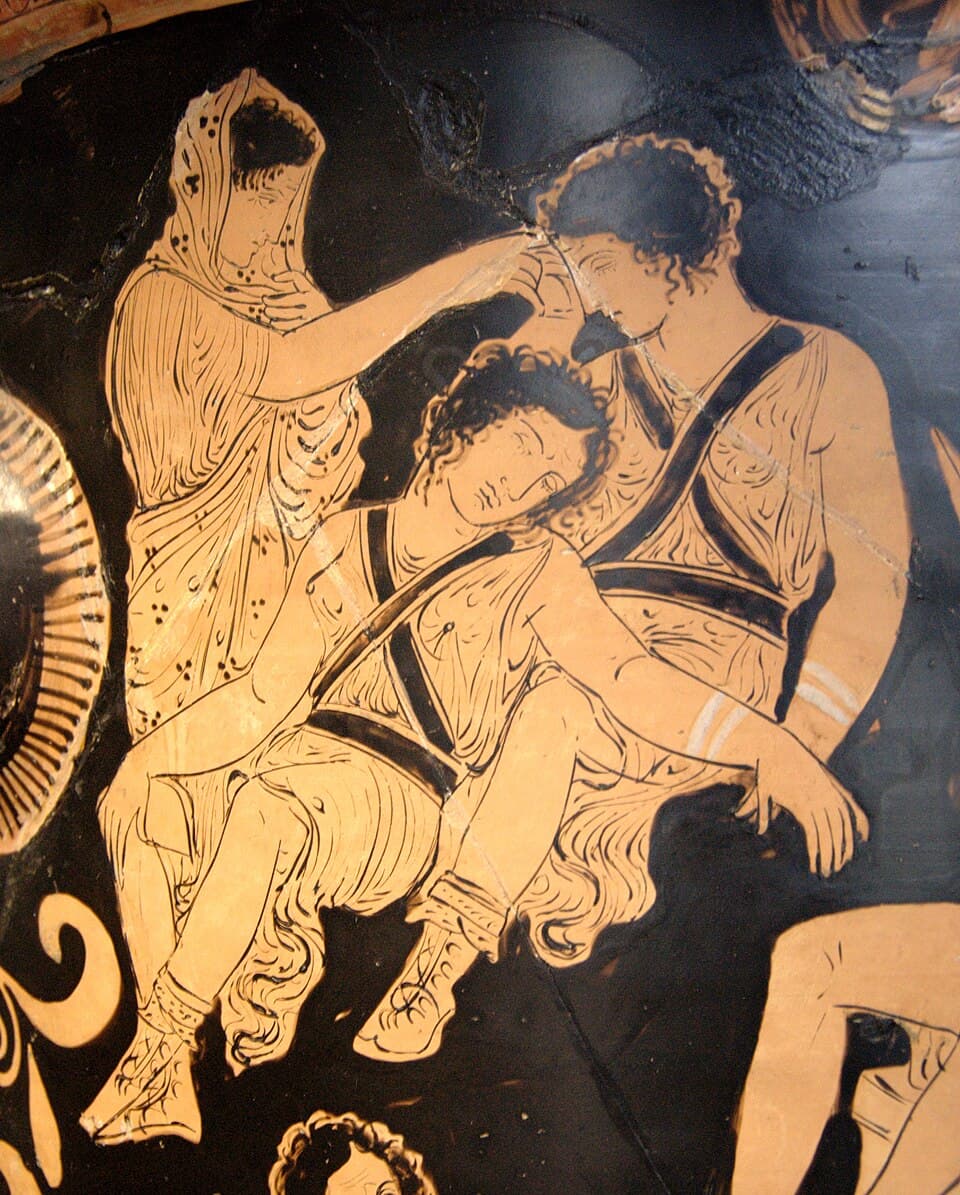
The Erinyes, also known as the Eumenides, are chthonic goddesses of vengeance in ancient Greek religion and mythology. A formulaic oath in the Iliad invokes them as "the Erinyes, that under earth take vengeance on men, whosoever hath sworn a false oath". Walter Burkert suggests that they are "an embodiment of the act of self-cursing contained in the oath".
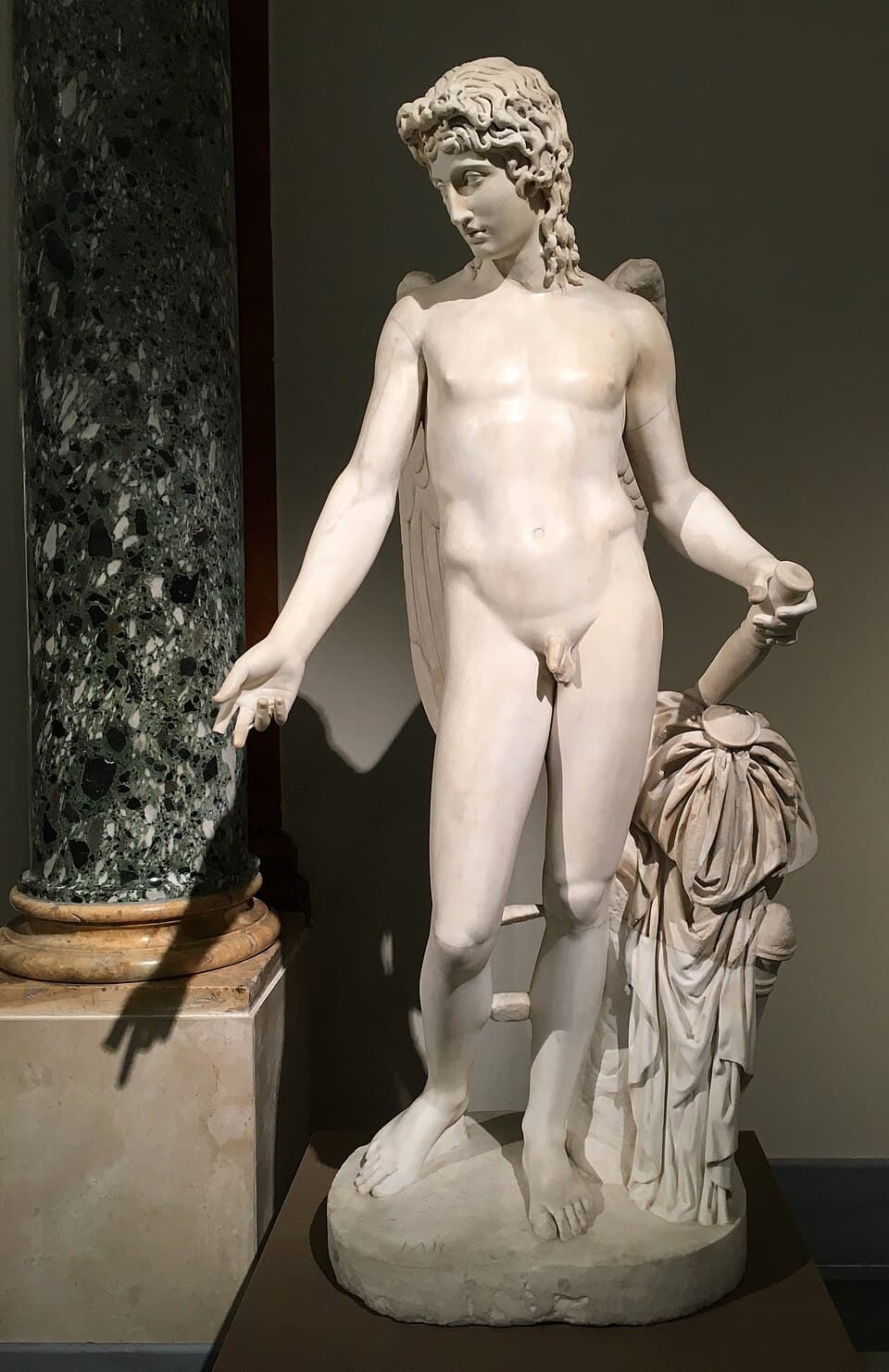
Eros is the Greek god of love and sex. The Romans referred to him as Cupid or Amor. In the earliest account, he is a primordial god, while in later accounts he is the child of Aphrodite.
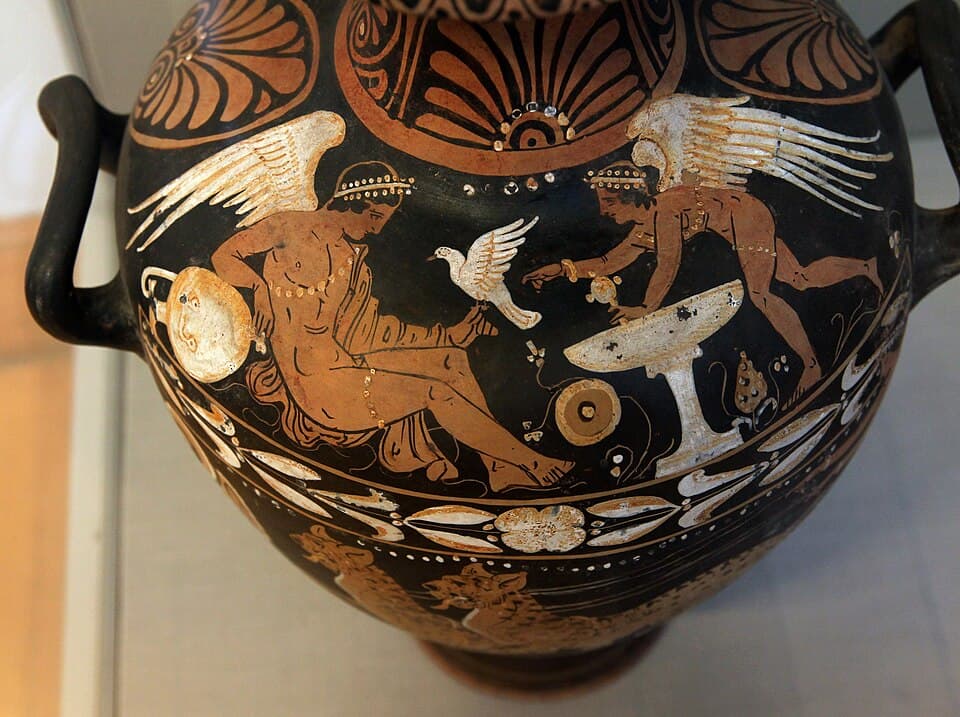
In Ancient Greek religion and mythology, the Erotes are a collective of winged gods associated with love and sexual intercourse. They are part of Aphrodite's retinue, along with the Charites. Erotes is the plural of Eros, who as a singular deity has a more complex mythology.
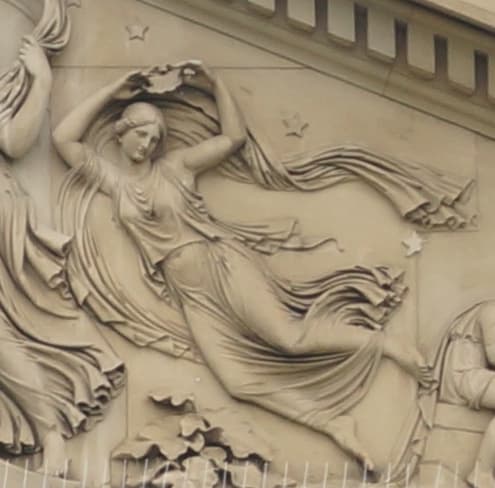
In Greek mythology, according to Plutarch, the 7th century BC Greek poet Alcman said that Ersa or Herse, the personification of dew, is the daughter of Zeus and the Moon (Selene).
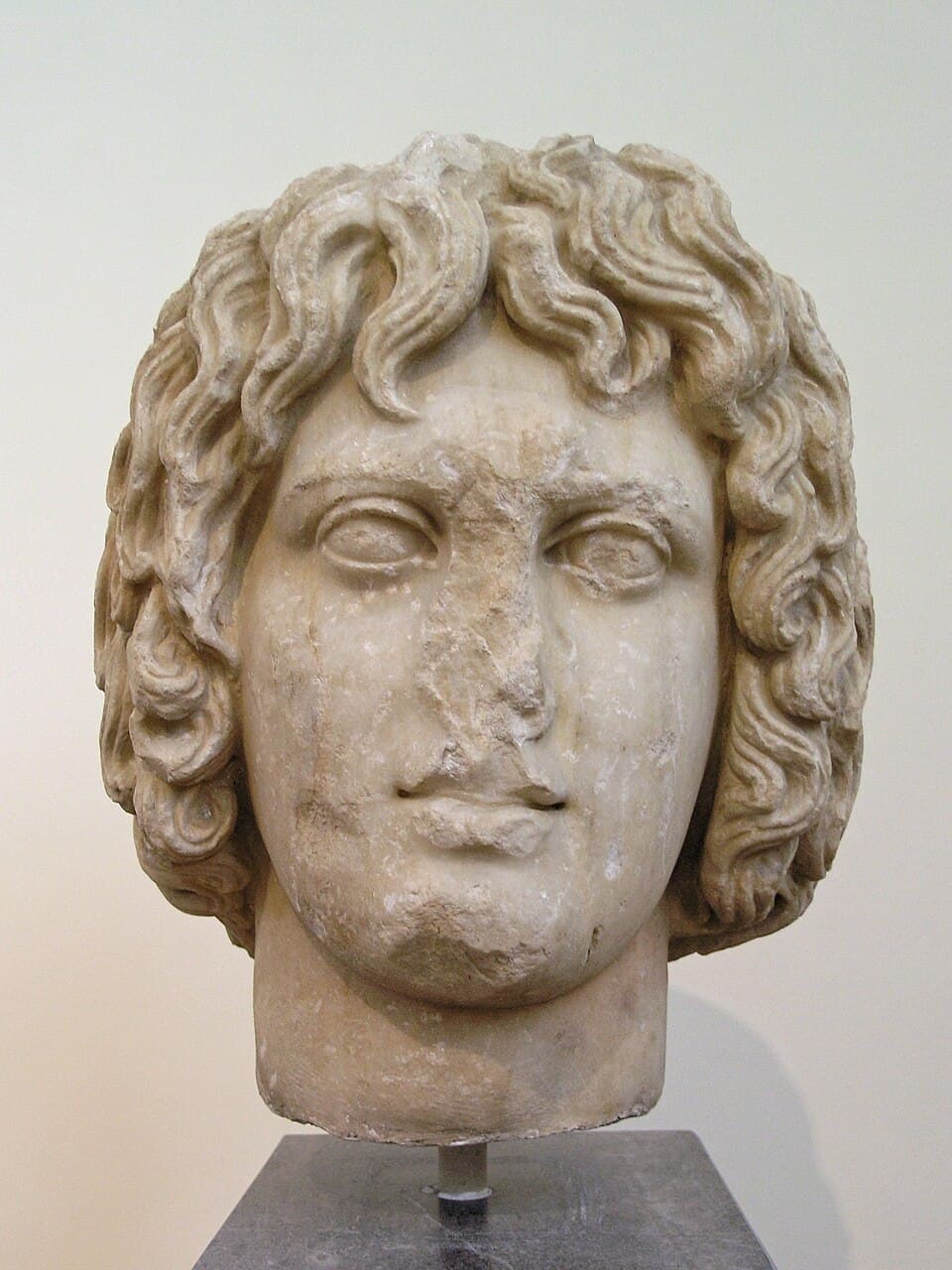
In ancient Greek religion and myth, Eubuleus or Eubouleus is a god known primarily from devotional inscriptions for mystery religions. The name appears several times in the corpus of the so-called Orphic gold tablets spelled variously, with forms including Euboulos, Eubouleos and Eubolos. It may be an epithet of the central Orphic god, Dionysus or Zagreus, or of Zeus in an unusual association with the Eleusinian Mysteries.
In Ancient Greek Religion, Eucleia or Eukleia was the name of a goddess and epithet of Artemis. The exact relationship between the two is unclear. The month name Eucleios derives from the goddess's name.
Eucleia, Euthenia, Eupheme, and Philophrosyne were, according to the fifth-century AD Greek Neoplatonist philosopher Proclus, the four daughters of Hephaestus and Aglaia:... who render the corporeal-formed nature decorated with beauty.

In ancient Greek religion and myth, Eukarpia was a divine personification of fertility, or an epithet or cult title for a deity. It is also found as a personal name for women.
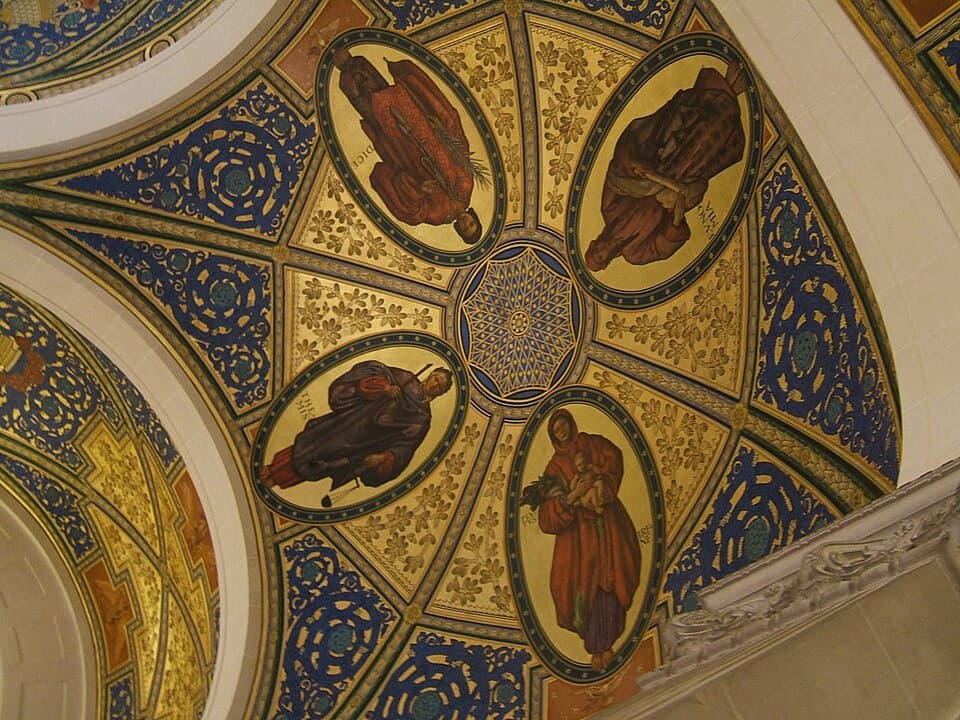
In Greek mythology, Eunomia was a minor but important goddess of law and legislation and her name can be translated as "good order", "governance according to good laws", as well as the spring-time goddess of green pastures. She was by most accounts the daughter of Themis and Zeus. Her opposite number was Dysnomia (Lawlessness).
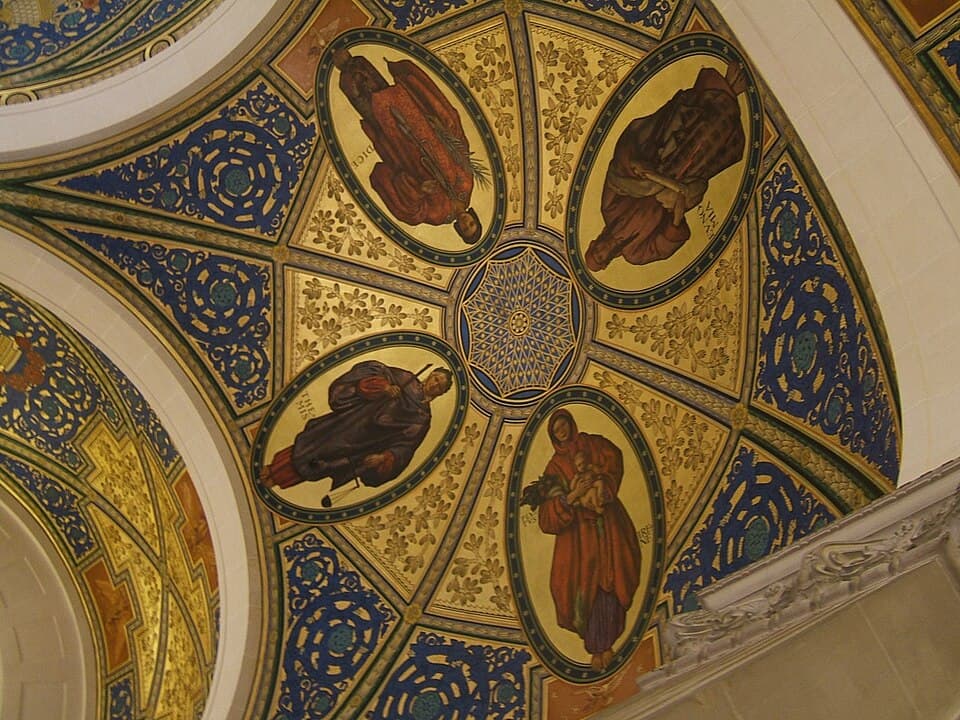
In Greek mythology, Eunomia was a minor but important goddess of law and legislation and her name can be translated as "good order", "governance according to good laws", as well as the spring-time goddess of green pastures. She was by most accounts the daughter of Themis and Zeus. Her opposite number was Dysnomia (Lawlessness).
In Greek mythology, Eunostus was a goddess whose image was set up in mills, and who was believed to keep watch over the just weight of flour.
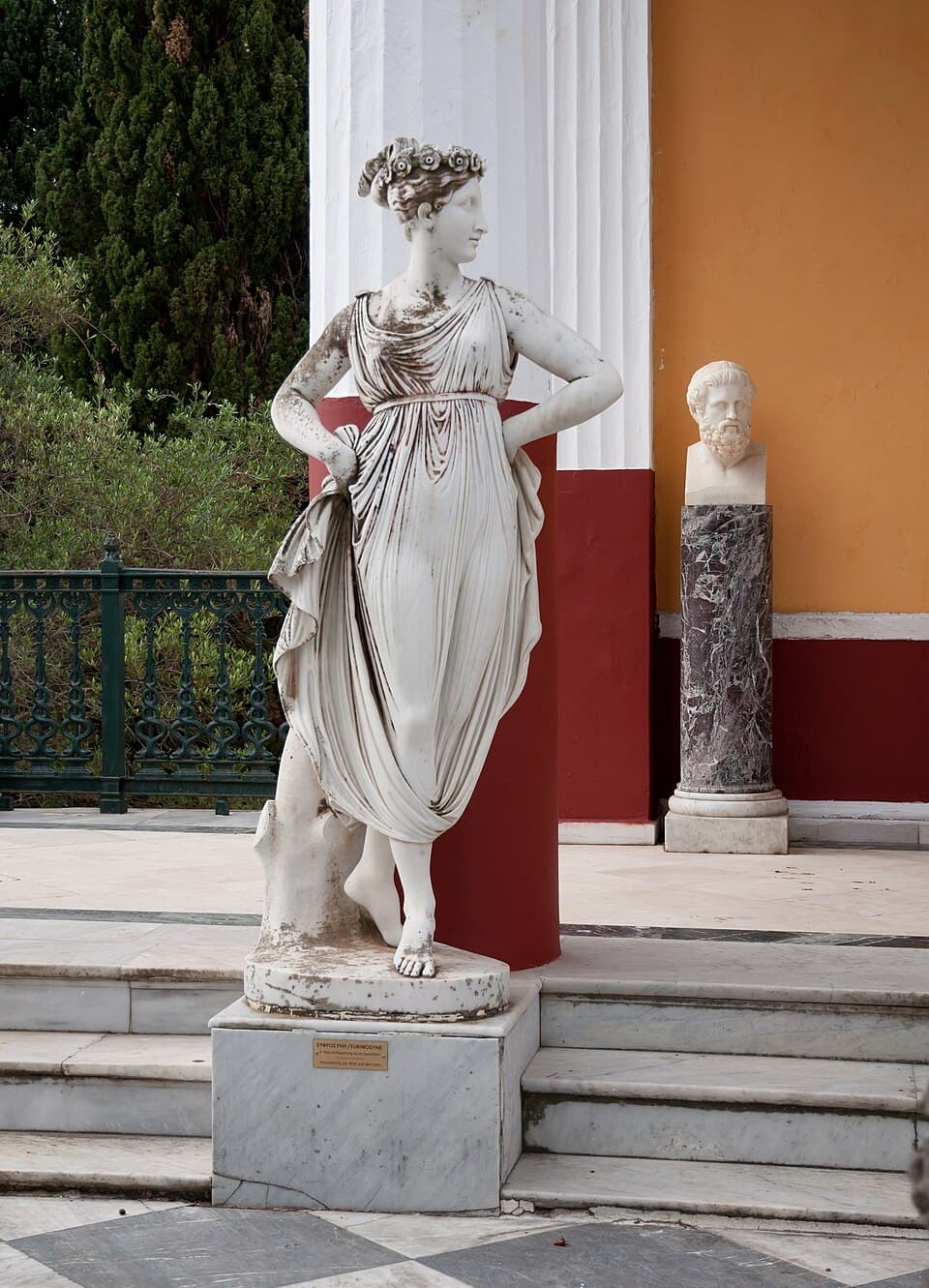
In ancient Greek religion and mythology, Euphrosyne is a goddess, one of the three Charites. She was sometimes named Euthymia or Eutychia.
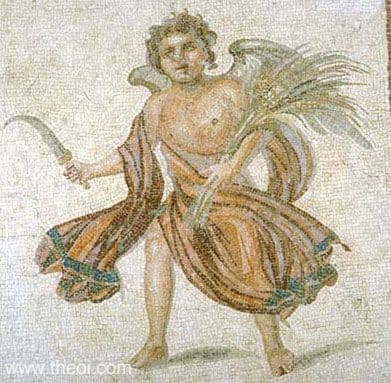
In ancient Greek mythology and religion, Eurus is the god and personification of the east wind, although sometimes he is also said to be southeast specifically. He is one of the four principal wind gods, the Anemoi, alongside his brothers Boreas, Zephyrus and Notus.
In Greek mythology Eurynome was an Oceanid and the mother of the Charites by Zeus.
Eusebeia is a Greek word abundantly used in Greek philosophy as well as in Greek translations of texts of Indian religions and the Greek New Testament, meaning to perform the actions appropriate to the gods. The root seb- (σέβ-) is connected to danger and flight, and thus the sense of reverence originally described fear of the gods.
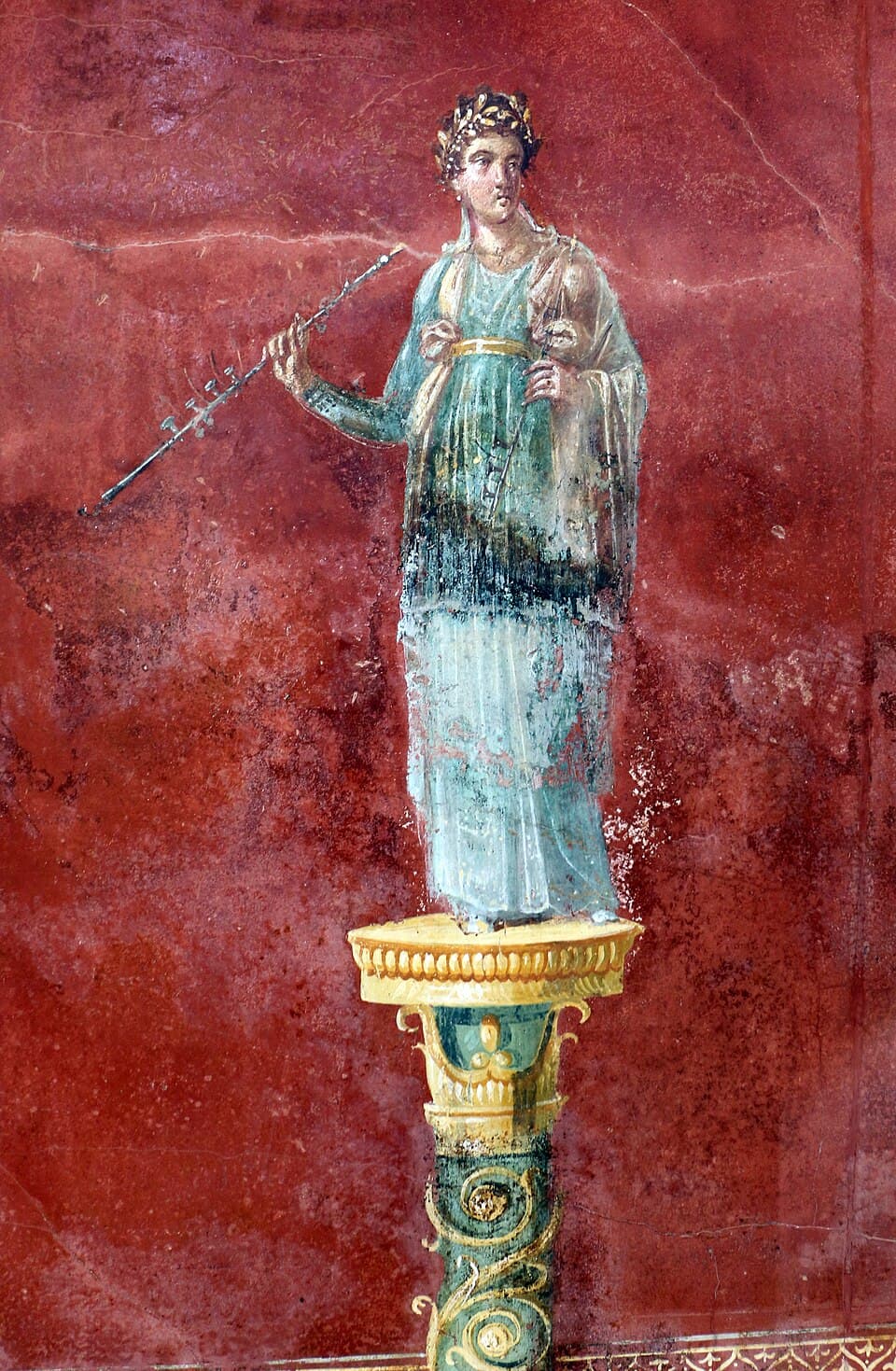
Euterpe was one of the Muses in Greek mythology, presiding over music. In late Classical times, she was named muse of lyric poetry. She has been called "Giver of delight" by ancient poets.
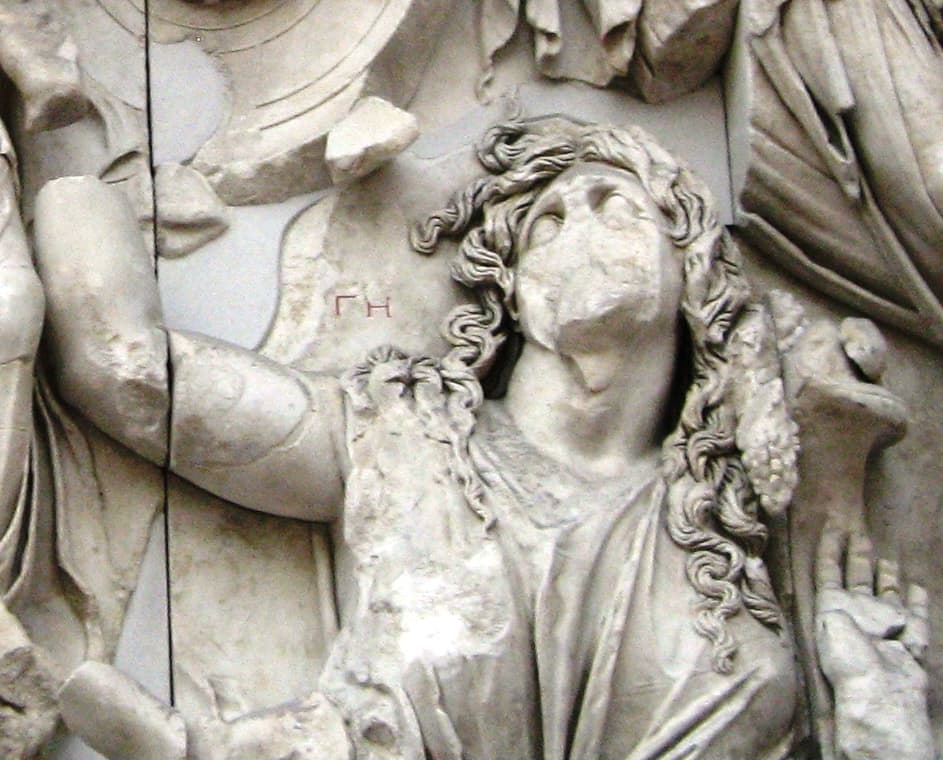
In Greek mythology, Gaia, also spelled Gaea, is the personification of Earth. She is the mother of Uranus (Sky), with whom she conceived the Titans, the Cyclopes, and the Giants, as well as of Pontus (Sea), from whose union she bore the primordial sea gods. Her equivalent in the Roman pantheon was Terra.
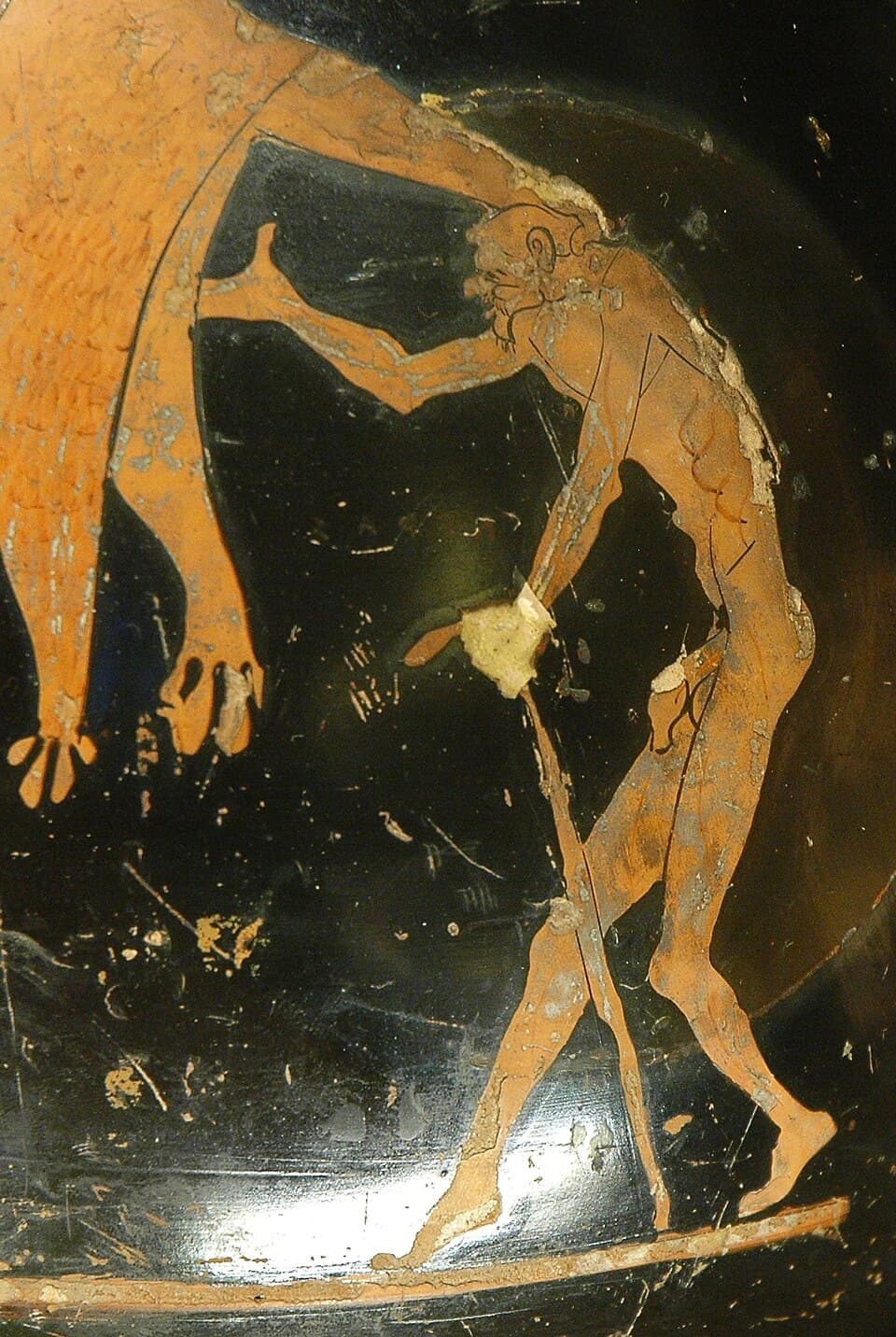
In Greek mythology, Geras is the god of old age. He was typically depicted as a tiny, shriveled old man. Gēras's opposite was Hebe, the goddess of youth.
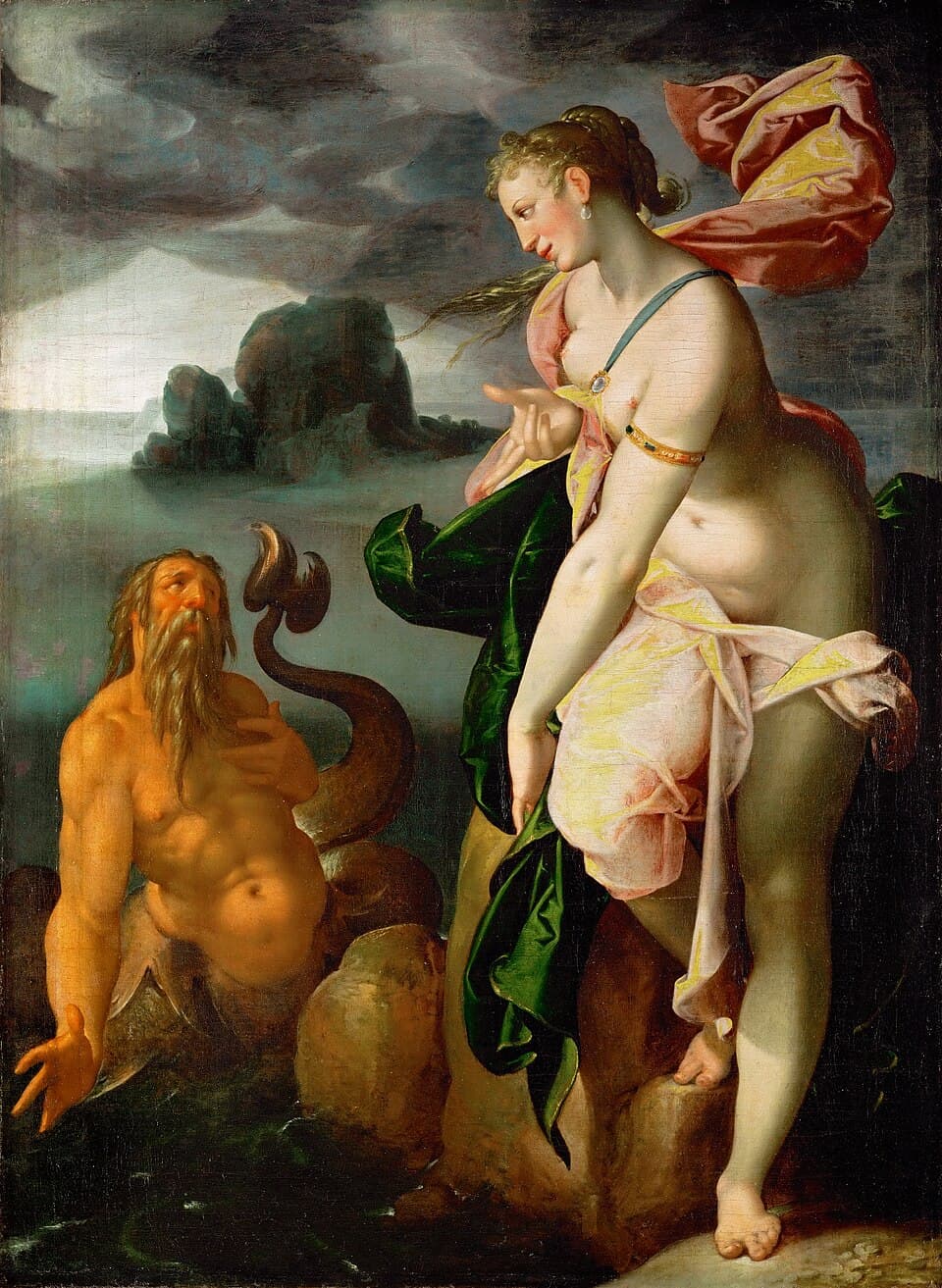
In Greek mythology, Glaucus was a Greek prophetic sea-god, born mortal and turned immortal upon eating a magical herb. It was believed that he came to the rescue of sailors and fishermen in storms, having earlier earned a living from the sea himself.
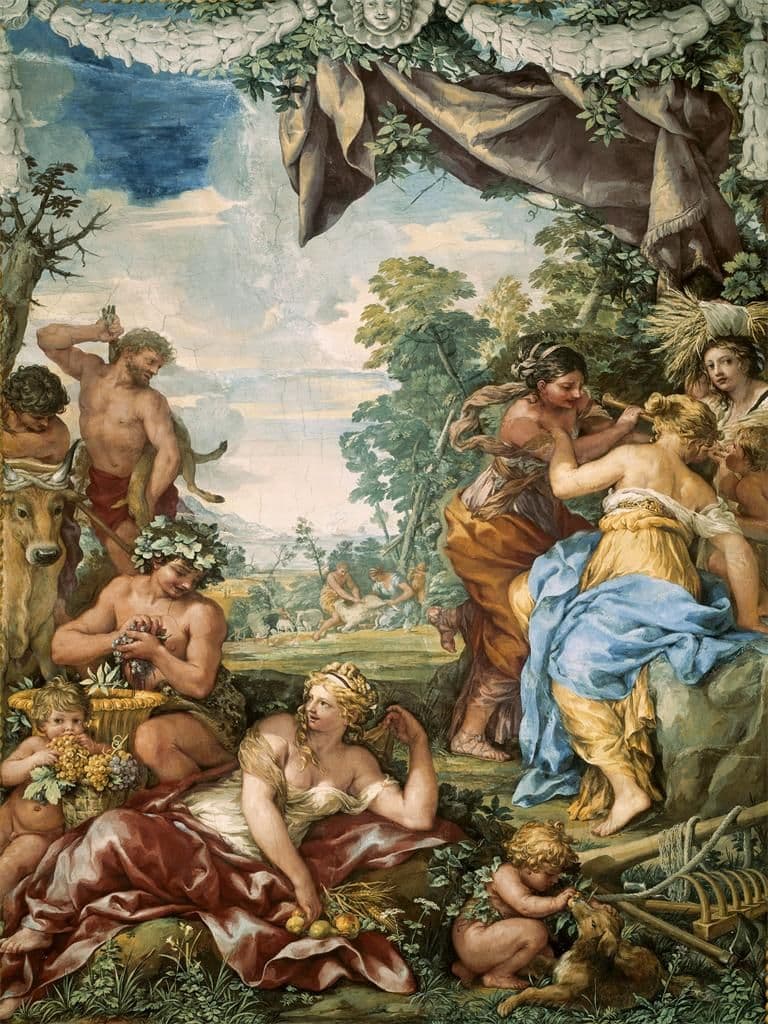
The term Golden Age comes from Greek mythology, particularly the Works and Days of Hesiod, and is part of the description of temporal decline of the state of peoples through five Ages, Gold being the first and the one during which the Golden Race of humanity lived. After the end of the first age was the Silver, then the Bronze, after this the Heroic age, with the fifth and current age being Iron.
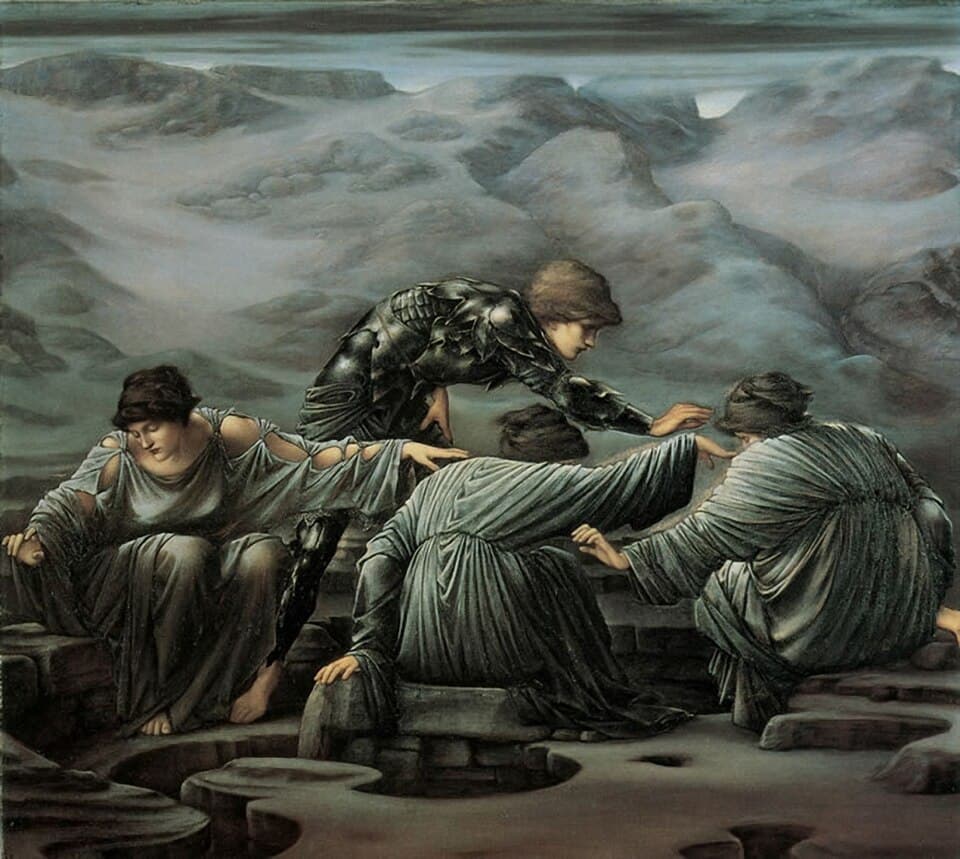
The Graeae, also called the Grey Sisters and the Phorcides, were three sisters of Greek mythology who had gray hair from their birth and shared one eye and one tooth among them. They were the daughters of the primordial sea gods Phorcys and Ceto and sisters of, among others, the Gorgons. Their names were Deino (Δεινώ), Pemphredo (Πεμφρηδώ), and Enyo.
The primordial deities of Greek mythology are the first generation of gods and goddesses. These deities represented the fundamental forces and physical foundations of the world and were generally not actively worshipped, as they, for the most part, were not given human characteristics; they were instead personifications of places or abstract concepts.
The ancient Greeks had numerous water deities. The philosopher Plato once remarked that the Greek people were like frogs sitting around a pond—their many cities hugging close to the Mediterranean coastline from the Hellenic homeland to Asia Minor, Libya, Sicily, and southern Italy. Thus, they venerated a rich variety of water divinities.
In Greek mythology, Gymnastica or Gymnasia, was the fourth Hora (Hour) who presided over the morning hour of education, training, gymnastics and exercise.
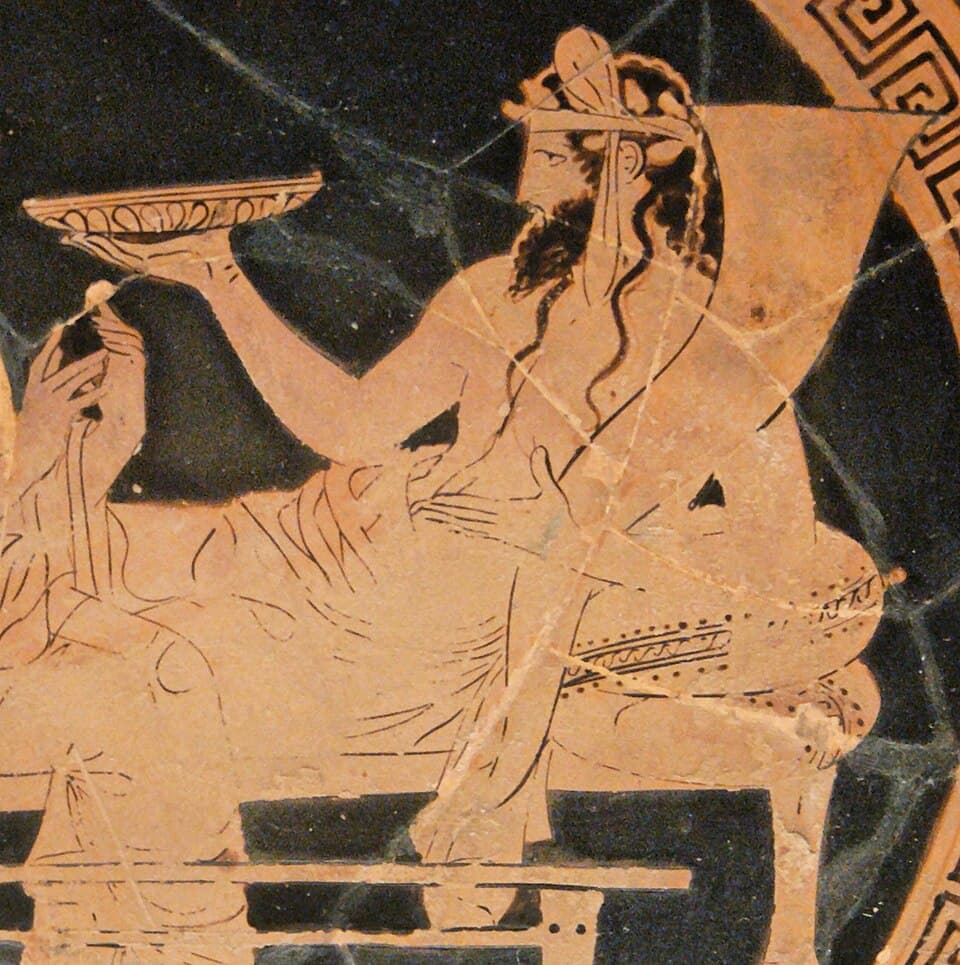
Hades, in the ancient Greek religion and mythology, is the god of the dead and riches and the King of the underworld, with which his name became synonymous. Hades was the eldest son of Cronus and Rhea, although this also made him the last son to be regurgitated by his father. He and his brothers, Zeus and Poseidon, defeated, overthrew, and replaced their father's generation of gods, the Titans, and claimed joint sovereignty over the cosmos.

In Greek mythology, Harmonia is the goddess of harmony and concord. Her Greek opposite is Eris and her Roman counterpart is Concordia. Harmonia is most well-known for her marriage to Cadmus and the many misfortunes that haunted her descendants, particularly those related to the fabled Necklace of Harmonia.

In Greek and Roman mythology, a harpy is a half-human and half-bird mythical creature, often believed to be a personification of storm winds. They feature in Homeric poems.
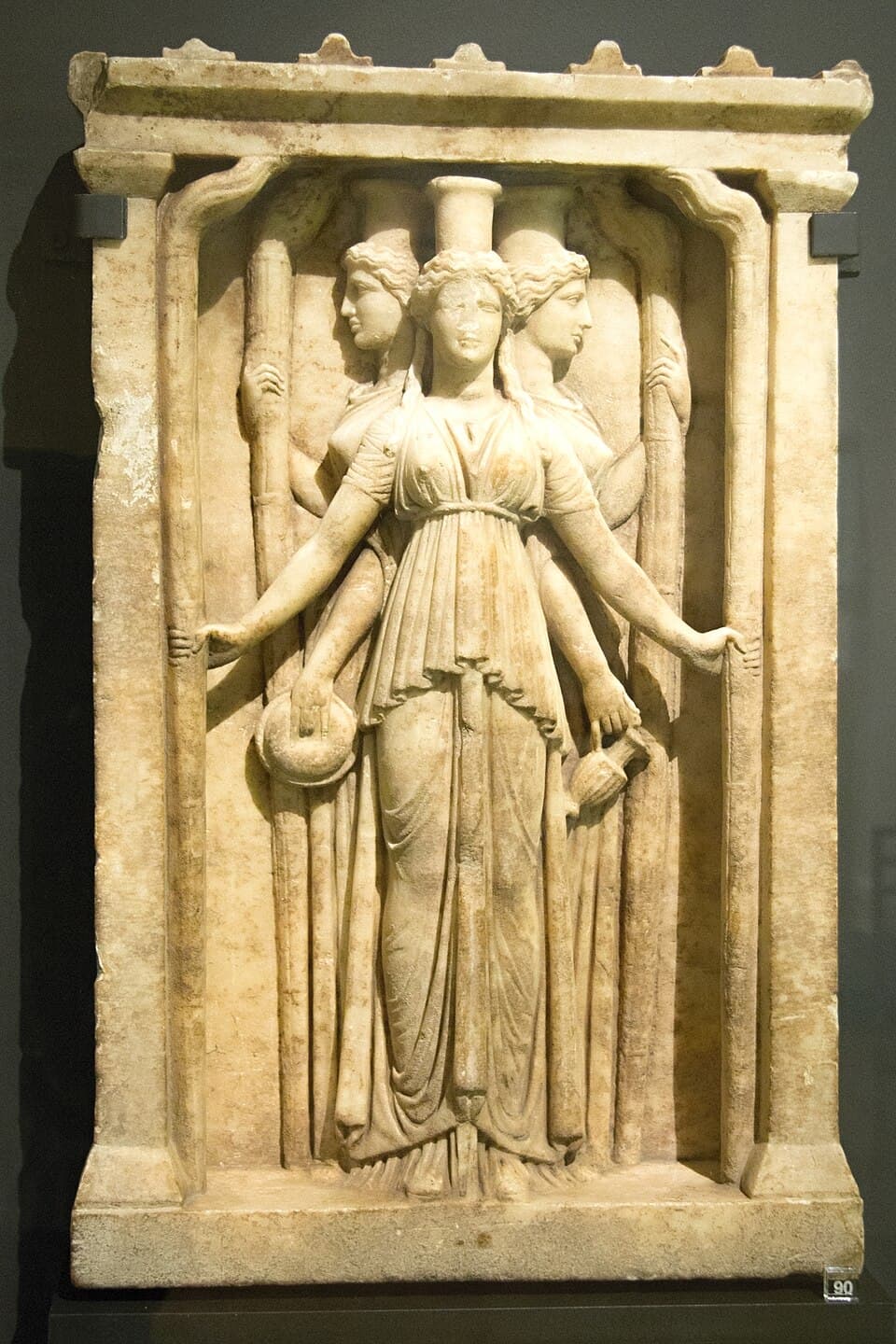
Hecate is a goddess in ancient Greek religion and mythology, most often shown holding a pair of torches, a key, or snakes, or accompanied by dogs, and in later periods depicted as three-formed or triple-bodied. She is variously associated with crossroads, night, light, magic, witchcraft, and the Moon. Her earliest appearance in literature was in Hesiod's Theogony in the 8th century BCE as a goddess of great honour with domains in sky, earth, and sea.
In Greek mythology, Hecaterus or Hekateros was a minor god and the father of five daughters by the daughter of Phoroneus, and through them grandfather of the Oreads, Satyrs, and Curetes. His wife was also identified as Anchiale, the mother of a set of sons.
Hedone is the Greek word meaning "pleasure". It was an important concept in Ancient Greek philosophy, especially in the Epicurean school. It is also the root of the English word "hedonism".
In ancient Greek religion, Hegemone was, according to the geographer Pausanias, the name given to one of the two Charites at Athens. Hegemone, as the name of a Charis, can be understood to mean "she who leads" in the sense of "brings the plants forth from the earth". Hegemone, along with Auxo, and several other deities including Ares, and Zeus, was invoked as witness to the civic oath sworn by the ephebes of Athens.
Heimarmene or Himarmene is a goddess and being of fate/destiny in Greek mythology. She belongs to a family of similar beings of destiny and fate, which have given us various modern concepts.
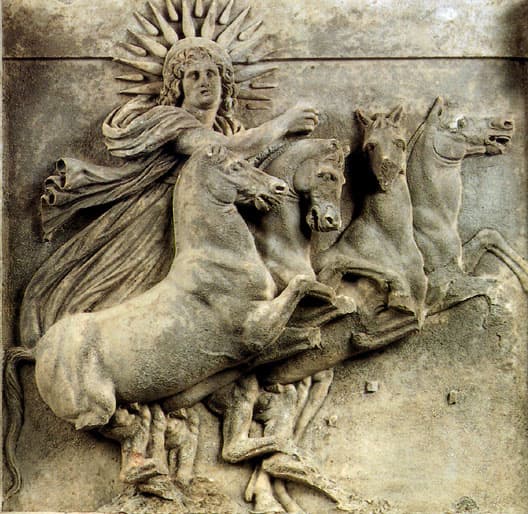
In ancient Greek religion and mythology, Helios is the god who personifies the Sun. His name is also Latinized as Helius, and he is often given the epithets Hyperion and Phaethon. Helios is often depicted in art with a radiant crown and driving a horse-drawn chariot through the sky.
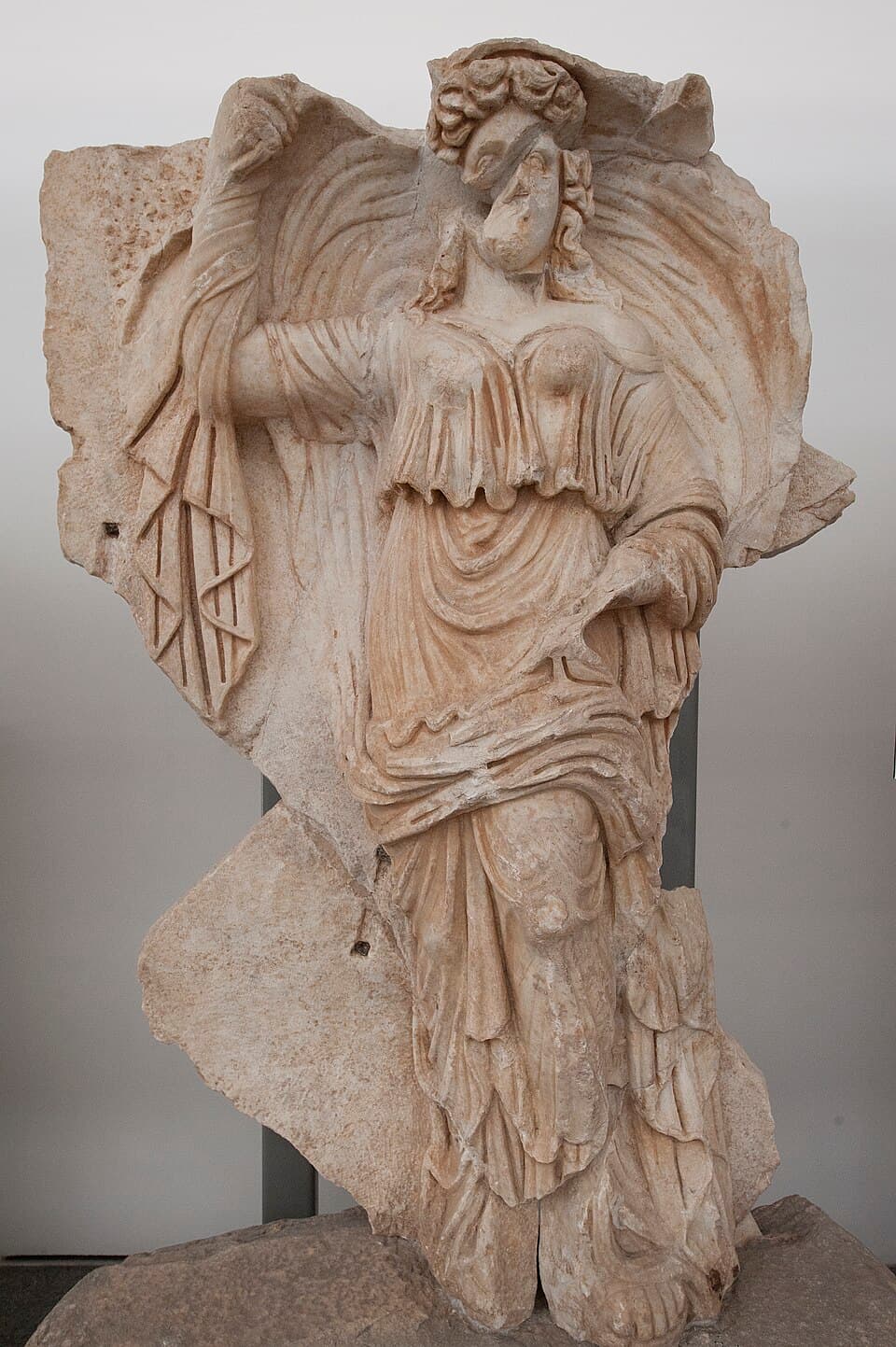
In Greek mythology, Hemera was the personification of day. According to Hesiod, she was the daughter of Erebus (Darkness) and Nyx (Night), and the sister of Aether. Though separate entities in Hesiod's Theogony, Hemera and Eos (Dawn) were often identified with each other.
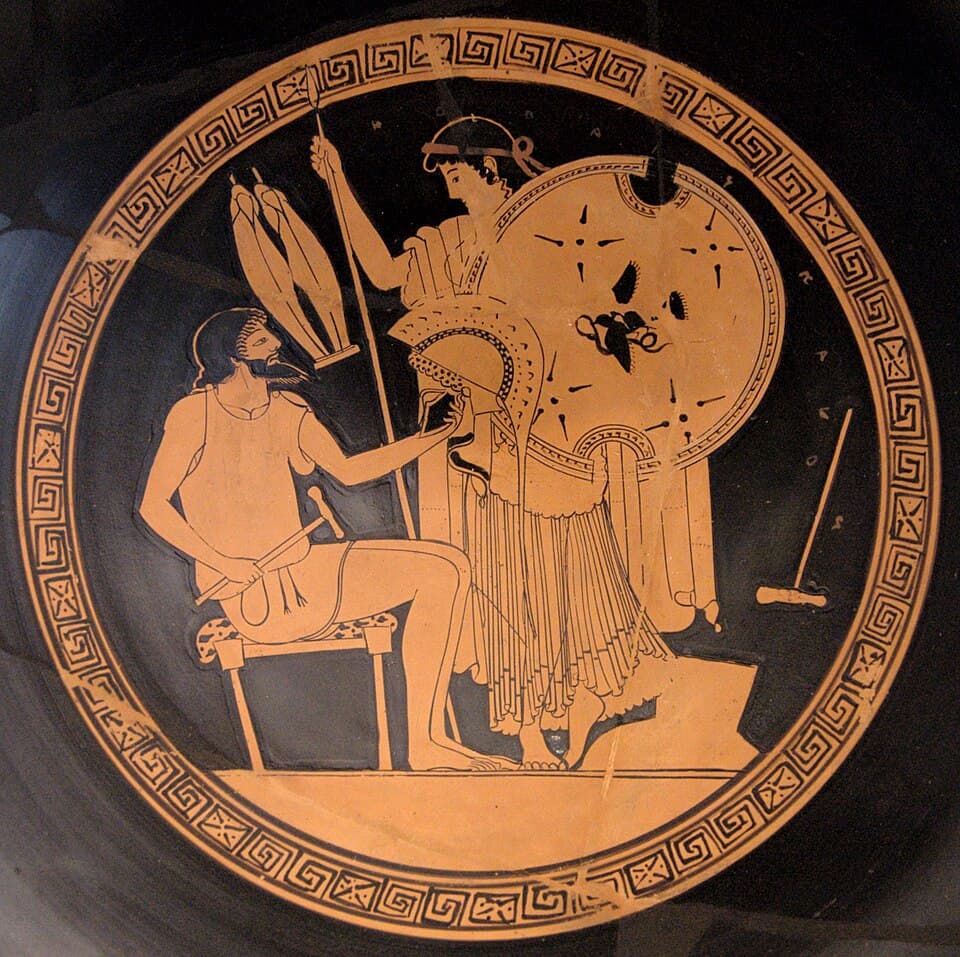
Hephaestus is the Greek god of artisans, blacksmiths, carpenters, craftsmen, fire, metallurgy, metalworking, sculpture, and volcanoes. In Greek mythology, Hephaestus was the son of Hera, either on her own or by her husband Zeus. He was cast off Mount Olympus by his mother Hera because of his lameness, the result of a congenital impairment; or in another account, by Zeus for protecting Hera from his advances.
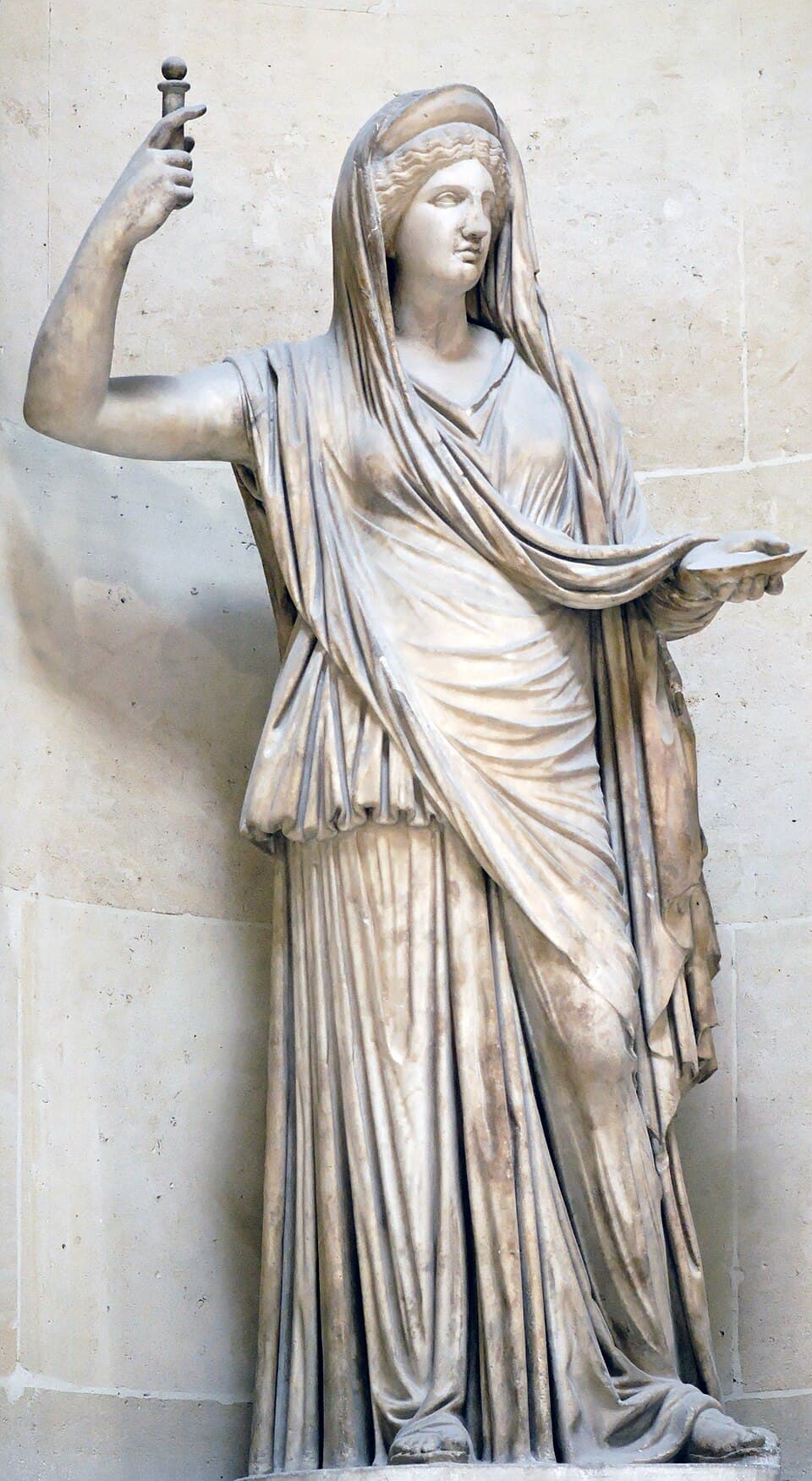
In ancient Greek religion, Hera is the goddess of marriage, women, and family, and the protector of women during childbirth. In Greek mythology, she is queen among the twelve Olympians on Mount Olympus, sister and wife of Zeus, and daughter of the Titans Cronus and Rhea. One of her defining characteristics in myth is her jealous and vengeful nature in dealing with any who offended her, especially Zeus's numerous adulterous lovers and illegitimate offspring.
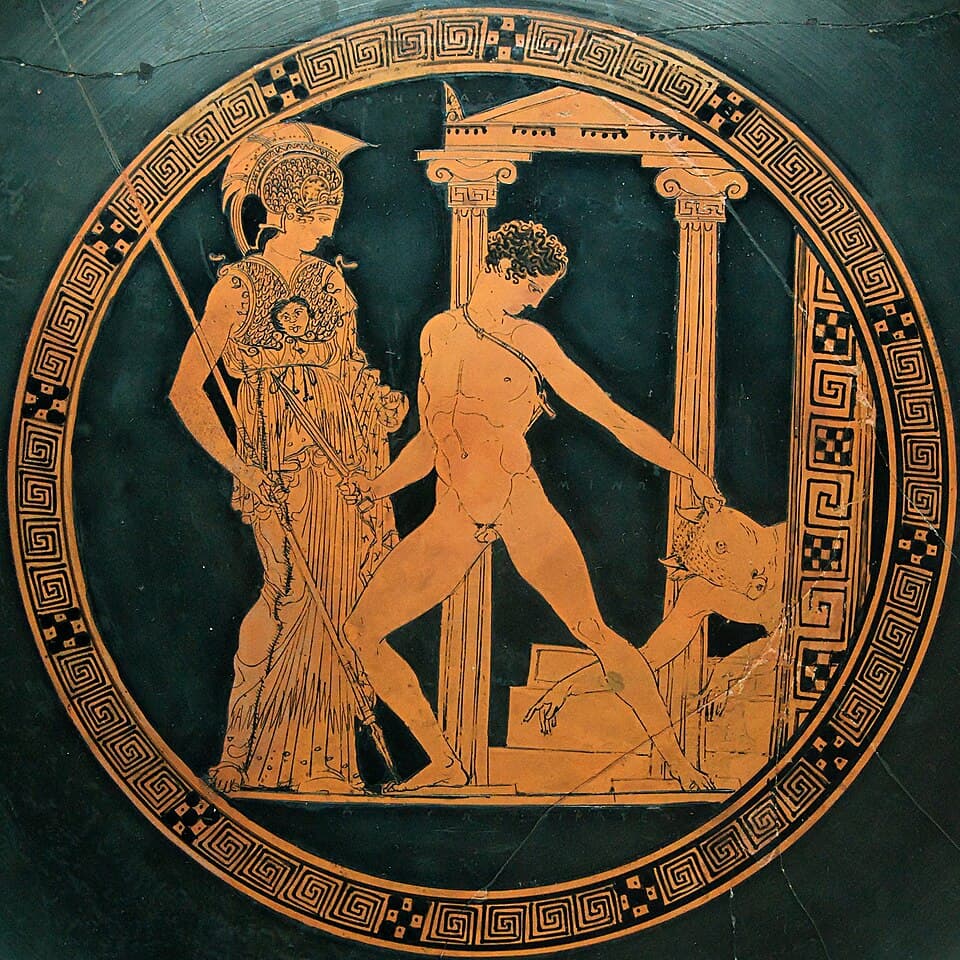
Heracles, born Alcaeus or Alcides, was a divine hero in Greek mythology, the son of Zeus and Alcmene, and the foster son of Amphitryon. He was a descendant of Perseus, another son of Zeus.
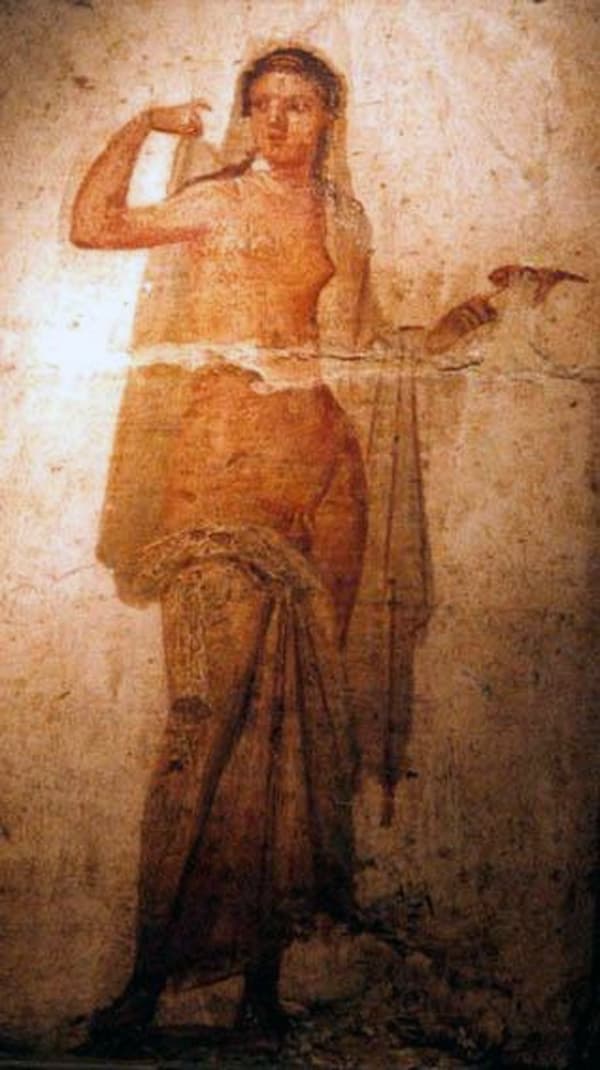
In ancient Greek religion and mythology, Hermaphroditus is a child of Aphrodite and Hermes. Because Hermaphroditus was a child of Hermes, and consequently a great-grandchild of Atlas, he is sometimes called Atlantiades. He has an androgynous body similar to that of an intersex person, and he is a minor romance deity symbolizing intersexuality, androgyny, and marriage.
In Greek mythology, Hesperis was the tenth Hora (Hour) who presided over the hour of dusk, the end of the afternoon work hours and start of evening.
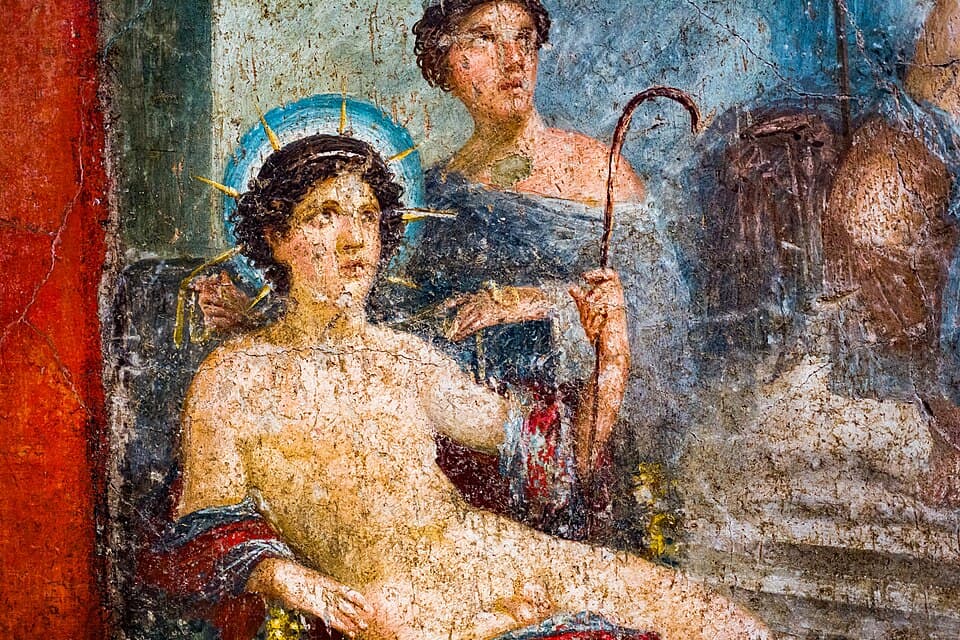
In Greek mythology, Hesperus is the Evening Star, the planet Venus in the evening. A son of the dawn goddess Eos, he is the half-brother of her other son, Phosphorus. Hesperus' Roman equivalent is Vesper.
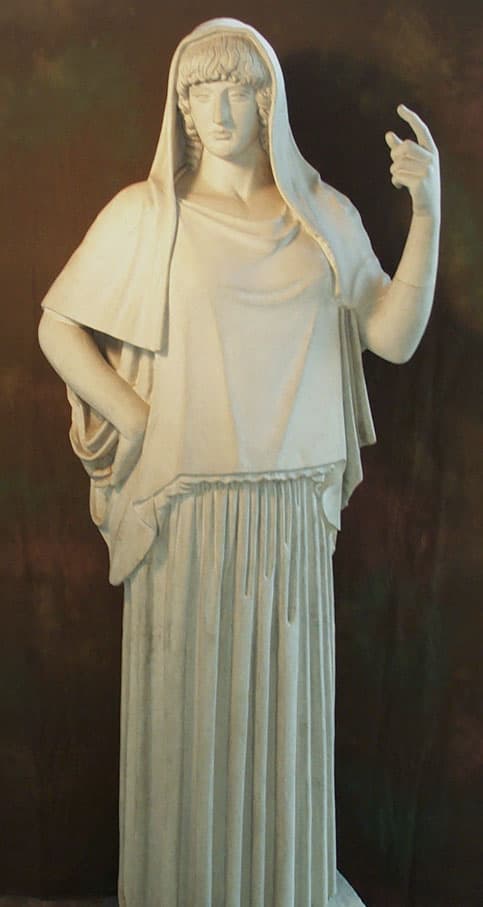
In ancient Greek religion and mythology, Hestia is the virgin goddess of the hearth and the home. In myth, she is the firstborn child of the Titans Cronus and Rhea, and one of the Twelve Olympians.
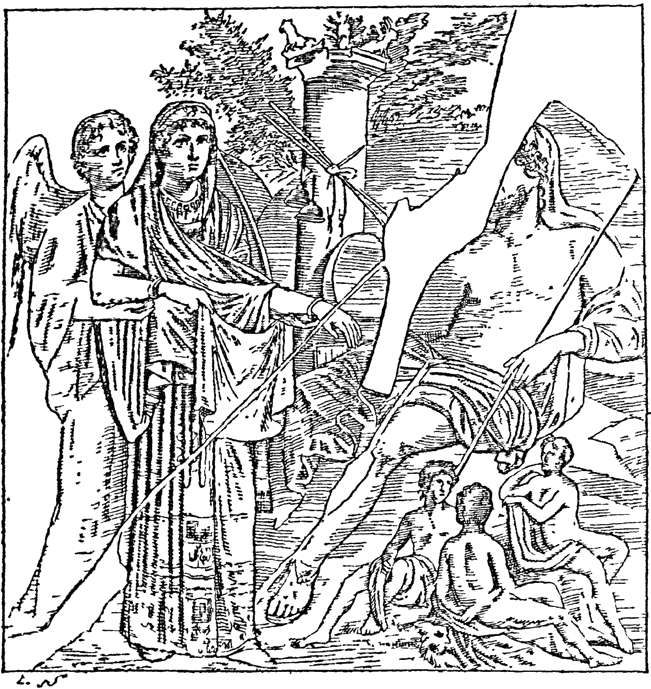
Hieros gamos, or hierogamy is a sacred marriage that takes place between gods, especially when enacted in a symbolic ritual where human participants represent the deities.
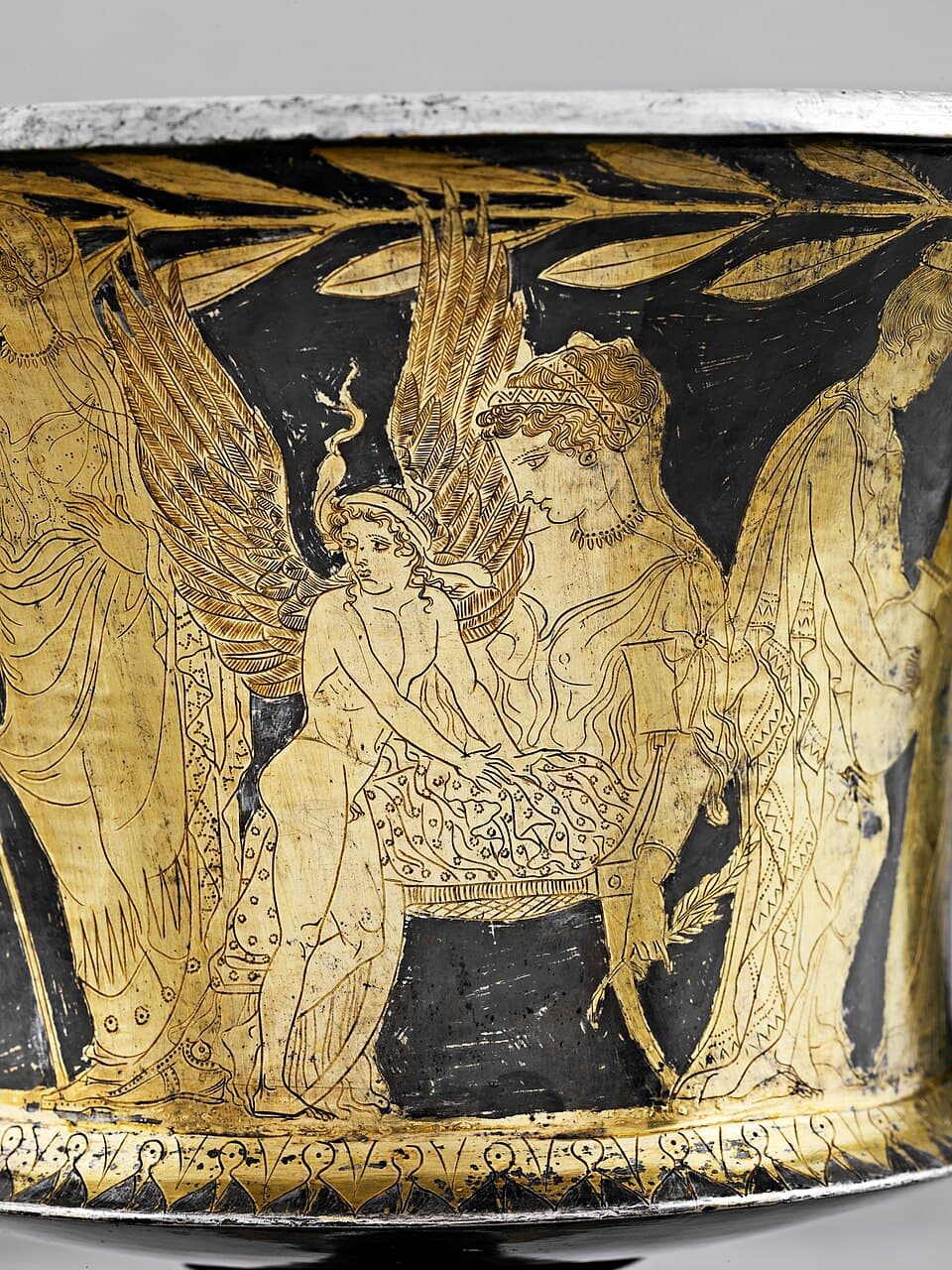
In Greek mythology and ancient Greek religion, Himeros is a winged love deity who is part of Aphrodite's procession. Often described as "sweet", he is the god and personification of desire and lust.
Hippeia or Hippea is the name of two characters in Greek mythology. Hippea, daughter of Antippus. She married Elatus and bore the Argonaut Polyphemus and Caeneus.
In Greek mythology, Homados was the personification of battle-noise—the shouts, cries, and confusion of men and the clashing of their weapons.
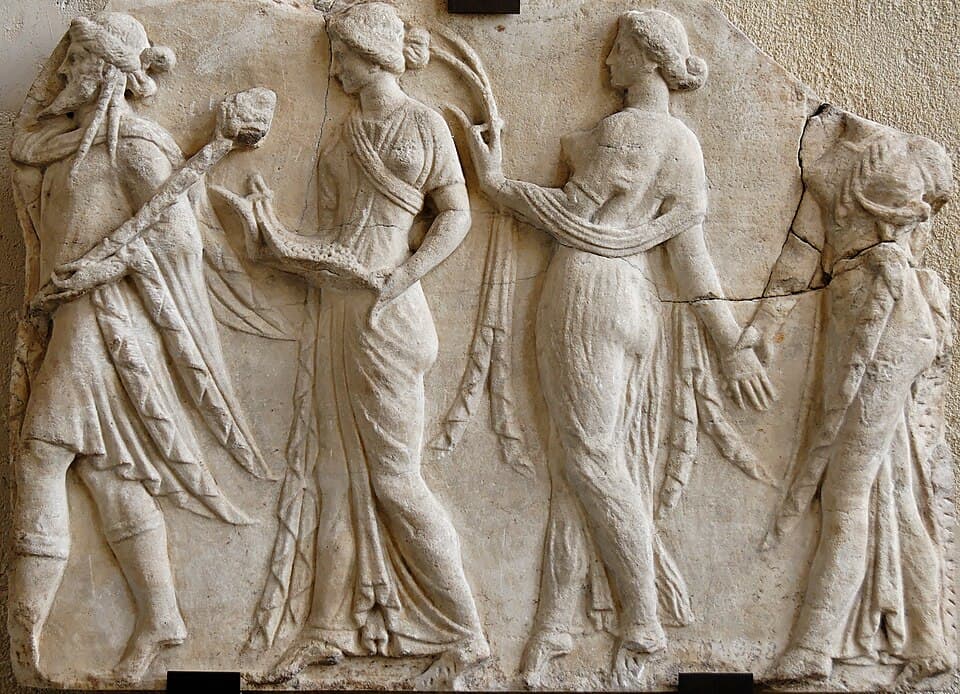
In Greek mythology, the Horae, Horai or Hours were the goddesses of the seasons and the natural portions of time.
In Greek mythology, Horkos personifies the curse that is inflicted on any person who swears a false oath. According to Hesiod, Horkos was the son of Eris (Strife). He is one of the divine enforcers of oaths, which were an important part of the ancient Greek system of justice.
In Greek mythology, Horme is the Greek spirit personifying energetic activity, impulse or effort, eagerness, setting oneself in motion, and starting an action, and particularly onrush in battle. She had an altar at Athens, where mainly the divine servants and relations of Zeus had altars. Her opposite character is Aergia, a goddess of sloth and apathy.
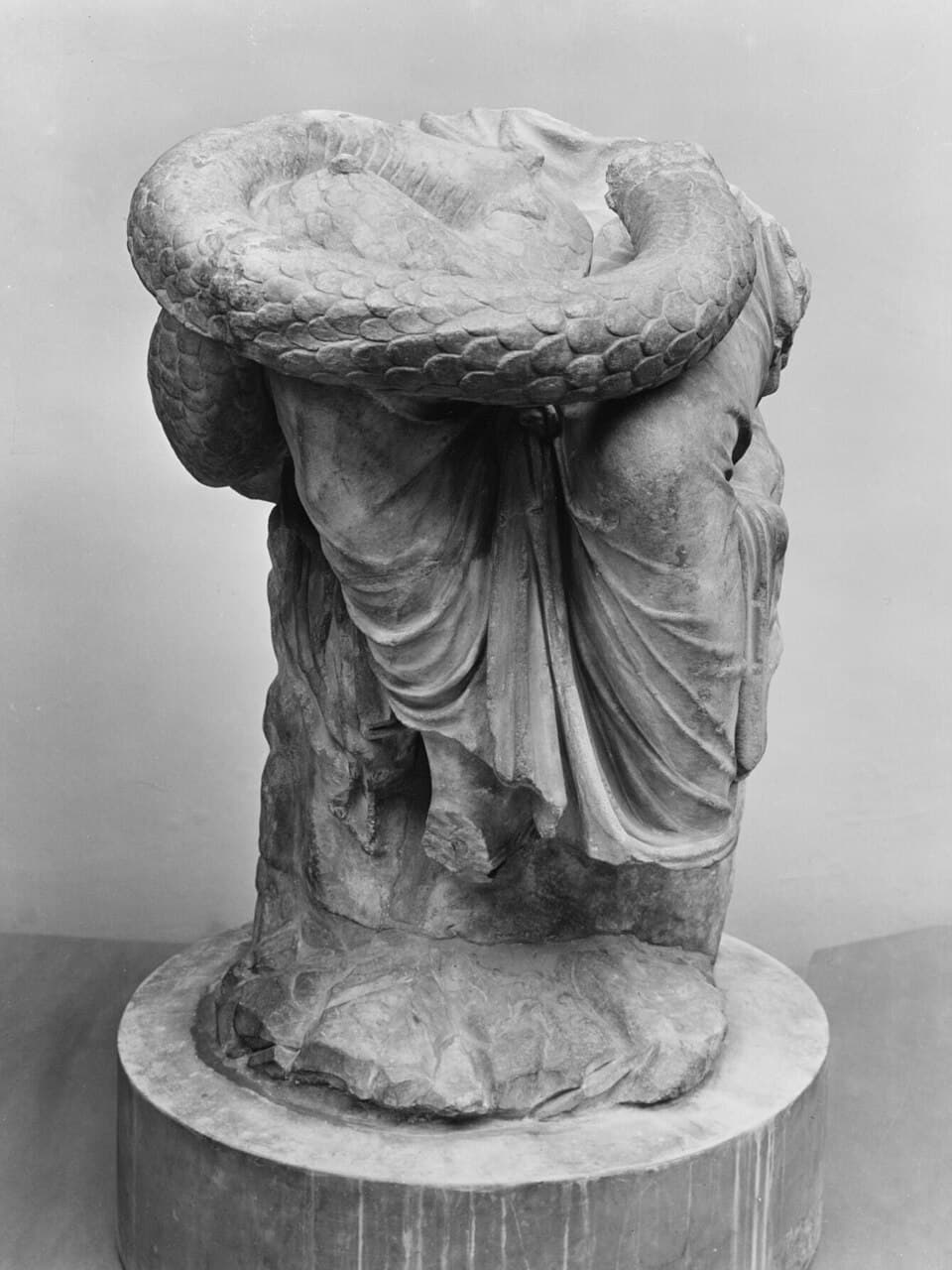
Hygieia is a goddess from Greek mythology. Hygieia is a goddess of health, cleanliness and hygiene. Her name is the source for the word "hygiene".
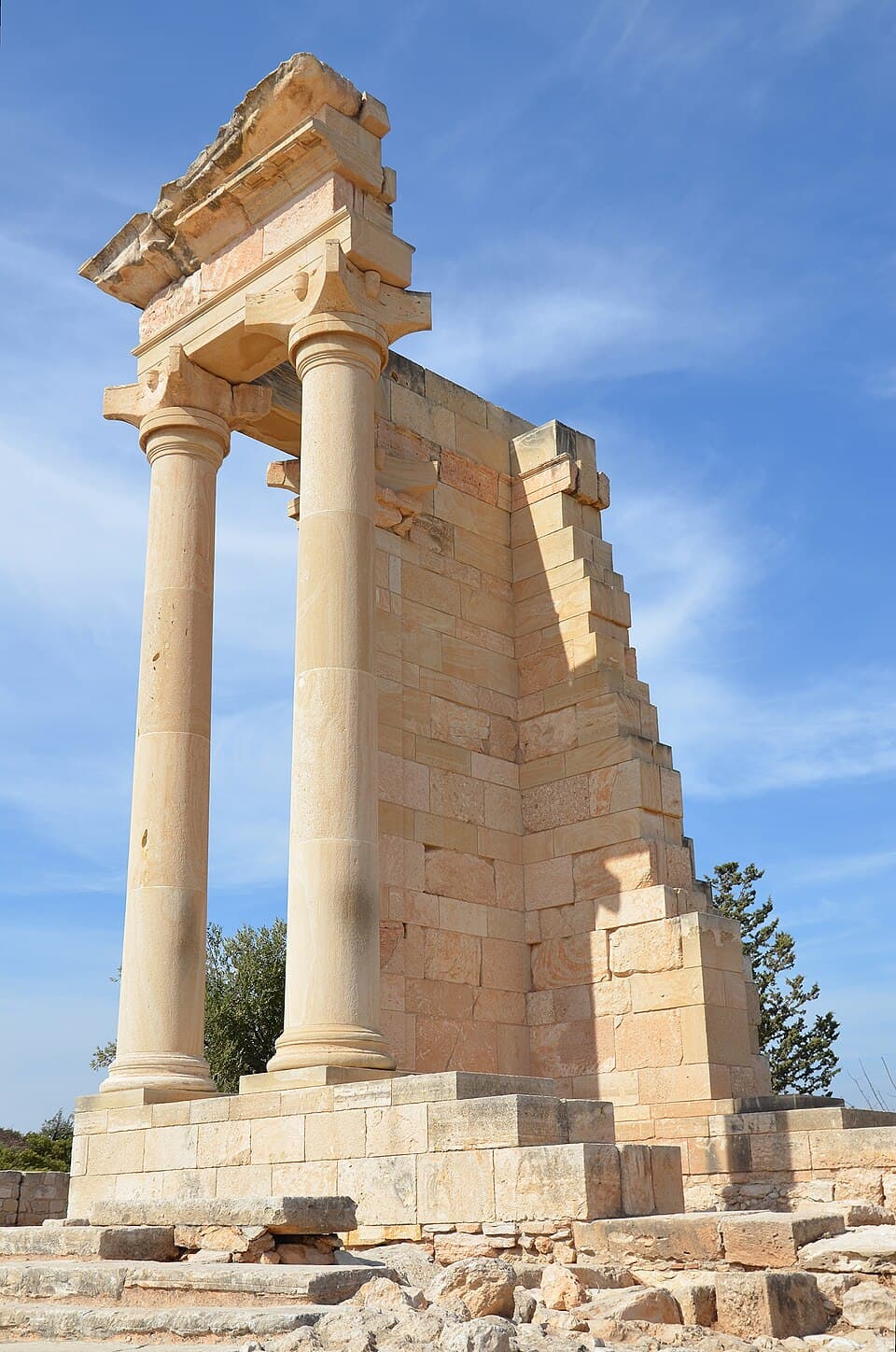
Hylates was a god worshipped on the island of Cyprus who was later likened to the Greek god Apollo. His name probably derives from ὑλακτέω [ʰylaktéō] "barking" or ὕλη [ʰýlē] "forest".
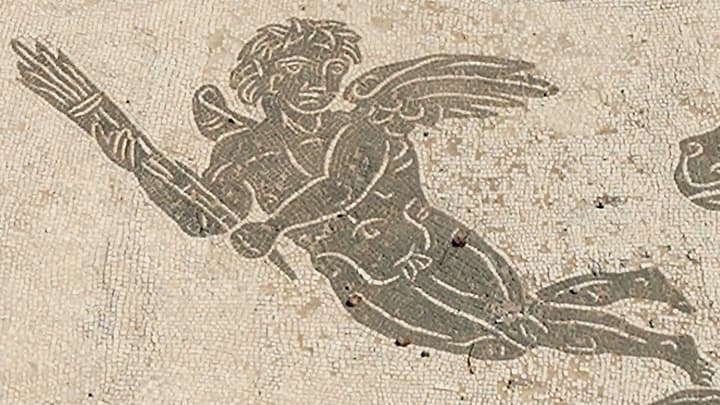
In Greek mythology, Hymen, Hymenaios or Hymenaeus (Ὑμέναιος), is a god of marriage ceremonies who inspires feasts and song. Related to the god's name, a hymenaios is a genre of Greek lyric poetry that was sung during the procession of the bride to the groom's house in which the god is addressed, in contrast to the Epithalamium, which is sung at the nuptial threshold.
In Greek mythology, Hypate (Ὑπάτη) was one of the three Muses of the lyre who were worshipped at Delphi, where the Temple of Apollo and the Oracle were located. Her name was also used to describe the first (lowest) note of the first tetrachord in ancient Greek music, which was also the tallest string on the lyre. Her sisters who were worshipped along with her were Nete and Mese, who also have notes named after them in ancient Greek music theory.
In Greek mythology, Hyperion was one of the Titans, the children of Uranus (Sky) and Gaia (Earth). With his sister, the Titaness Theia, Hyperion fathered Helios (Sun), Selene (Moon) and Eos (Dawn).
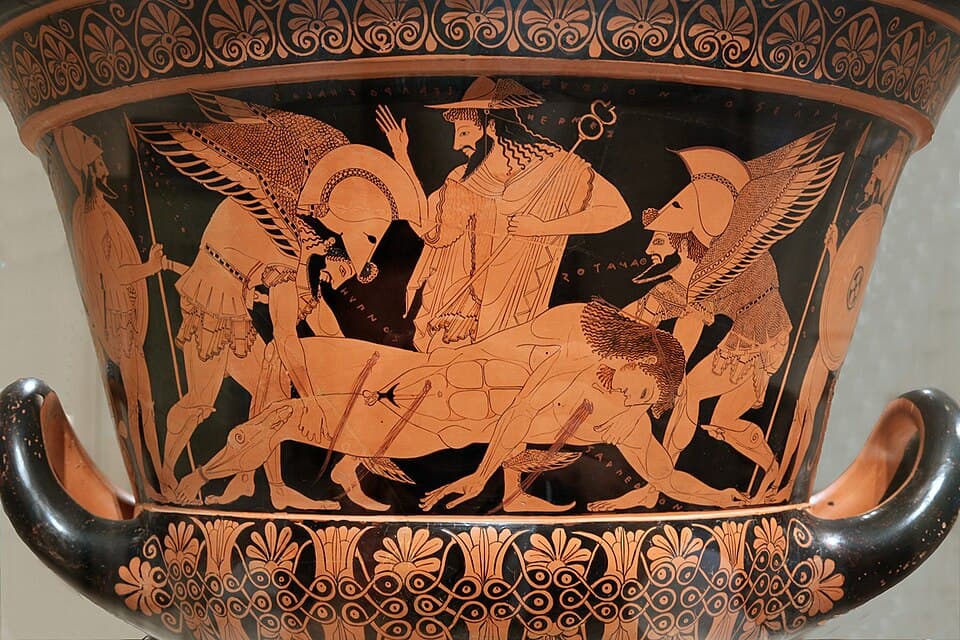
In Greek mythology, Hypnos, also spelled Hypnus, is the personification of sleep. The Roman equivalent is Somnus. His name is the origin of the word hypnosis.
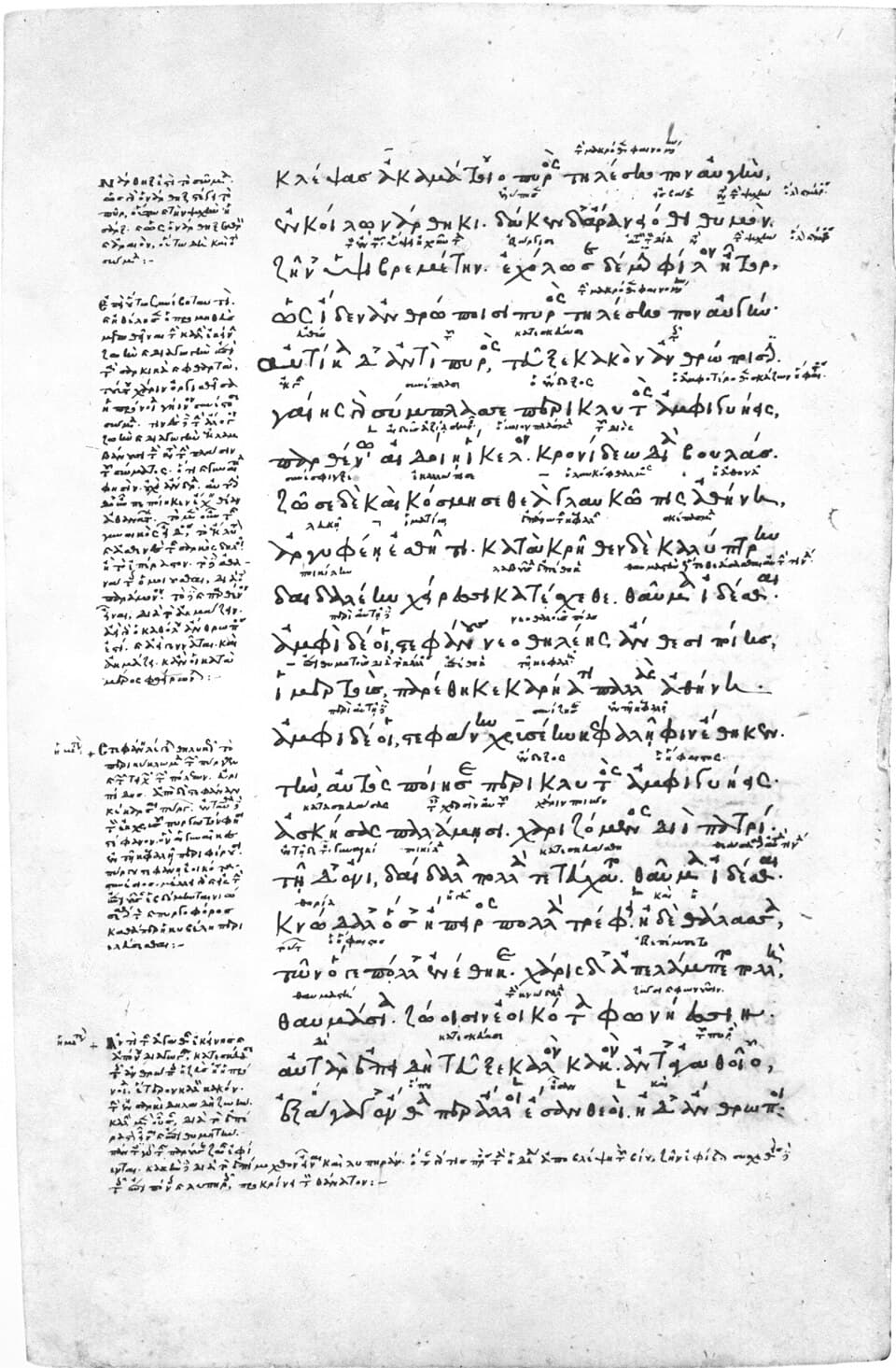
In Greek mythology, the Hysminai or Hysminae are collectively the personification of combat. In Hesiod's Theogony, the Hysminai are listed among the children of Eris (Strife). Like all of the children of Eris given by Hesiod, the Hysminai are a personified abstraction, allegorizing the meaning of their name, and representing one of the many harmful things which might be thought to result from discord and strife, with no other identity.
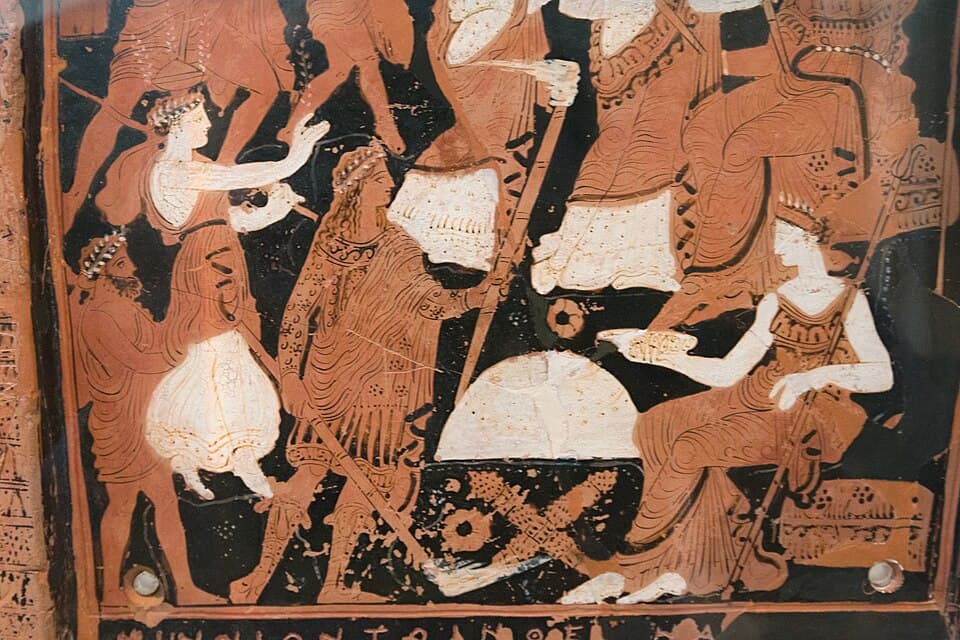
In ancient Greek religion and mythology, Iacchus was a minor deity, of some cultic importance, particularly at Athens and Eleusis in connection with the Eleusinian Mysteries, but without any significant mythology. He perhaps originated as the personification of the ritual exclamation Iacche! cried out during the Eleusinian procession from Athens to Eleusis.
In Greek mythology, Iapetus or Iapetos, also Japetus or Japetos, was one of the Titans, the son of Uranus (Sky) and Gaia (Earth) and father of Atlas, Prometheus, Epimetheus, and Menoetius. He was also called the father of Buphagus and Anchiale in other sources.
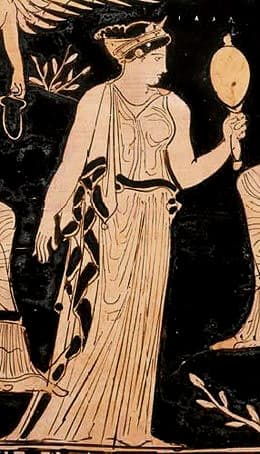
Iaso or Ieso was the Greek goddess of recuperation from illness. The daughter of Asclepius, she had four sisters: Aceso, Aegle, Hygieia, and Panacea. All five were associated with some aspect of health or healing.
In Greek mythology, the Dactyls or Daktyloi were the archaic mythical race of male beings associated with the Great Mother, whether as Cybele or Rhea. Their numbers vary, but often they were ten spirit-men so like the three Korybantes or the Cabeiri that they were often interchangeable. The Dactyls were both ancient smiths and healing magicians.
In Greek mythology, Idyia or Eidyia was a daughter of the Titans Oceanus and Tethys, and queen to Aeëtes, king of Colchis. She was the mother of Medea, Chalciope and Absyrtus. According to Apollonius of Rhodes, she was the youngest of the Oceanides.
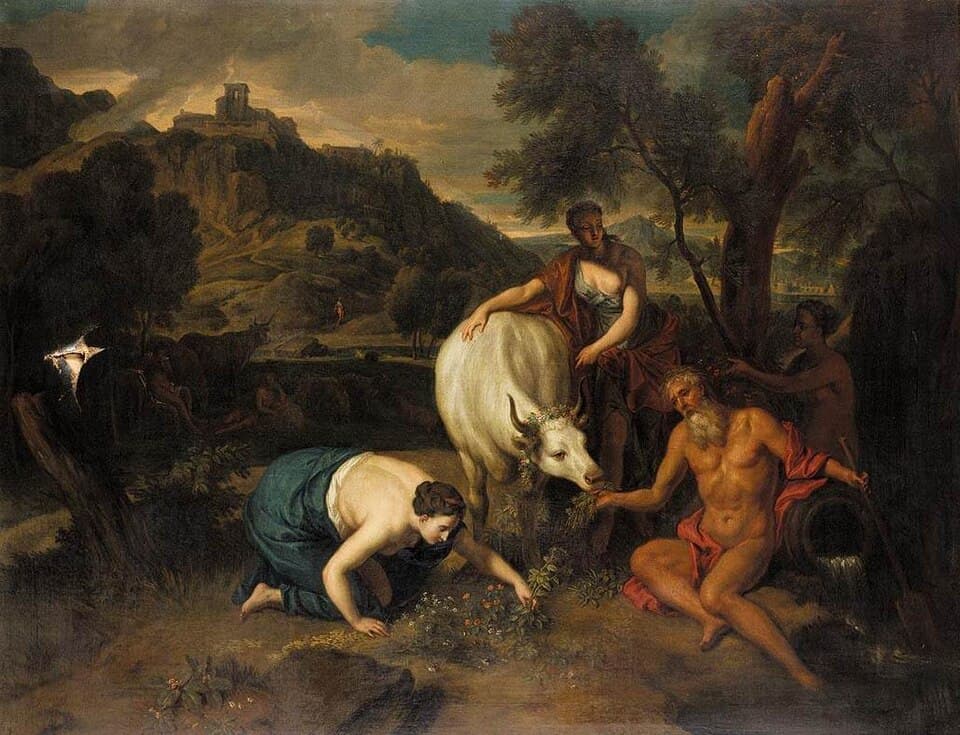
In Greek mythology, Inachus or Inachos was the first king of Argos. He was one of the three thousand sons of Oceanus and Tethys. The Inachus River, a river in eastern Peloponnese, is named after him.
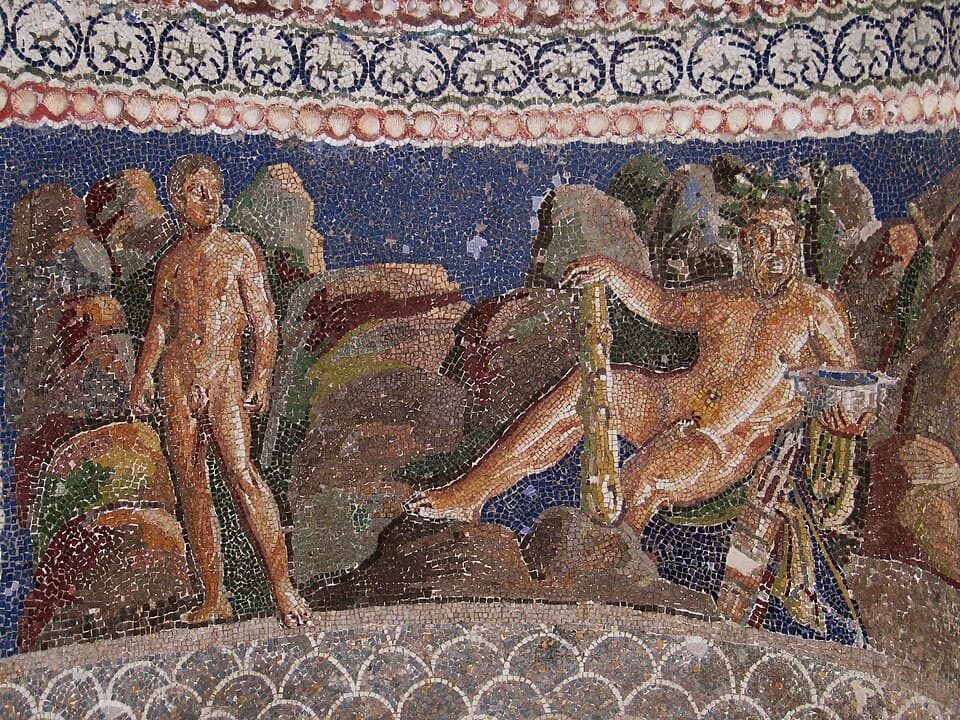
In Greek mythology, Iolaus was a Theban divine hero. He was famed for being Heracles's charioteer and squire, and for helping with some of his Labors, as well as for being one of the Argonauts.
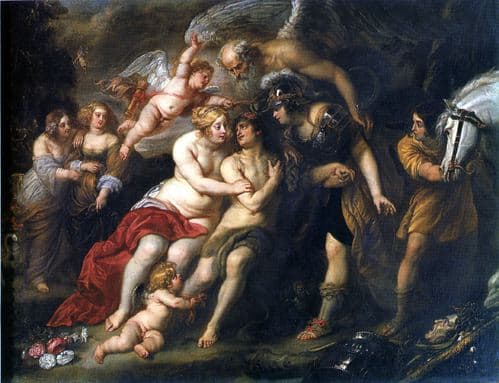
Kakia is the Greek goddess of vice and moral badness. She was depicted as a vain and heavily made-up woman dressed in revealing clothes, and was presented as the opposite of Arete, goddess of excellence and virtue.
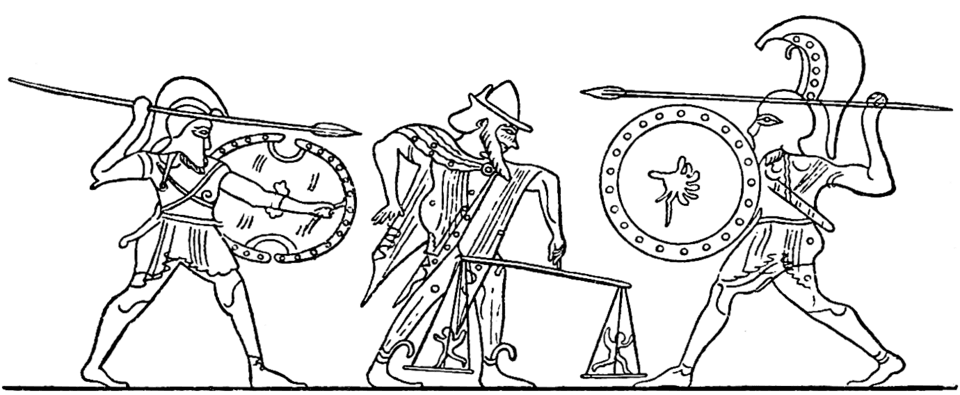
In Greek mythology, the Keres were female death-spirits. They were the goddesses who personified violent death and who were drawn to bloody deaths on battlefields. Although they were present during death and dying, they did not have the power to kill.
It's commonly believed that, in Greek mythology, Koalemos is the deity or daemon of stupidity, found in a play by Aristophanes and a book by Plutarch.
According to Greek mythology, the Korybantes, also spelled Corybantes or Corybants, were the armed and crested dancers who worshipped the Phrygian goddess Cybele with drumming and dancing. They are also called the Kurbantes in Phrygia.
According to Greek mythology, the Korybantes, also spelled Corybantes or Corybants, were the armed and crested dancers who worshipped the Phrygian goddess Cybele with drumming and dancing. They are also called the Kurbantes in Phrygia.
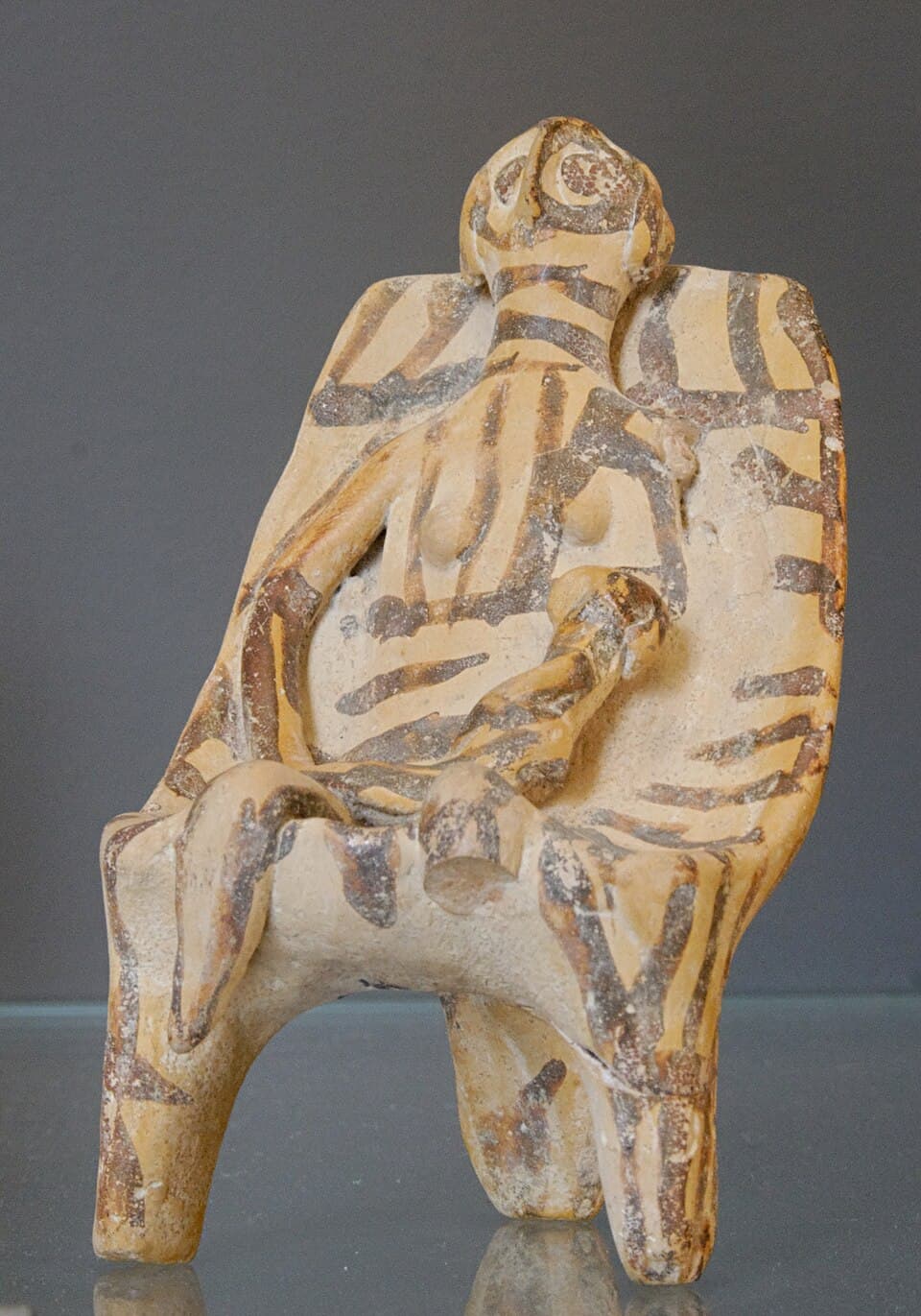
Kourotrophos is the name that was given in ancient Greece to gods and goddesses whose properties included their ability to protect young people. Numerous gods are referred to by the epithet such as Athena, Leto, Apollo, Hermes, Hecate, Aphrodite, Artemis, Eileithyia, Demeter, Gaia, Cephissus and Asclepius. They were usually depicted holding an infant in their arms.
In Greek mythology, Kydoimos or Cydoemus was the personification of the din of battle, confusion, uproar and hubbub. He was probably numbered amongst the Makhai, daimones of the battlefield. Kydoimos appears in Aristophanes' Peace as a character.