Western1770–1831
Georg Hegel
Stuttgart
German idealist whose dialectic of history shaped modern philosophy.
Biography
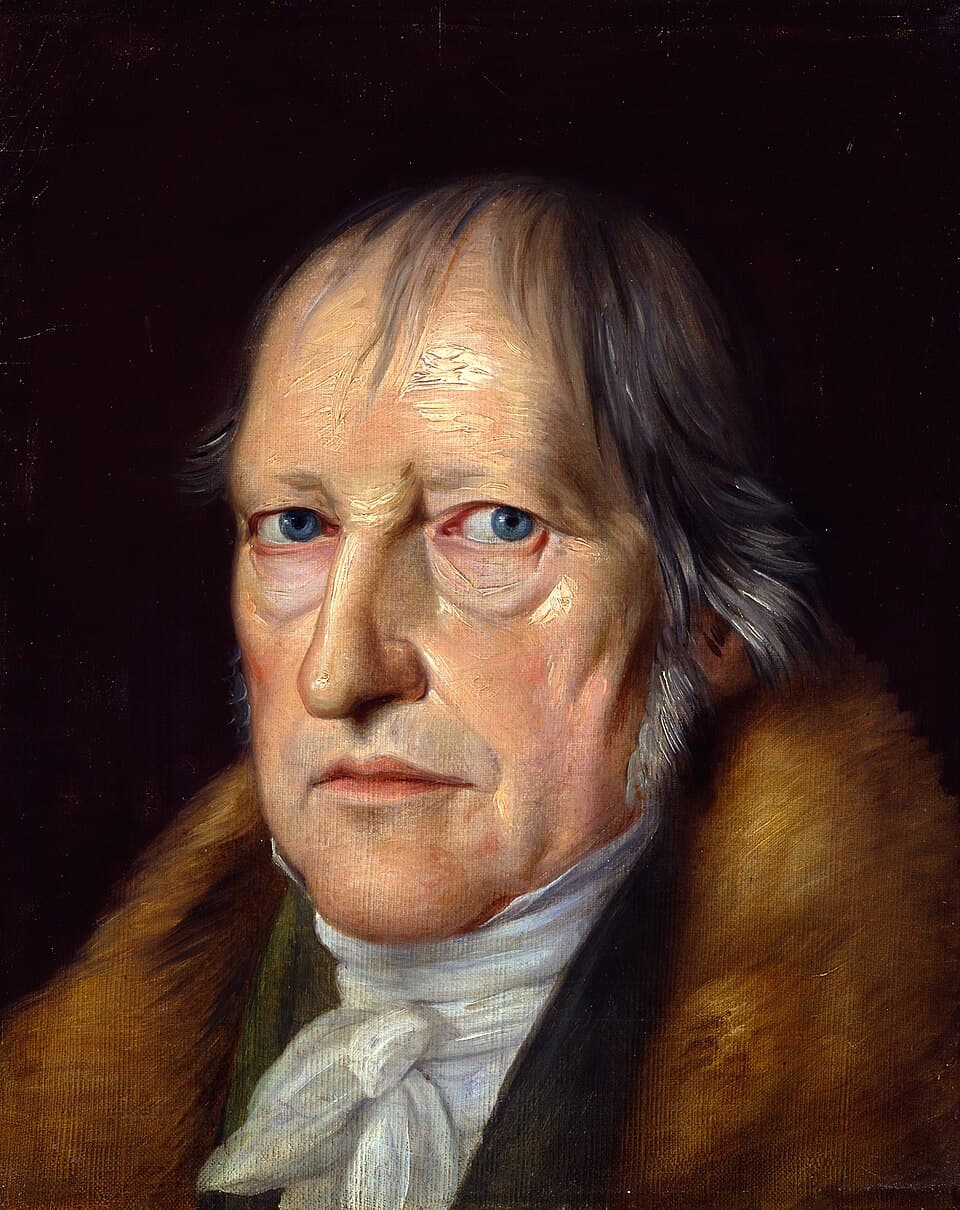
Georg Wilhelm Friedrich Hegel — Stuttgart seminarian, private tutor, newspaper editor, and finally Berlin's reigning professor — completed the Phenomenology of Spirit in Jena in 1806, by his own account finishing as Napoleon's cannon sounded; he had seen the emperor ride through and called him "the world-soul on horseback."
His system is the most ambitious ever built: reality is not substance but subject — Geist, spirit, coming to know itself through history. Truth is the whole, and the whole develops dialectically: every position (the Phenomenology's famous master and slave; the Logic's being, nothing, becoming) generates its own contradiction and is aufgehoben — cancelled, preserved, and raised — in a richer one. History is "the progress of the consciousness of freedom": one free under Oriental despotism, some in Greece, all — in principle — in the modern state. "The rational is the actual and the actual is the rational," says the Philosophy of Right (1821), a sentence read as both consecration of Prussia and coded promise of reform.
Religion, for Hegel, is no enemy of reason but its picture-language: Vorstellung, representation, of the same content philosophy grasps as concept. Christianity is "the absolute religion" precisely because its story — God emptying into a human being who dies, even the death on the cross, and rises as universal Spirit — IS the dialectic, imaged. The Incarnation means the divine and human are not alien; "the death of God" (his phrase before Nietzsche's) is the moment infinite Spirit takes finitude into itself.
He died of cholera in 1831, and his school split like an inheritance: Right Hegelians kept the theology; Left Hegelians — Strauss dissolving the gospels into myth, Feuerbach inverting theology into anthropology, Marx standing the dialectic "on its feet" — manufactured modern secularism from his tools. Both sides were using his fire.
Works
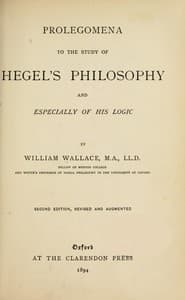
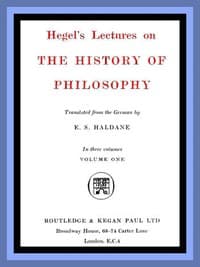
Prolegomena to the Study of Hegel's Philosophy, and Especially of His Logic
en
Hegel, Georg Wilhelm Friedrich, 1770-1831; Logic
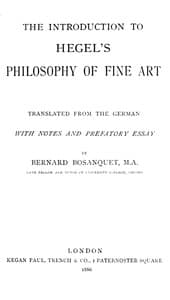
The Introduction to Hegel's Philosophy of Fine Arts: Translated from the German with Notes and Prefatory Essay
en
Aesthetics; Art -- Philosophy
Quote Attribution
Identify the philosopher behind a quote using AI.
Books by & about Georg Hegel
Works by and about Georg Hegel — readable in full, right here in the Library.
Read on site →
Read on site →
Read on site →
Read on site →
Read on site →
Read on site →
Read on site →
Read on site →
Read on site →
Read on site →

Read on site →
Read on site →
Read on site →
Read on site →
Read on site →
Read on site →
Read on site →
Read on site →
Read on site →
Read on site →
Read on site →
Read on site →
Read on site →
Read on site →