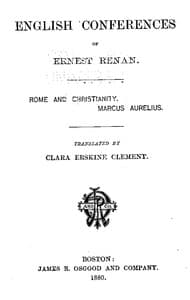
English Conferences of Ernest Renan: Rome and Christianity. Marcus Aurelius
en
Catholic Church; Church history -- Primitive and early church, ca. 30-600; Marcus Aurelius, Emperor of Rome, 121-180
Rome
Roman emperor and Stoic, whose private Meditations are a timeless manual for living.
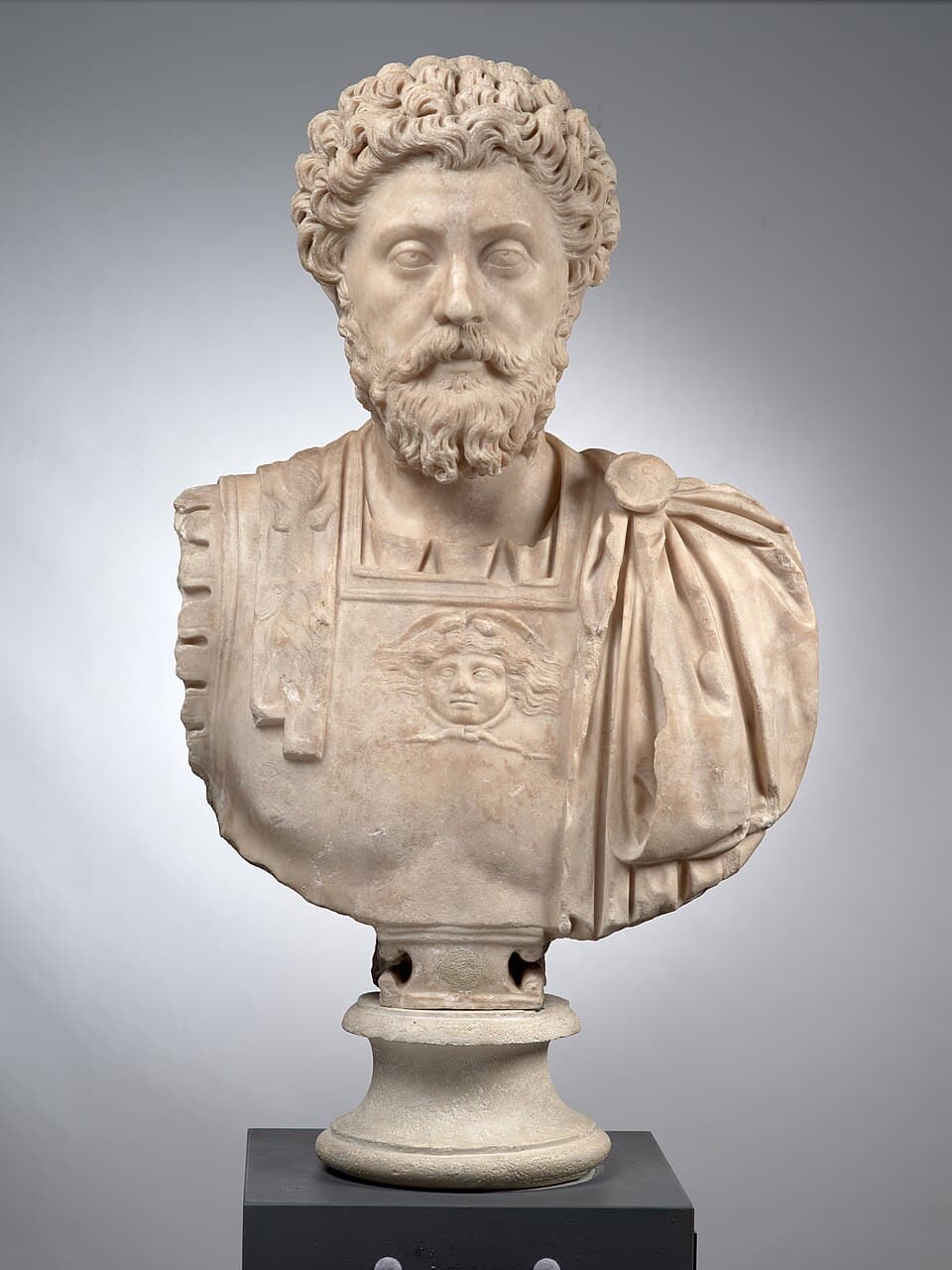
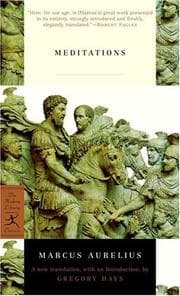
Marcus Aurelius ruled the Roman Empire from 161 to 180 through plague, flood, and endless frontier war — and spent his nights in a Greek notebook interrogating himself. He never meant us to read it. The Meditations — literally "To Himself" — survived by accident and became the most intimate document ever left by absolute power.
He was the last of Stoicism's great voices, heir to the slave Epictetus, whose Discourses he quotes with gratitude to his teacher Rusticus in Book I — an emperor schooled by a slave, which is itself a Stoic lesson. The doctrine is austere: the cosmos is a single living whole ordered by logos; nothing happens contrary to nature; the only good is virtue and the only evil vice; everything else — health, reputation, the throne, life itself — is indifferent. "You have power over your mind, not outside events; realize this, and you will find strength."
The Meditations practice rather than argue. He rehearses mortality relentlessly — Alexander the Great and his mule-driver came to the same dust — not from morbidity but as a solvent for vanity and rage. He instructs himself each dawn to expect the meddling and the ungrateful, and to meet them without hatred, "for we were born to work together, like feet, like hands, like eyelids." On providence he allows himself an honest either/or that theologians rarely risk: "either providence or atoms" — and concludes that the duty of virtue stands the same in both worlds.
Under his reign Christians were executed — Justin Martyr among them — a standing irony beside his gentleness on the page. He died on the Danube frontier in 180. His book has been the field manual of composure ever since: Frederick the Great carried it on campaign, and it remains the most read work of ancient philosophy.
en
Catholic Church; Church history -- Primitive and early church, ca. 30-600; Marcus Aurelius, Emperor of Rome, 121-180


en
Latin literature -- History and criticism

en
Ethics; Life; Stoics

en
Ethics; Life; Marcus Aurelius, Emperor of Rome, 121-180; Stoics
Quote Attribution
Identify the philosopher behind a quote using AI.
Works by and about Marcus Aurelius — readable in full, right here in the Library.