
Western1844–1900
Nietzsche
Prussia
German philosopher of will, value, and the death of God, author of Thus Spoke Zarathustra.
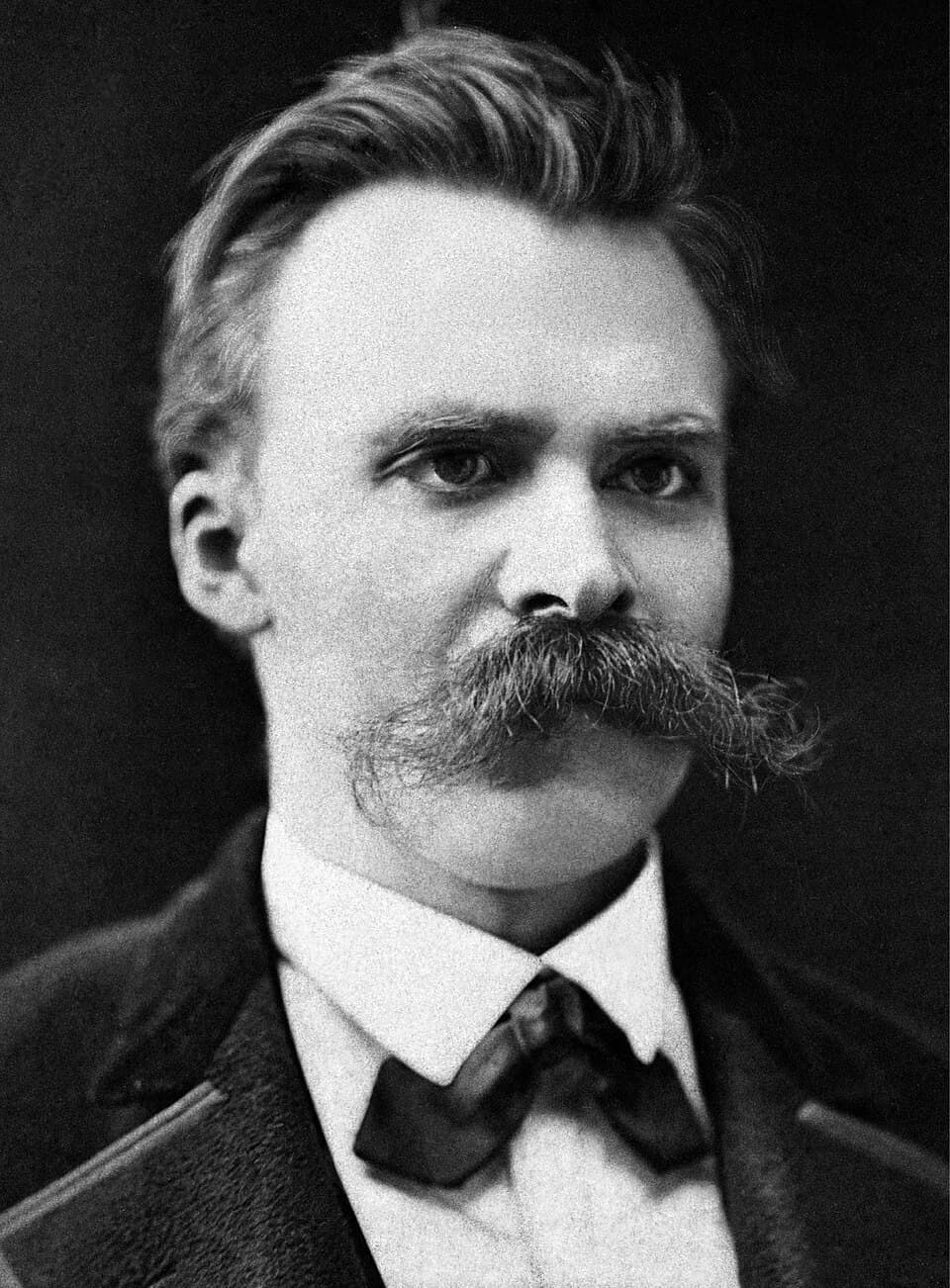
Biography
Friedrich Nietzsche was a Lutheran pastor's son who became modernity's most unsparing physician of religion. A prodigy — full professor of philology at Basel at twenty-four — he resigned in ill health at thirty-four and spent a decade writing in boarding houses, nearly unread, before his collapse in Turin in 1889.
His famous sentence is almost always misquoted in spirit. "God is dead" — announced by the madman in The Gay Science (1882) — is not a boast but a diagnosis: European civilization had ceased to believe, yet went on living off the moral capital of the faith it abandoned, and had not begun to feel the earthquake. The question that consumed him was what comes after: nihilism, or a revaluation of all values.
On the Genealogy of Morality (1887) is his most disciplined work: an argument that Christian morality arose as slave morality — the resentment of the powerless transmuting weakness into virtue and strength into sin — and that its crowning value, selfless pity, turns life against itself. Thus Spoke Zarathustra (1883–85) offered the countermovement in prophetic costume: the Übermensch, the will to power, the eternal recurrence as a test of whether one could love one's life enough to will it endlessly again.
He admired Jesus while despising what Paul, in his reading, built from the crucifixion (The Antichrist, 1888). He kept a strange respect for the Old Testament and for Islam's lack of pity-morality, and reserved his contempt for comfortable modern unbelievers who kept Christian ethics without Christian metaphysics — the "English flat-heads."
His sister edited his remains into a proto-fascist forgery the Nazis exploited; the actual books despise antisemitism and German nationalism alike. Psychology of religion, existentialism, and every serious modern defense of faith — which must now answer him — carry his fingerprints.
Works

Ecce Homo: Complete Works, Volume Seventeen
en
Nietzsche, Friedrich Wilhelm, 1844-1900; Philosophers -- Germany -- Biography
Egoists, A Book of Supermen: Stendhal, Baudelaire, Flaubert, Anatole France, Huysmans, Barrès, Nietzsche, Blake, Ibsen, Stirner, and Ernest Hello
en
Literature, Modern -- 19th century -- History and criticism
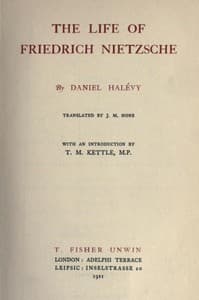
Friedrich Nietzsche
en
Nietzsche, Friedrich Wilhelm, 1844-1900; Philosophers -- Germany -- Biography; Philosophy, German -- 19th century


Human, All-Too-Human: A Book for Free Spirits, Part 1: Complete Works, Volume Six
en
Human beings


Nietzsche and Art
en
Aesthetics, German -- 19th century; Nietzsche, Friedrich Wilhelm, 1844-1900 -- Aesthetics

Nietzsche and Other Exponents of Individualism
en
Individualism; Nietzsche, Friedrich Wilhelm, 1844-1900

On the Future of our Educational Institutions
en
Education -- Philosophy; Educational change -- Germany; Nietzsche, Friedrich Wilhelm, 1844-1900 -- Views on education
On the Future of our Educational Institutions; Homer and Classical Philology: Complete Works, Volume Three
en
Classical philology; Education -- Philosophy; Educational change -- Germany; Homer; Nietzsche, Friedrich Wilhelm, 1844-1900 -- Views on education
Overtones, a book of temperaments : $b Richard Strauss, Parsifal, Verdi, Balzac, Flaubert, Nietzsche, and Turgénieff
en
Music
Prophets of Dissent : Essays on Maeterlinck, Strindberg, Nietzsche and Tolstoy
en
Maeterlinck, Maurice, 1862-1949; Nietzsche, Friedrich Wilhelm, 1844-1900; Strindberg, August, 1849-1912; Tolstoy, Leo, graf, 1828-1910


The Birth of Tragedy; or, Hellenism and Pessimism
en
Aesthetics; Greek drama (Tragedy) -- History and criticism -- Theory, etc.; Music -- Philosophy and aesthetics; Mythology, Greek, in literature; Tragedy; Tragic, The

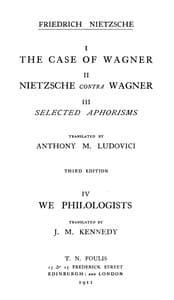
The Case of Wagner, Nietzsche Contra Wagner, and Selected Aphorisms.
en
Essays; Literature -- Collections; Music -- History and criticism; Wagner, Richard, 1813-1883

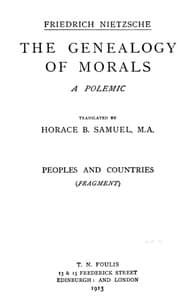
The Genealogy of Morals: The Complete Works, Volume Thirteen, edited by Dr. Oscar Levy.
en
Ethics
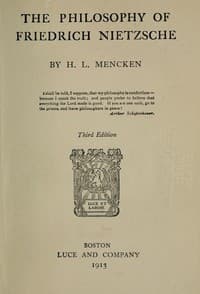
The Philosophy of Friedrich Nietzsche
en
Nietzsche, Friedrich Wilhelm, 1844-1900; Philosophy, German -- 19th century
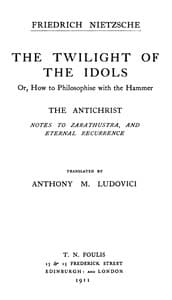
The Twilight of the Idols; or, How to Philosophize with the Hammer. The Antichrist: Complete Works, Volume Sixteen
en
Philosophy
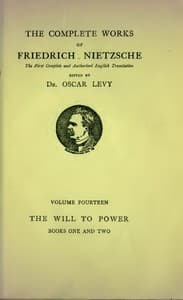
The Will to Power: An Attempted Transvaluation of All Values. Book I and II
en
Nihilism (Philosophy); Power (Philosophy); Values
The Will to Power: An Attempted Transvaluation of All Values. Book III and IV
en
Nihilism (Philosophy); Power (Philosophy); Values

Thoughts out of Season, Part I
en
Philosophy, German; Strauss, David Friedrich, 1808-1874; Wagner, Richard, 1813-1883
Thoughts out of Season, Part I: David Strauss, the Confessor and the Writer - Richard Wagner in Bayreuth.
en
Strauss, David Friedrich, 1808-1874; Wagner, Richard, 1813-1883
Thoughts Out of Season, Part II
en
History -- Study and teaching; Schopenhauer, Arthur, 1788-1860

Thus Spake Zarathustra: A Book for All and None
en
Philosophy, German; Superman (Philosophical concept)

We Philologists: Complete Works of Friedrich Nietzsche, Volume 8
en
Classical philology; Education
What Nietzsche Taught
en
Nietzsche, Friedrich Wilhelm, 1844-1900; Nietzsche, Friedrich Wilhelm, 1844-1900 -- Criticism and interpretation; Philosophy
Quote Attribution
Identify the philosopher behind a quote using AI.
Books by & about Nietzsche
Works by and about Nietzsche — readable in full, right here in the Library.
Read on site →
Read on site →
Read on site →
Read on site →
Read on site →
Read on site →
Read on site →
Read on site →

Read on site →
Read on site →
Read on site →

Read on site →

Read on site →
Read on site →
Read on site →
Read on site →
Read on site →
Read on site →
Read on site →
Read on site →

Read on site →
Read on site →
Read on site →
Read on site →