
Greek384 BC – 322 BC
Aristotle
Stagira
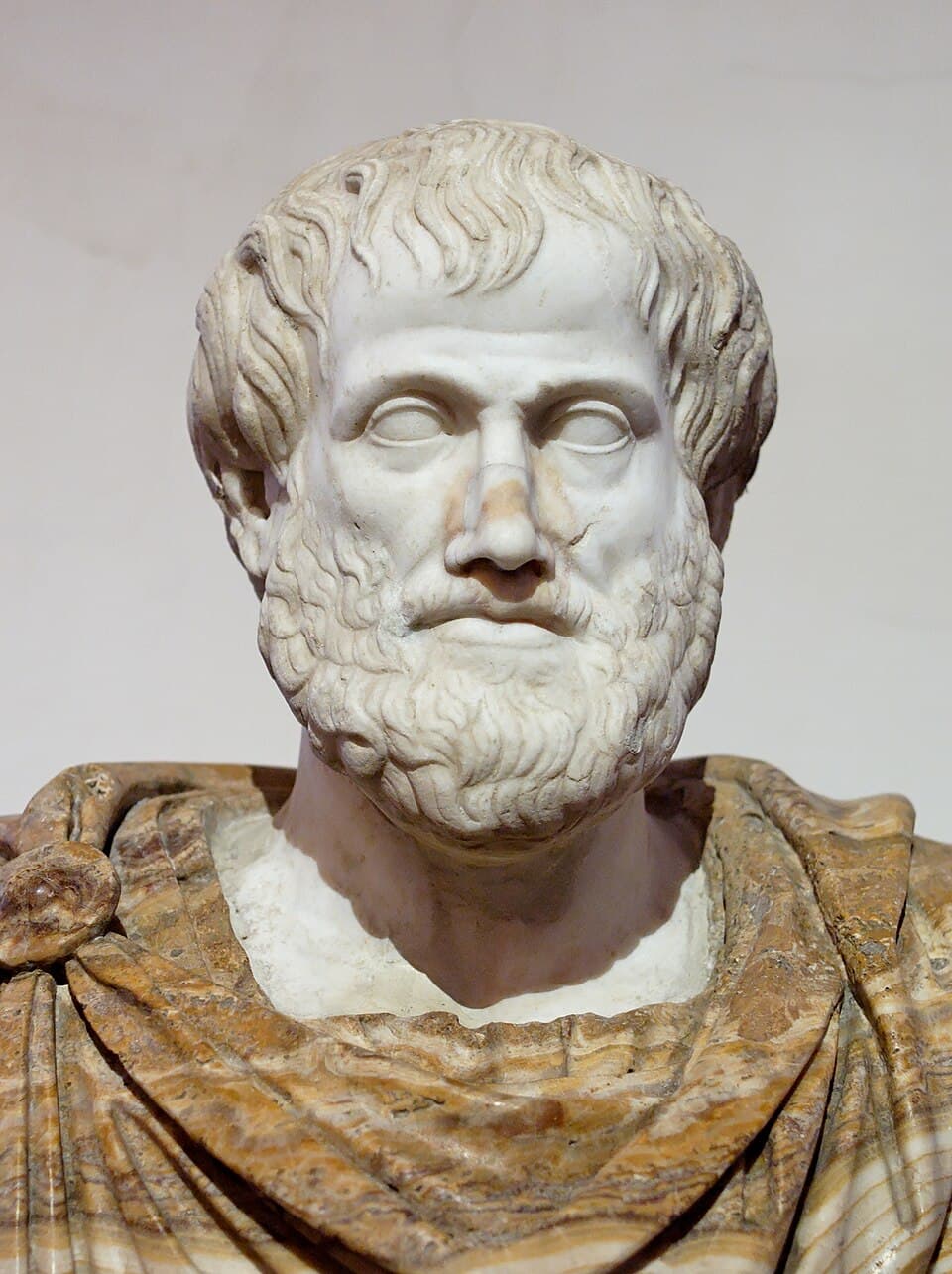
Pupil of Plato and tutor to Alexander, the systematic philosopher of logic, ethics, and nature.
Biography
Aristotle came to Plato's Academy at seventeen and stayed twenty years, then walked away from its central doctrine. Against the theory of Forms he set a philosophy of this world: the reality of a thing is not a shadow of some eternal pattern but the form-in-matter before you — this horse, this man, this city. He tutored Alexander of Macedon, returned to Athens, and founded his own school, the Lyceum, whose members philosophized while walking — the Peripatetics.
The surviving corpus is a university in one man. The Organon invented formal logic and gave the syllogism its name; the Physics and Metaphysics built an account of change through four causes — material, formal, efficient, final — and argued that the chain of movers must terminate in an Unmoved Mover, pure actuality, thought thinking itself. The Nicomachean Ethics defines the human good as eudaimonia: flourishing through activity in accordance with virtue, where each virtue is a mean between excesses — courage between cowardice and rashness — acquired by habit rather than argument alone. The Politics famously calls the human being a political animal, completed only in a community.
No philosopher shaped monotheist theology more, which is remarkable for a pagan who never worshipped one God. His Unmoved Mover became the template for the God of the philosophers: Ibn Sina's Necessary Existent, Maimonides' deity, and the five ways of Thomas Aquinas all argue in his grammar. Medieval Islam simply called him "the First Teacher"; the Latin West, "the Philosopher."
His empiricism mattered as much as his theology. He dissected animals, catalogued constitutions, and insisted that knowledge begins with the senses — a temperament that, recovered in the twelfth and thirteenth centuries through Arabic transmission, seeded the scientific culture that would eventually outgrow him.
Works


Aristotle on the art of poetry
en
Aesthetics -- Early works to 1800; Music -- Philosophy and aesthetics; Poetry -- Early works to 1800
Aristotle's works:: Containing the Master-piece, Directions for Midwives, and Counsel and Advice to Child-bearing Women with Various Useful Remedies
en
Gynecology -- Early works to 1800; Human reproduction -- Early works to 1800; Medicine, Popular -- Early works to 1800; Obstetrics -- Early works to 1800
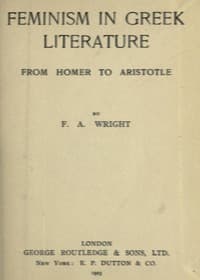
Feminism in Greek Literature from Homer to Aristotle
en
Feminism and literature -- Greece; Feminist literary criticism; Greek literature -- History and criticism; Women -- Greece -- History; Women and literature -- Greece; Women in literature

Lives of Eminent Zoologists, from Aristotle to Linnæus: with Introductory remarks on the Study of Natural History
en
Zoologists

Plato's Doctrine Respecting the Rotation of the Earth and Aristotle's Comment Upon That Doctrine
en
Aristotle, 384 BC-322 BC; Astronomy, Greek; Earth (Planet) -- Rotation; Plato. Timaeus



The Athenian Constitution
en
Athens (Greece) -- Politics and government -- Early works to 1800; Classical literature; Constitutional history -- Greece -- Athens -- To 146 B.C.


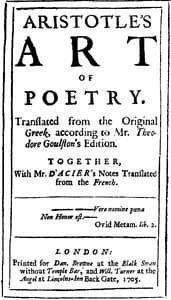

The Works of Aristotle the Famous Philosopher: Containing his Complete Masterpiece and Family Physician; his Experienced Midwife, his Book of Problems and his Remarks on Physiognomy
en
Human beings; Mind and body; Reproduction


Quote Attribution
Identify the philosopher behind a quote using AI.
Books by & about Aristotle
Works by and about Aristotle — readable in full, right here in the Library.
Read on site →
Read on site →
Read on site →
Read on site →
Read on site →
Read on site →
Read on site →
Read on site →
Read on site →
Read on site →
Read on site →
Read on site →
Read on site →
Read on site →
Read on site →
Read on site →
Read on site →
Read on site →
Read on site →

Read on site →
Read on site →
Read on site →
Read on site →
Read on site →